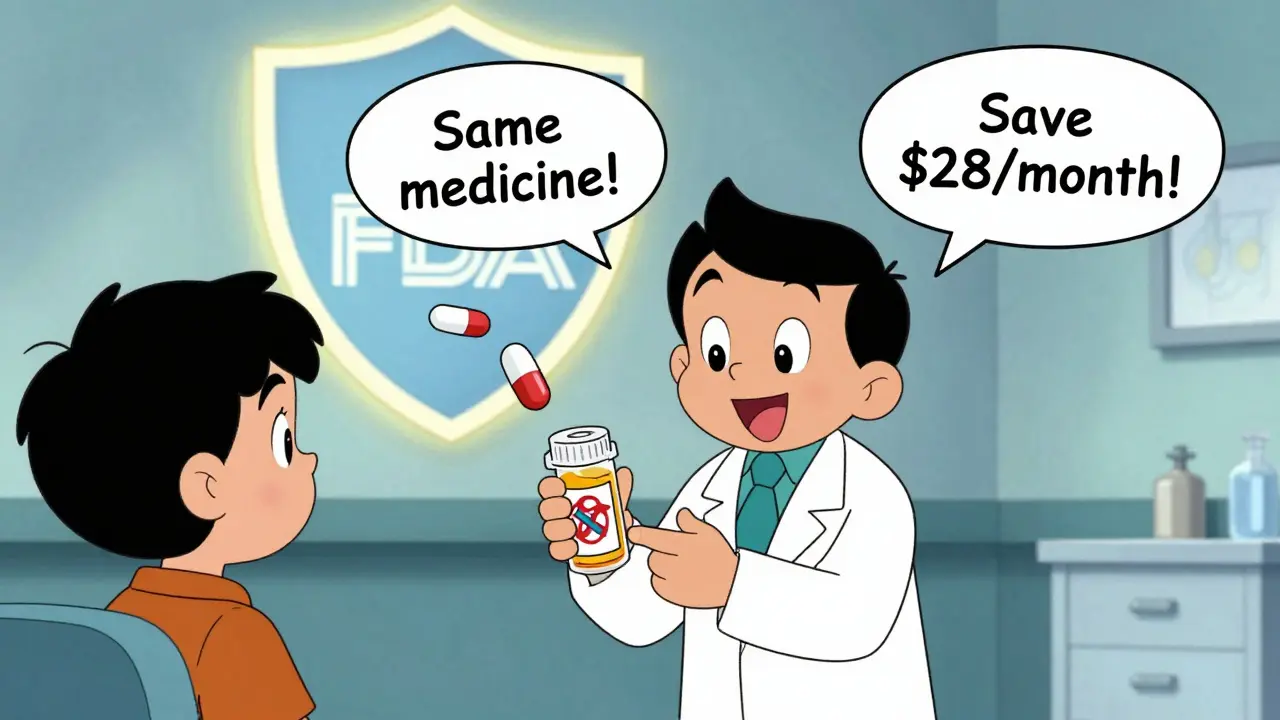
When a patient walks out of the doctor’s office with a prescription, they’re not just getting a pill-they’re getting a decision. A decision about cost, trust, and whether they’ll actually take the medicine every day. And that’s where healthcare providers play a role no one talks about enough: patient advocacy for generic medications.
Most people think generics are just cheaper versions of brand-name drugs. But that’s not the full story. The FDA requires generics to match the brand in active ingredients, strength, dosage form, and how the body absorbs them. That’s not a guess. It’s science. A generic drug must show it delivers the same amount of medicine into the bloodstream within a very tight range-80% to 125% of the brand. That’s not luck. That’s rigorous testing. And yet, patients still ask, “Why does this pill look different?”
Why Patients Hesitate-Even When It Makes Sense
It’s not about the science. It’s about perception. A 2015 review of studies found that many patients still believe generics are less effective. Why? Because they’ve seen the same medication change shape, color, or size after switching from brand to generic. One patient might get a blue oval pill one month, then a white capsule the next. They don’t know it’s the same drug. They think something’s wrong. Or worse-they think they’re getting a lower quality product.
And the numbers back this up. When patients are prescribed a brand-name drug with a $50 copay, nearly 4 in 10 abandon the prescription before filling it. But when the same drug is available as a generic with a $15 copay? That abandonment rate drops by more than half. The Association for Accessible Medicines found that new patient abandonment rates are 266% higher for brand-name drugs than for generics. That’s not just about money-it’s about trust. And trust comes from the provider.
The Provider’s Role: More Than a Prescription
Doctors and pharmacists aren’t just prescribing drugs-they’re managing trust. A 2022 position paper from the American College of Physicians says doctors should prescribe generics whenever possible. Not because they’re cheaper (though they are), but because they work just as well. And when patients know that, they’re more likely to stick with their treatment.
But here’s the catch: most providers don’t talk about it. A primary care visit lasts 13 to 16 minutes. There’s no time for a lecture on bioequivalence. So what do you say? You don’t need to explain the 80-125% range. You say: “This generic is the same medicine, approved by the FDA, and it’s going to cost you less than half. That means you’re more likely to be able to take it every day.”
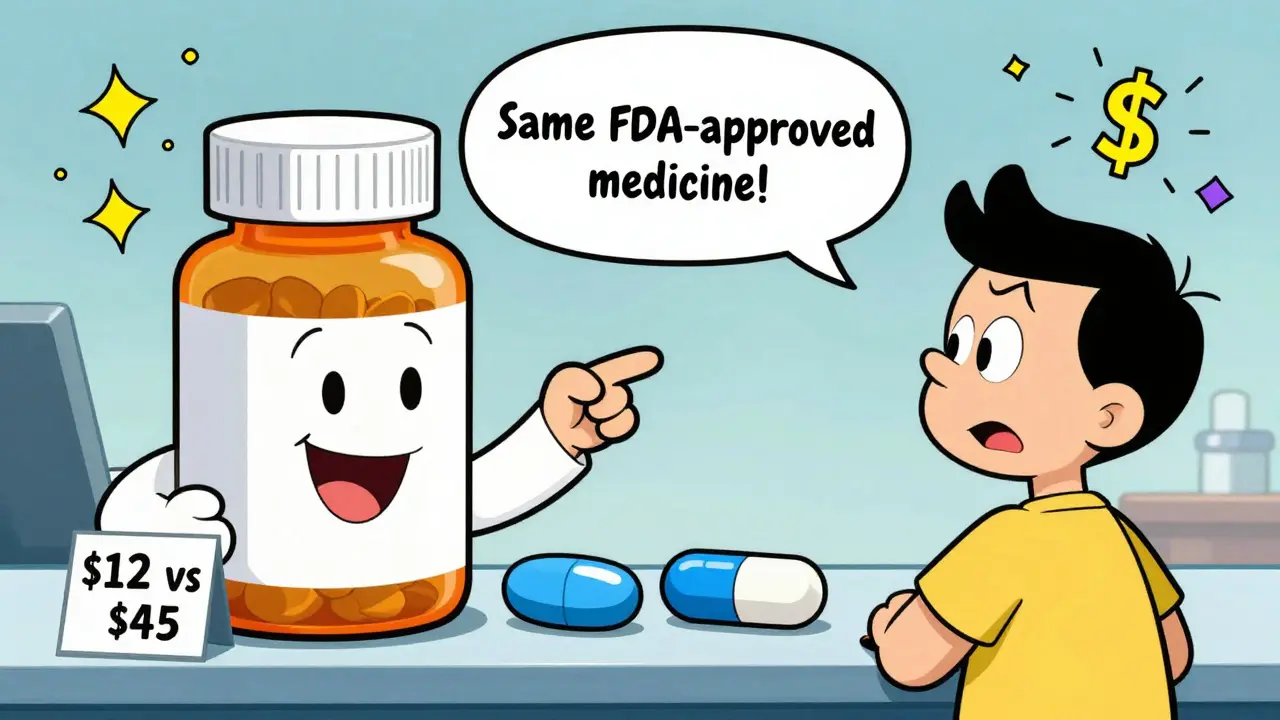
Pharmacists are even more critical. They’re the ones handing the pill bottle to the patient. They see the confusion in the patient’s eyes. They hear the questions: “Is this the right one?” “Did they give me the wrong drug?” A good pharmacist doesn’t wait for the question. They say it upfront: “I know this looks different from what you took before, but it’s the exact same medicine. The FDA makes sure of it. And your copay is only $12 instead of $45.”
When Generics Aren’t Enough
Not every drug is the same. Some medications have a narrow therapeutic index-meaning the difference between an effective dose and a harmful one is very small. Drugs like warfarin, levothyroxine, and certain seizure medications fall into this category. For these, switching between brands and generics can sometimes cause problems. That’s why the American Academy of Family Physicians opposes mandatory generic substitution for these drugs.
But here’s the nuance: the Academy of Managed Care Pharmacy disagrees. They argue that even for these drugs, the evidence shows switching is safe when done properly. So who’s right? Both, in a way. The science says it’s safe. But the patient experience says it’s scary. That’s why the provider’s job isn’t to pick a side-it’s to listen. To know the patient’s history. To ask: “Have you had any issues with this medicine before?”
Cost Isn’t Just a Number-It’s a Barrier
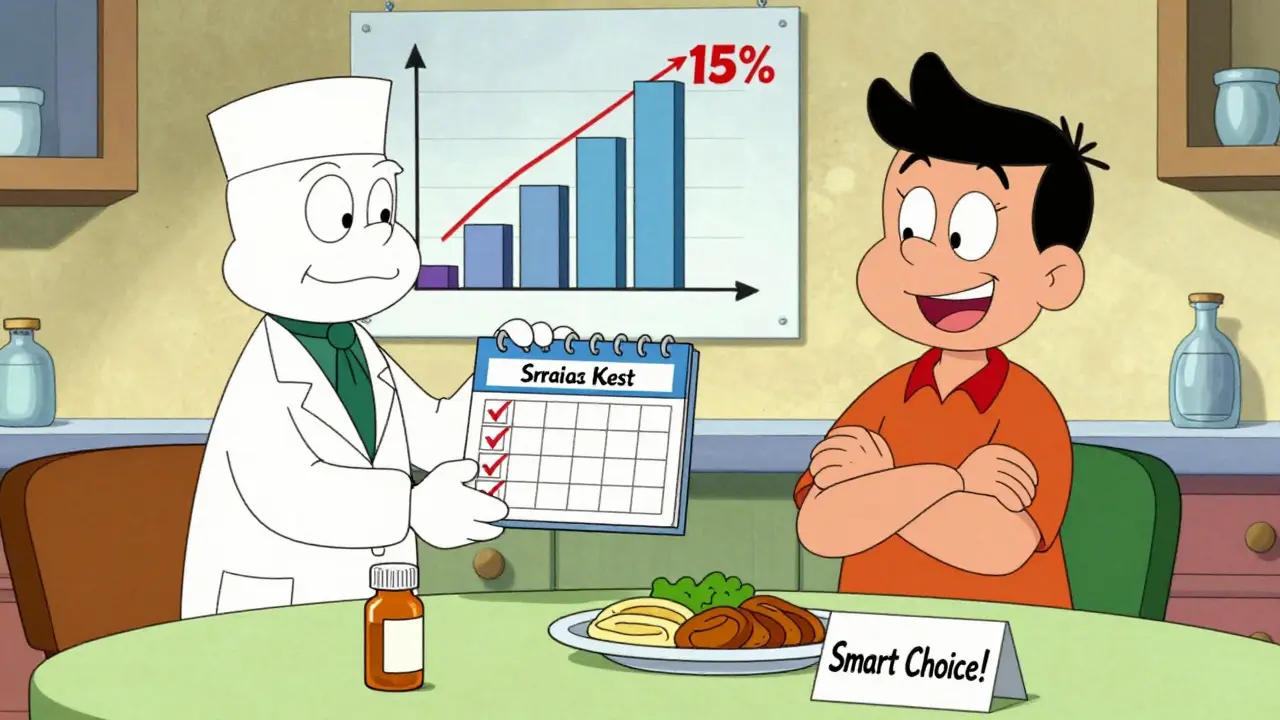
Let’s talk numbers. In 2022, generics made up 90% of all prescriptions filled in the U.S. But they accounted for only 23% of total drug spending. That’s because generics cost, on average, 85% less than brand-name drugs. One year after a generic enters the market, prices drop to about 15% of the original brand price.
But here’s the twist: in 2023, the American Society of Health-System Pharmacists warned that some generic drugs are suddenly getting more expensive. A few essential medications-like certain antibiotics or insulin analogs-have seen price spikes due to manufacturing shortages or consolidation in the supply chain. So now, providers aren’t just advocating for generics-they’re checking if the generic they’re prescribing is even available at a price patients can afford.
That’s why advocacy now includes asking: “Is this generic still priced right?” “Is there a different generic option?” “Should we consider a brand if the generic just went up to $30?”
The Communication Gap
Most patients don’t know what “bioequivalent” means. They don’t care. What they care about is: “Will this work?” “Will I be able to afford it?” “Can I trust it?”
Providers who win are the ones who say: “I’ve prescribed this generic to hundreds of patients. They all did just as well as on the brand. And this one saves you $28 a month. That’s a free meal out every week.”
That’s not medical jargon. That’s human language. And it works. A study found that when providers proactively explain generic substitution-before the patient even notices the pill looks different-adherence improves by 30%. Why? Because they didn’t wait for fear to set in. They stopped it before it started.
What’s Next?
Electronic health records are starting to show real-time cost comparisons at the point of prescribing. A doctor types in a brand-name drug, and the system pops up: “Generic available. Copay: $12. Brand: $48.” That’s powerful. But it’s not enough. The doctor still has to say: “This is a good option. Let’s try it.”
And that’s the real job of patient advocacy-not to push generics blindly, but to make sure the patient understands: This isn’t a compromise. It’s a smart choice.
When a patient stops taking their medicine because they can’t afford it, it’s not a failure of the drug. It’s a failure of communication. And that’s something every provider can fix-with one honest conversation.
 How to Handle Prescription Transfers Between Countries: A Practical Guide for Travelers
 When Your Doctor Might Prescribe Brand-Name Only and Why
 Routine Monitoring to Catch Medication Side Effects Early: Essential Tests and Timelines
 Promo codes for on-line pharmacy getroman.com
 How to Audit Your Medication Bag Before Leaving the Pharmacy: A Simple 7-Step Safety Check
Nishan Basnet
March 20, 2026 AT 21:26As a pharmacist in Delhi, I see this every day. Patients stare at their generics like they’re aliens. I just say: ‘This is the same pill your doctor prescribed, just cheaper. You’re not losing anything-except your bill.’ One man cried because he could finally afford his blood pressure meds. That’s advocacy. Not a lecture. Just honesty.
Timothy Olcott
March 21, 2026 AT 12:00LOL at all this ‘patient advocacy’ BS. America’s got the best drugs in the world, and now we’re telling people to take cheap knockoffs? 🤡 My cousin took a generic and got sick. FDA my ass. BRAND NAME ALL THE WAY. 💪🇺🇸
Desiree LaPointe
March 22, 2026 AT 20:49Oh, sweet mercy. Another feel-good piece about how doctors should ‘talk more’ like we’re all sitting in a TED Talk with a kombucha in hand. The truth? Most providers don’t have time, and patients don’t care about bioequivalence-they care about whether their insurance covers it. Stop romanticizing primary care. It’s a triage system with a stethoscope.
Jackie Tucker
March 23, 2026 AT 18:52How quaint. We’ve reduced human health to a cost-per-pill equation, as if the soul of medicine can be quantified by a spreadsheet. The real tragedy isn’t the price-it’s that we’ve convinced ourselves that efficiency is virtue. When did we stop believing in the sacredness of the ritual of healing? Now it’s just ‘swallow this, it’s 85% cheaper.’
Thomas Jensen
March 24, 2026 AT 01:12GENERIC DRUGS ARE A GOVERNMENT PLOT. They’ve been mixing in fillers to make us docile. I read a guy on TruthFeed who said the FDA got bought by Big Pharma and now they’re pushing generics so we don’t get too healthy. My cousin’s neighbor’s dog died after taking a generic. Coincidence? I think not. 🕵️♂️
matthew runcie
March 24, 2026 AT 10:11Simple truth: if it works and costs less, use it. No drama. No speeches. Just give people what they need.
Johny Prayogi
March 25, 2026 AT 04:05Yessss!! 🙌 I’m a nurse and I’ve been saying this for years. Patients don’t need a lecture-they need to hear: ‘This is the same, but it’ll save you $30.’ One lady hugged me because she could finally refill her antidepressant. That’s the win. Keep it real. Keep it cheap. Keep it going. 💊❤️
Nicole James
March 25, 2026 AT 10:00Wait-so you’re saying that the FDA, Big Pharma, and the pharmaceutical supply chain are all aligned in their ‘generics are safe’ narrative? But what about the 2023 shortages? The 14% price spike in insulin generics? The consolidation of 3 companies controlling 80% of the market? This isn’t advocacy-it’s a PR campaign disguised as public health. And who benefits? Not the patient. Not the provider. The system. Always the system.