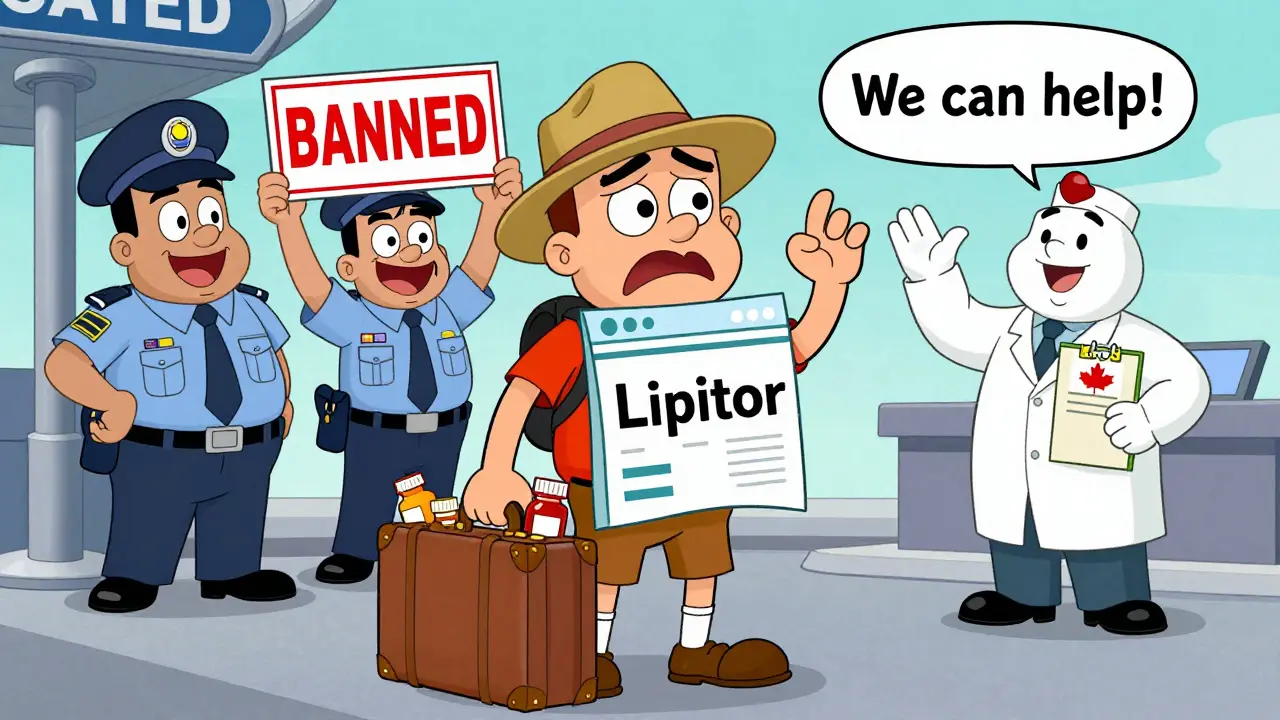
Planning a trip abroad and worried about your meds? You’re not alone. Every year, millions of travelers carry prescriptions across borders - but getting them refilled or transferred in another country isn’t as simple as walking into a local pharmacy. International prescription transfers are a patchwork of conflicting laws, cultural differences, and bureaucratic hurdles. Whether you’re flying to Canada, living in Europe, or visiting China, knowing the rules ahead of time can save you from running out of medication halfway through your trip.
Why Prescription Transfers Are So Complicated
Prescriptions don’t travel like passports. Each country has its own rules about who can prescribe, what drugs are allowed, and how prescriptions must be written. The U.S. Food and Drug Administration (FDA) bans importing prescription drugs for personal use under federal law - but in practice, they often turn a blind eye if you’re bringing in a 90-day supply for yourself. Meanwhile, the European Union lets you use a prescription from Germany in Italy, France, or Spain with minimal hassle. But if you try to take that same German prescription to Japan or Brazil? You’re likely to hit a wall. The core problem? No global standard. The DEA in the U.S. updated its rules in 2023 to let pharmacies electronically transfer controlled substances like painkillers or ADHD meds between U.S. locations - but explicitly excluded international transfers. Canada requires a Canadian doctor to review and sign off on your U.S. prescription before filling it. China and Middle Eastern countries often demand a signed letter from your doctor explaining why you need the medication and confirming your diagnosis.Step-by-Step: What to Do Before You Leave
Don’t wait until you’re overseas to figure this out. Start at least two weeks before your trip. Here’s what actually works:- Get the generic name - Not the brand. Your doctor’s prescription might say "Lipitor," but in Europe, it’s called "atorvastatin." Ask your pharmacist or doctor to write down the generic name and dosage on a separate note.
- Bring your original prescription - Keep the physical copy with you. Many countries require it. Don’t rely on a photo on your phone.
- Ask for a doctor’s letter - A signed, dated note on official letterhead stating your diagnosis, the medication name, dosage, and reason for travel is critical. Especially for controlled substances or countries like China, UAE, or Saudi Arabia.
- Carry no more than a 90-day supply - The FDA doesn’t officially allow importing drugs, but they rarely stop travelers bringing a personal 90-day supply. Exceed that, and customs may seize your meds.
- Check your destination’s rules - Some countries ban common U.S. drugs. For example, codeine is illegal in Japan. Oxycodone is restricted in Australia. Search “[Country] + controlled substances list” before you go.
Transferring Prescriptions to Canada
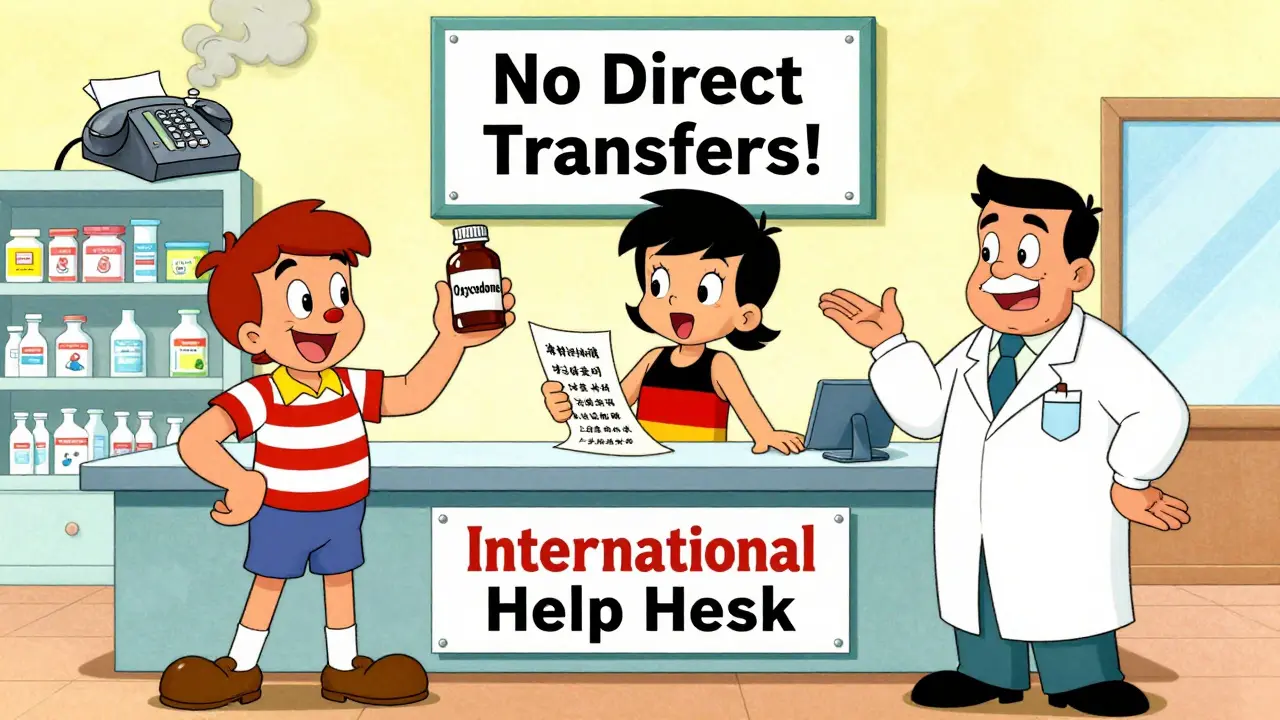
Canada is one of the most common destinations for Americans seeking cheaper meds - but you can’t just transfer your U.S. prescription directly. Most U.S. pharmacies refuse to do it. Here’s the real process:- Contact a Canadian pharmacy that offers international transfer services (like PharmacyChecker-verified ones).
- Send them your original prescription, doctor’s letter, and medical history.
- The Canadian pharmacist will contact your doctor to verify details and issue a new Canadian prescription.
- You’ll pay Canadian prices - often 30-60% lower than U.S. retail.
Traveling Within the European Union
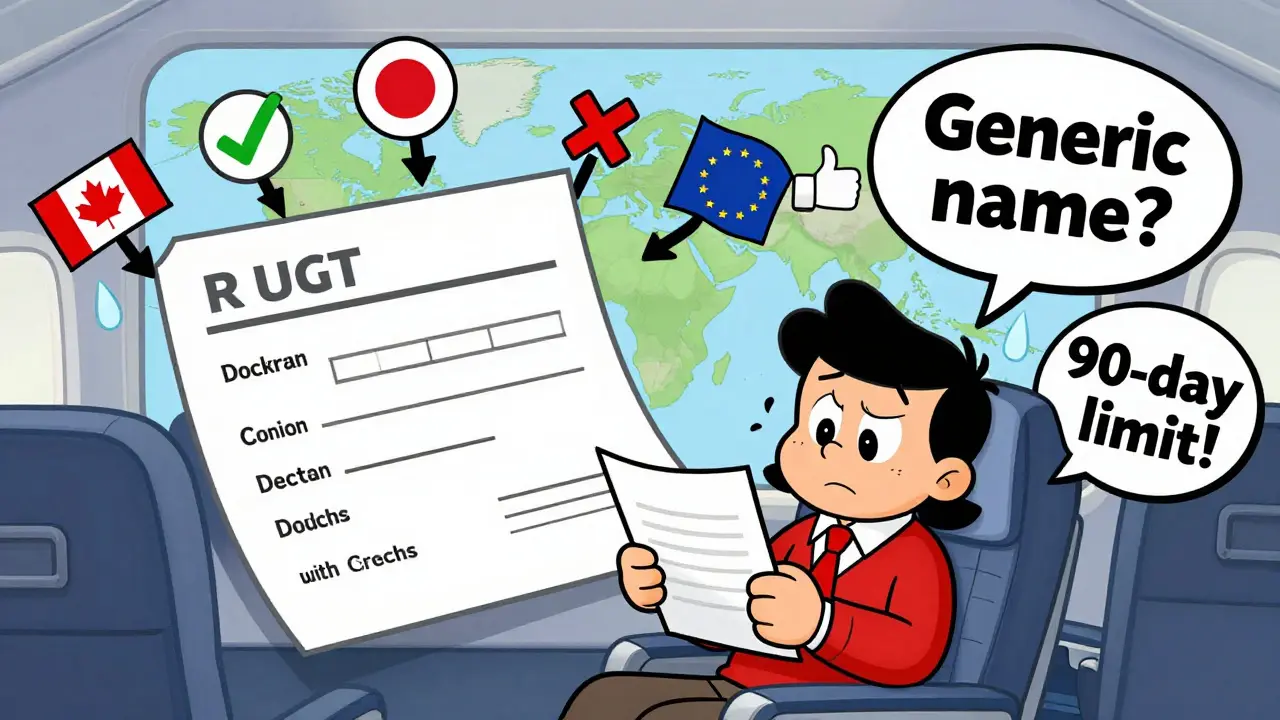
If you’re moving between EU countries, you’re in the best possible situation. A prescription issued in Spain, Poland, or Sweden is valid across all 27 member states. But here’s the catch: you still need to follow local rules.- Use the generic drug name - Brand names vary. A pill called "Crestor" in the U.S. might be "rosuvastatin" in Germany.
- Some countries limit quantities. For example, France may only allow a 30-day supply per fill, even if your U.S. script says 90.
- Always carry your prescription. Pharmacists may ask to see it.
- Controlled substances like benzodiazepines (Valium, Xanax) still require extra documentation - even in the EU.
What About Asia, the Middle East, or Africa?
These regions are the hardest. Many countries have strict bans on certain medications - even common ones.- Japan bans codeine, pseudoephedrine, and many ADHD medications.
- The UAE and Saudi Arabia require official medical documents and may deny entry if your prescription doesn’t match your visa purpose.
- China requires a signed letter from your doctor, translated into Mandarin, and sometimes a pre-approval from local health authorities.
- Bring enough medication for your entire trip.
- Carry a doctor’s letter on official letterhead with your diagnosis, medication list, and your signature.
- Keep meds in original bottles with your name on them.
- Never ship meds ahead - customs will likely confiscate them.
What to Do If You Run Out
If you lose your meds or they get stolen, don’t panic - but don’t try to buy them over the counter either. Here’s what works:- Call your home doctor. They can often fax a new prescription to a local pharmacy - if they’re willing.
- Visit a local clinic. Many countries have walk-in clinics that can evaluate you and issue a new prescription.
- Use international pharmacy networks. Services like PharmacyChecker or MedAire can help connect you with licensed pharmacies abroad - for a fee.
- Never use unregulated online pharmacies. They sell counterfeit or unsafe drugs.
Pitfalls to Avoid
Many travelers make the same mistakes. Don’t be one of them.- Don’t assume your U.S. pharmacy will help. Most have no process for international transfers. Don’t waste time asking.
- Don’t rely on apps or websites. Many sites claim they can transfer prescriptions abroad - most are scams.
- Don’t carry more than 90 days. Even if you’re going on a six-month trip, split your supply. Keep 90 days with you, ship the rest ahead (if allowed), or refill locally.
- Don’t forget to check local laws. What’s legal in the U.S. might be illegal in Thailand or Dubai.
Who Can Help?
You don’t have to figure this out alone. Here are reliable resources:- PharmacyChecker.com - Verifies Canadian and international pharmacies. Offers free guidance on cross-border transfers.
- MedAire - Provides travel health consultations (around $150) with detailed medication plans for international trips.
- U.S. Embassy or Consulate - Can provide lists of local doctors and pharmacies in the country you’re visiting.
- Your insurance provider - Some plans offer international refill networks or telehealth options abroad.
Most importantly: plan ahead. Medication access abroad isn’t guaranteed. But with the right prep, you can avoid the stress, the delays, and the risk of running out.
Can I transfer my U.S. prescription to a pharmacy in another country?
Generally, no. U.S. pharmacies are not legally allowed to transfer prescriptions internationally. Even if they wanted to, most don’t have the systems or legal clearance to do it. The only exception is Canada - but even there, it’s not a direct transfer. A Canadian pharmacist must review your prescription, contact your doctor, and issue a new Canadian prescription. It’s not a simple refill - it’s a new process.
Is it legal to bring prescription drugs into another country?
It depends. The U.S. FDA bans personal importation of prescription drugs - but enforces it loosely if you’re bringing a 90-day supply for personal use. Other countries have their own rules. For example, Japan bans codeine and oxycodone entirely. The UAE requires a doctor’s letter and may deny entry if your meds don’t match your visa purpose. Always check your destination’s government health website before you travel.
Do I need a doctor’s letter to travel with prescription meds?
Yes - especially if you’re taking controlled substances (like opioids, benzodiazepines, or stimulants) or traveling to countries with strict drug laws (China, Middle East, Japan, Australia). The letter should include: your name, diagnosis, medication name (generic), dosage, prescribing doctor’s name and contact info, and a statement that the medication is necessary for your health. A signed, dated letter on official letterhead is best.
Can I get my prescription filled in Europe if I’m from the U.S.?
It’s possible, but not guaranteed. EU countries recognize prescriptions from other EU members - but not from outside the bloc. If you’re a U.S. citizen, you’ll likely need to visit a local doctor, explain your situation, and get a new prescription. Some pharmacies may accept your U.S. script with a doctor’s letter, but they’re not required to. Always call ahead and ask.
What should I do if my medication isn’t available abroad?
First, check if there’s a generic equivalent. For example, if you take "Lipitor," the generic "atorvastatin" is widely available. If not, contact your home doctor - they may be able to switch you to an alternative before you leave. If you’re already abroad and stuck, visit a local clinic or hospital. Many countries have doctors who can evaluate you and prescribe a similar medication. Never substitute without medical advice - even if it looks the same.
 Opioids and MAOIs: Why This Combination is Dangerous and How to Avoid It
 Hemophilia and Alcohol: Essential Facts and Safe Practices
 Methimazole Allergy: Symptoms and Management
 How to Talk About Stopping or Tapering a Medication Safely with Your Doctor
 Physical Therapy for Joint Disorders: Range of Motion and Strengthening Guide
Marie Crick
February 20, 2026 AT 04:52U.S. pharmacies refusing to transfer prescriptions? Shocking. I’ve been trying to get my ADHD meds refilled in Canada for months. They act like I’m smuggling heroin. Meanwhile, my Canadian friend just walked in and got hers filled like it was a Starbucks order. Double standard much?
Benjamin Fox
February 21, 2026 AT 06:30LOL at people panicking about meds 😂 Just bring extra and don’t be a baby. If you’re going abroad, you better know your own damn country’s laws. FDA doesn’t care if you bring 90 days. Border agents? Probably too busy laughing at you to even check. 🤷♂️💊
Laura B
February 21, 2026 AT 10:35This is actually super helpful. I’m planning a 6-month trip to Portugal next year and was worried about my antidepressants. I didn’t realize EU prescriptions work across borders - that’s a game changer. I’m going to print out my generic names and get that doctor’s letter ASAP. Thanks for breaking it down so clearly!
Amrit N
February 23, 2026 AT 04:36bro i just flew to thailand last month with my zoloft and no letter and they didnt even ask 😅 i was scared to death but it was chill. just keep it in original bottle and dont be shady. also thailand has zoloft like everywhere lol
Caleb Sciannella
February 23, 2026 AT 05:50It is imperative to underscore the systemic fragmentation of pharmaceutical regulatory frameworks across sovereign jurisdictions. The absence of a unified international pharmacopeia creates not merely logistical inconveniences, but potential public health vulnerabilities. One must recognize that while the U.S. FDA maintains a de facto tolerance for personal importation of a 90-day supply, this is an enforcement policy, not a legal endorsement. The European Union’s mutual recognition directive, by contrast, represents a rare and commendable harmonization of standards - one that ought to serve as a model for global cooperation. I urge travelers to consult not only the destination’s ministry of health, but also the World Health Organization’s International Medical Products Availability Database, which provides authoritative guidance on drug classification and importation restrictions.
madison winter
February 25, 2026 AT 04:40I’m just wondering… why do we even need to jump through these hoops? Why can’t my doctor just write a global prescription? Why does my mental health depend on whether I’m in country X or Y? It’s absurd. We’re living in 2025, not 1925.
John Cena
February 25, 2026 AT 12:52Great guide. I’d just add: if you’re on insulin or something life-critical, call the embassy BEFORE you go. They’ve got lists of local hospitals that can help. Also, carry a backup - even if it’s expired, it might help you get a new script faster. Been there, nearly didn’t make it.
aine power
February 26, 2026 AT 01:51How quaint. The idea that a mere ‘doctor’s letter’ could satisfy Japanese customs. One must have a notarized affidavit, translated by a certified linguist, endorsed by the Ministry of Health, Labour and Welfare, and submitted via registered mail 30 days prior to arrival. Anything less is amateurish.
Irish Council
February 26, 2026 AT 09:26They’re lying. The FDA doesn’t 'turn a blind eye' - they’re actively tracking every pill you bring. Your name, your flight, your meds - all in a database. Next thing you know, you’re on a watchlist. And that 'Canadian pharmacy'? They’re just fronts for the DEA. You think you’re saving money? You’re just funding the surveillance state.
Hariom Sharma
February 26, 2026 AT 13:44bro i used to work in a pharmacy in delhi and we used to get so many americans asking for their 'xanax' or 'adderall' - we always told them to go to a doc here. most of them were shocked we could get it without a script 😅 but then again, we don’t have the same crazy laws. just sayin - if you’re flexible, the world is way easier than you think
Greg Scott
February 26, 2026 AT 21:03Thanks for this. I’ve been traveling for work for 10 years and this is the first time I’ve seen a clear breakdown. I always just carried extra and hoped for the best. The part about EU prescriptions being valid across members? Huge. I’ll be heading to Poland next month - this changes everything.
Ashley Paashuis
February 27, 2026 AT 21:11I’m a nurse who works with international patients. I want to emphasize: always carry your original prescription bottle with your name on it. Even if you have a doctor’s letter, if your meds are in a different container, customs will seize them. I’ve seen it happen. It’s not worth the risk. Also - keep a copy of your prescription in your email. Cloud backup saves lives.
Oana Iordachescu
February 28, 2026 AT 00:42Did you know the WHO is pushing for a global prescription database? It’s being rolled out quietly. They’re tracking every drug you take, everywhere. Your insulin, your anxiety meds, your ADHD - all logged. This guide? It’s not helping you avoid surveillance. It’s training you to comply. Think about it.
Davis teo
February 28, 2026 AT 15:15My friend got arrested in Dubai for having 30 pills of Xanax. She had a U.S. prescription. They put her in jail for 6 weeks. No lawyer. No call. Just… gone. This isn’t about 'rules' - it’s about power. And if you think you’re safe because you’re American? You’re delusional.
Michaela Jorstad
March 1, 2026 AT 03:55This is so thoughtful! I especially appreciate the emphasis on carrying the original bottle and the doctor’s letter. I’ve had friends lose meds on trips - one in Mexico, one in Germany - and the panic is real. Thank you for making this feel manageable. I’m sharing this with my entire book club. We’re all traveling next year!