
When you notice bright red blood in your stool or see maroon streaks in the toilet, it’s natural to panic. But not all lower GI bleeding is the same. Two of the most common causes-diverticula and angiodysplasia-look different, behave differently, and need totally different approaches. If you’re over 60, or know someone who is, this isn’t just medical jargon. It’s a real, urgent issue that affects thousands every year.
What Exactly Is Lower GI Bleeding?
Lower gastrointestinal bleeding means blood is coming from somewhere in your colon, rectum, or anus. It’s not the same as black, tarry stools-that’s usually upper GI bleeding that’s taken longer to pass. Lower GI bleeding shows up as fresh red or dark maroon blood. The most common sign? Hematochezia. That’s the medical term for bright red blood in your stool. It’s startling, but not always dangerous. Many cases stop on their own. The problem is knowing which ones need action.Every year, about 20 to 27 out of every 100,000 people in the U.S. end up in the hospital because of it. And over 60% of those cases happen in people older than 60. The older you are, the higher your risk. That’s because the walls of your colon change over time. Blood vessels weaken. Muscles thin out. And that’s where diverticula and angiodysplasia come in.
Diverticula: The Silent Bleeder
Diverticula are small pouches that stick out from the colon wall. They’re common-up to half of people over 60 have them. Most never cause problems. But in about 30 to 50% of serious lower GI bleeds, diverticula are the culprit.Here’s how it works: Blood vessels run along the outside of the colon. When a diverticulum forms, it pushes the vessel sideways, so it ends up right under the thin lining of the pouch. It’s like a balloon pressing against a thin plastic bag. Over time, that vessel gets stretched and fragile. When it ruptures, it bleeds hard-sometimes a liter of blood in minutes. And here’s the key: it’s usually painless. No cramps, no fever. Just sudden, scary bleeding.
Most of the time, the bleeding stops on its own. About 80% of cases do. But if it keeps going, you need help fast. That’s where colonoscopy comes in. Done within 24 hours of arrival at the hospital, it cuts death risk by 26%. The doctor looks for a bleeding point-a red spot, a clot, or a visible vessel. Then they can treat it right then and there.
Endoscopic therapy means injecting epinephrine to shrink the vessel, then using heat or a clip to seal it. Success rate? Around 85 to 90% for stopping the bleed right away. But here’s the catch: about 1 in 4 people bleed again within a year. That’s why some patients end up needing surgery to remove the affected segment of colon.
Angiodysplasia: The Sneaky, Slow Leaker
Angiodysplasia-also called vascular ectasia or AVM-is the second most common cause of major lower GI bleeding in older adults. It’s not as dramatic as diverticular bleeding. Instead of one big gush, it’s a slow drip. You might not even notice blood in your stool. Instead, you feel tired. Pale. Short of breath. That’s because you’re slowly losing blood over months or years.This isn’t a one-time event. It’s a chronic problem. These abnormal blood vessels form where small arteries connect directly to veins without the usual capillary buffer. Think of it like a pipe with no pressure regulator. Blood rushes through, the walls stretch, and they eventually leak. They’re most common on the right side of the colon-the cecum and ascending colon.
Over 80% of cases happen in people 65 and older. The average age? 72. And here’s a lesser-known fact: if you have aortic stenosis-a narrowing of the heart valve-you’re at higher risk. Turbulent blood flow damages a key clotting protein called von Willebrand factor. That makes even tiny vessels more likely to bleed.
Diagnosing angiodysplasia is tricky. Colonoscopy might miss it. The lesions are small, red, and often hidden under mucus. That’s why experts now use high-definition colonoscopy with chromoendoscopy-dye sprays that make the vessels stand out. Even then, you might need a second look.
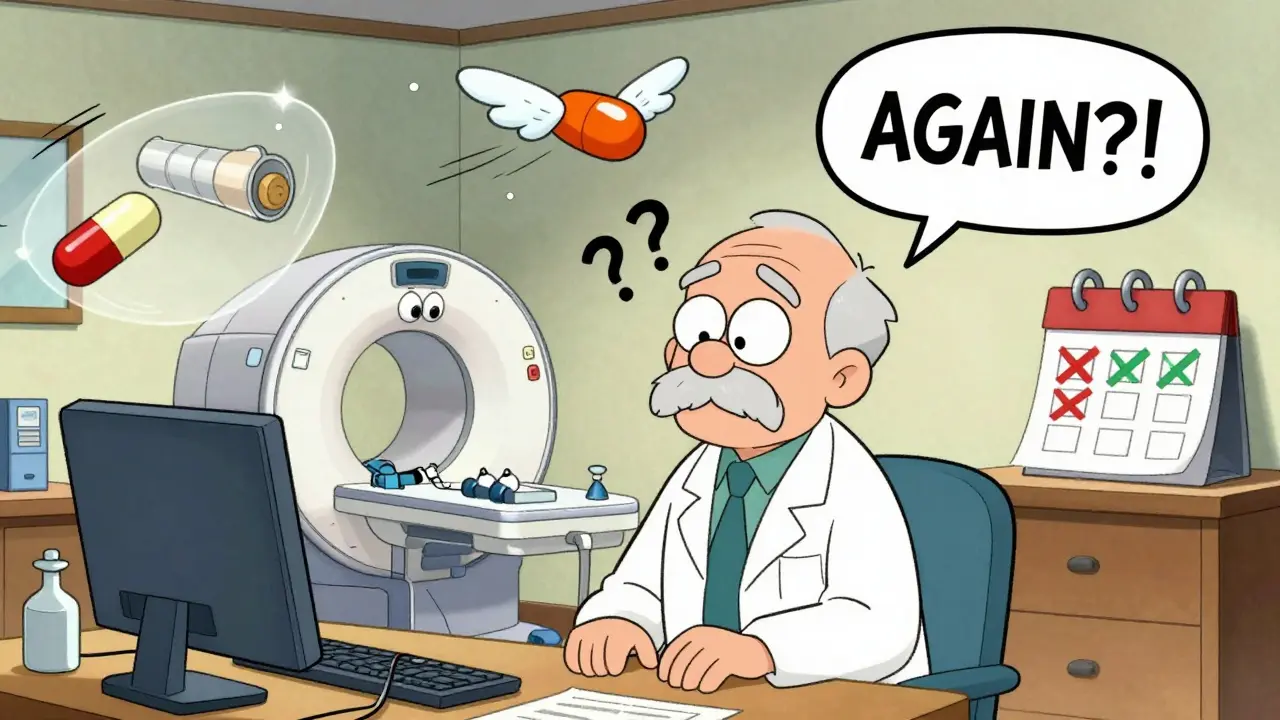
When colonoscopy doesn’t find anything, but bleeding keeps happening, that’s when you move to capsule endoscopy or device-assisted enteroscopy. Capsule endoscopy swallows a tiny camera. It takes pictures as it travels through your small intestine. It finds the source in 62% of cases where colonoscopy failed. But it’s not perfect. About 15% of people have a capsule stuck in a narrowed area they didn’t know about. That’s why some doctors prefer balloon-assisted enteroscopy-it lets them go deeper and even treat what they find.

The Workup: What Doctors Do When You Bleed
When you show up with GI bleeding, the first thing they do is check your vitals. Are you dizzy? Is your heart racing? Is your blood pressure low? These signs tell them how bad it is. Then they run a few basic tests:- Complete blood count (CBC)-to see how low your hemoglobin is. Below 10 g/dL? You’ve lost a lot.
- Coombs test and coagulation panel-to rule out clotting disorders.
- Type and crossmatch-in case you need a blood transfusion.
Then comes the big one: colonoscopy. Done ASAP. Ideally within 24 hours. If you’re unstable, they might use IV fluids and a drug called erythromycin to speed up bowel clearance. You don’t need a perfect prep. You need to see the source.
If the colon looks clean, and you’re still bleeding, they’ll move to CT angiography. This scan uses dye and a powerful X-ray machine to find active bleeding at a rate as slow as 0.5 mL per minute. It’s accurate in 85% of cases. It’s especially useful if you’re too sick for a scope or if the bleeding is coming from the small bowel.
For patients with recurrent bleeding, especially those with angiodysplasia, doctors are now looking beyond endoscopy. Thalidomide, once known for birth defects, is now used off-label at 100 mg daily. In a major study, it cut transfusion needs by 70%. Octreotide, a hormone-like drug, can also help. It tightens blood vessels and reduces flow. Given as a shot three times a day, it works for about 60% of patients.
What Happens After the Bleed?
Diverticular bleeding usually doesn’t come back if you treat the right segment. But if you’ve had one episode, you’re more likely to have another. That’s why some surgeons recommend removing the left colon-where most diverticula live-after a second bleed.Angiodysplasia is different. It’s not a one-off. It’s a condition. Even after successful treatment, up to 40% of patients bleed again within two years. That’s why long-term monitoring matters. Some patients end up needing repeat endoscopies every 6 to 12 months. Others rely on medical therapy to keep bleeding under control.
And here’s something patients don’t talk about enough: the emotional toll. One survey of 243 people with recurrent angiodysplasia found they spent an average of 18 months going from doctor to doctor before getting a diagnosis. Three or more negative colonoscopies? That’s not unusual. It’s frustrating. It’s exhausting. It makes you feel like you’re being ignored.
On the flip side, people with diverticular bleeding often describe it as a one-time crisis. Once it’s treated, they feel relieved. Many say they never had another episode. That’s the good news.
New Tools, Better Outcomes
The field is changing fast. Artificial intelligence is now being built into colonoscopy systems. In a 2022 study, AI flagged angiodysplasia lesions that human eyes missed-boosting detection by 35%. That’s huge. And new endoscopic clips are proving better than heat or injection. One European trial showed 92% success in stopping diverticular bleeding.There’s also a major NIH trial running right now (NCT04567891). It’s comparing thalidomide to placebo for recurrent angiodysplasia. Results are due in late 2024. If it works, this could become standard care.
Survival rates are good. Five-year survival? About 78% for diverticular bleeding, 82% for angiodysplasia. But that’s not because the bleeding itself is harmless. It’s because most patients are older, and their overall health determines their outcome. Managing heart disease, kidney function, and medications like blood thinners matters just as much as stopping the bleed.
What You Should Do
If you’ve had one episode of rectal bleeding:- Don’t ignore it. Even if it stops.
- Get a colonoscopy. Don’t wait. The sooner, the better.
- Ask your doctor about your risk for angiodysplasia-especially if you’re over 65 or have heart valve disease.
- If you’re on blood thinners, discuss whether they need adjustment.
- Keep track of symptoms: fatigue, dizziness, shortness of breath. These could mean slow bleeding.
There’s no magic pill. But with the right tools and a clear plan, most people recover well. The key is acting fast-and knowing what you’re dealing with.
Is lower GI bleeding always serious?
Not always, but it should never be ignored. Many cases stop on their own, especially diverticular bleeding. But even minor bleeding can be a sign of something bigger-like cancer, angiodysplasia, or inflammatory disease. About 10-15% of LGIB cases are caused by tumors. If you’re over 50, you need a full evaluation, even if the bleeding seems mild.
Can angiodysplasia be cured?
Not really. Angiodysplasia is a chronic condition. Endoscopic treatment can stop active bleeding, but new lesions often form over time. That’s why many patients need repeat procedures. Medical therapies like thalidomide or octreotide can reduce frequency, but they don’t eliminate the problem. Long-term management, not cure, is the goal.
Why is colonoscopy done so quickly after bleeding starts?
Because the sooner you find the source, the better your outcome. A 2015 meta-analysis showed that patients who got colonoscopy within 24 hours had a 26% lower death rate than those who waited 48-72 hours. Early endoscopy also allows for immediate treatment. If you’re bleeding, time isn’t just a factor-it’s your biggest ally.
Can I prevent diverticula or angiodysplasia?
Not really. Both are age-related changes. You can’t stop aging. But you can reduce your risk of complications. Eat a high-fiber diet to keep stools soft. Avoid NSAIDs like ibuprofen if you’ve had bleeding before-they can irritate the gut. Stay hydrated. And if you’re on blood thinners, work with your doctor to find the safest dose.
What’s the difference between diverticulitis and diverticular bleeding?
They’re completely different. Diverticulitis is when diverticula get inflamed or infected. You get fever, pain (usually left lower abdomen), and sometimes nausea. Diverticular bleeding is painless. It’s just blood-no pain, no fever. One is an infection, the other is a broken blood vessel. They need totally different treatments.
 Exploring 7 Effective Alternatives to Atarax for Anxiety Relief and Allergy Management
 Cerebral Aneurysm: Understanding Rupture Risk and Modern Treatment Options
 Methoxsalen and Collagen Production: What It Does to Your Skin
 Patient Advocacy by Providers: Supporting Appropriate Generic Medication Use
 How Disulfiram Helps Treat Alcohol-Induced Liver Disease
Simon Critchley
February 10, 2026 AT 17:33Let’s be real-diverticula aren’t just ‘pouches,’ they’re tiny time bombs with a vendetta against your colon. Vessels get stretched like overinflated balloon animals, and BAM-hematochezia outta nowhere. No pain? That’s the sneaky part. It’s like your gut’s whispering, ‘Hey, I’m bleeding,’ while you’re scrolling TikTok. Endoscopy within 24 hours? Non-negotiable. I’ve seen patients wait ‘til Monday and wonder why they almost needed a transfusion on Friday. Pro tip: epinephrine + clip beats cautery 9/10. And yes, 25% rebleed rate? That’s not a bug-it’s a feature of aging. 🤯
Karianne Jackson
February 12, 2026 AT 03:55I saw my grandma bleed out like a faucet and no one told her it could happen again. This is scary stuff. Why isn’t this on TV? Everyone needs to know.
Tom Forwood
February 13, 2026 AT 20:09Yo, I’m a med student in Chicago and this post is gold. Angiodysplasia is such a silent assassin-my grandpa was on warfarin, had zero symptoms, just kept getting paler and tired. They did 3 colonoscopies and missed it. Then he swallowed a capsule camera and boom-right colon’s got 3 little red spots like little stop signs. Took 2 sessions to cauterize ‘em. Thalidomide? Wild. I read a paper where it cut transfusions by 70%. Who knew a drug once banned for birth defects could save old folks’ lives? 🤯
Chelsea Cook
February 14, 2026 AT 05:59So let me get this straight-your colon is basically a 70-year-old with varicose veins… and we’re supposed to be shocked when it leaks? 🙄 Meanwhile, Big Pharma is selling us ‘colon cleanses’ and ‘fiber supplements’ like they’re magic potions. Newsflash: you can’t ‘prevent’ aging. But you can stop ignoring the signs. If you’re over 65 and feel like you’re running on 2% battery? Get checked. Not ‘maybe next week.’ NOW. Your future self will thank you. 💪
John Sonnenberg
February 15, 2026 AT 19:58Colonoscopy within 24 hours? That’s ridiculous. What about patient comfort? What about informed consent? What about the fact that most of these procedures are performed by overworked, underpaid doctors who are rushed? And don’t get me started on AI-now we’re letting algorithms read our guts? Who trained it? What if it misses something? What if it overdiagnoses? What if it’s biased? This is not medicine-it’s a high-tech gamble. And don’t tell me ‘it’s 85% accurate’-I don’t want to be the 15%.
Jessica Klaar
February 16, 2026 AT 22:28I just want to say how much this means to people like me-someone who’s had three negative scopes and still felt like something was wrong. It took 18 months before someone finally did a capsule endoscopy. I cried when they found the lesion. It’s not just physical-it’s emotional. You start doubting yourself. ‘Am I just anxious?’ ‘Is this all in my head?’ This post? It validates us. You’re not crazy. You’re not overreacting. You’re just… bleeding. And that matters. Thank you.
Kathryn Lenn
February 18, 2026 AT 16:13Let’s be honest-this whole system is rigged. Diverticula? Angiodysplasia? Those are just fancy terms for ‘your body is falling apart.’ Who profits? Hospitals. Drug companies. Endoscopy machine manufacturers. Thalidomide? That’s a drug that almost destroyed a generation, now being repurposed to keep old people alive so they keep paying for meds. And AI? It’s not ‘improving detection’-it’s automating the diagnostic treadmill. You’re not getting better care-you’re getting more tests, more bills, more fear. Wake up. This isn’t medicine. It’s a revenue stream.
Randy Harkins
February 18, 2026 AT 17:42This is why I love medicine-real, messy, human, and constantly evolving. I’ve seen patients go from ‘I’m fine’ to ‘I almost died’ in 48 hours. And yeah, some of us are lucky-we get diagnosed fast. But for those who don’t? This info is lifeline material. I’m sharing this with my 72-year-old dad. And I’m telling him: if he sees red, he calls the doc. No waiting. No ‘maybe tomorrow.’ And hey-thanks for mentioning thalidomide. I didn’t know it was being used like this. That’s hope. That’s progress. 🙌