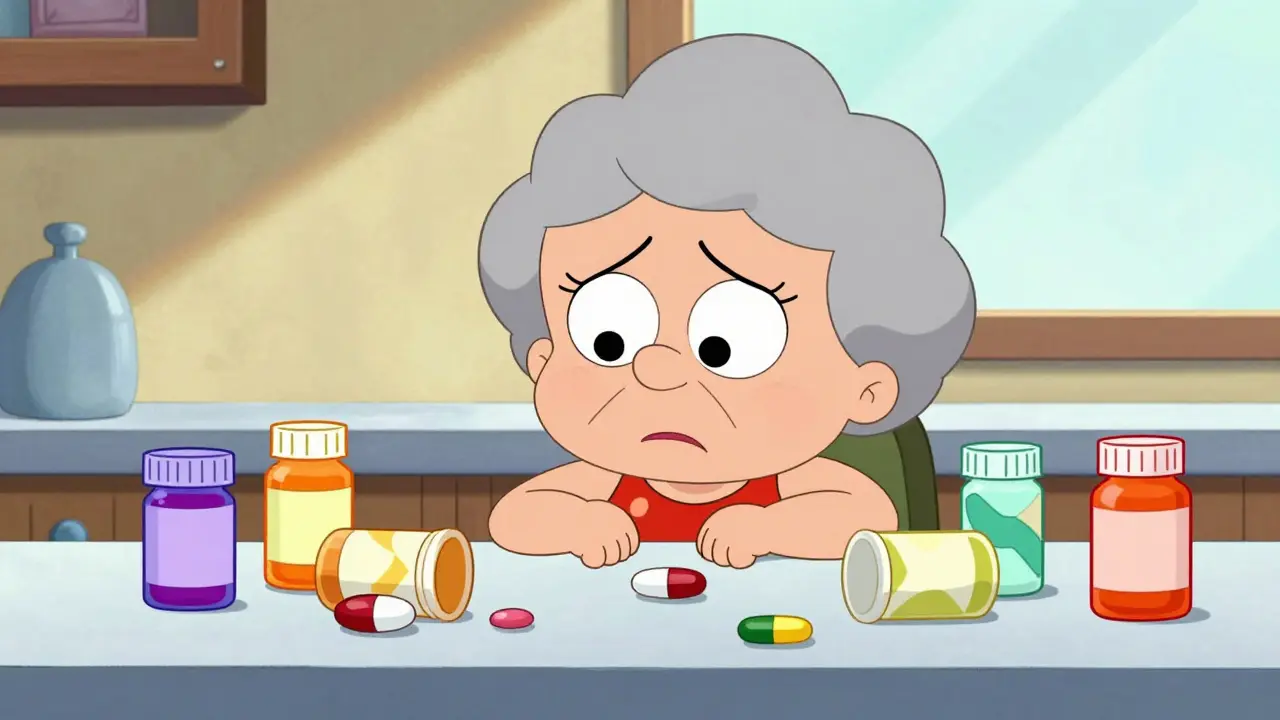
Why Medication Safety at Home Matters
Every year, thousands of people end up in hospitals because of simple mistakes with their medication safety at home. It's not just about forgetting a dose-mixing up pills, taking the wrong amount, or not knowing how to store medicines safely can lead to serious health problems. For older adults managing multiple medications, the risks are even higher. According to the CDC, medication errors contribute to 5% to 41% of hospital admissions. The Partners in Care Foundation reports that medication-related hospital admissions cost between $37.6 billion and $50 billion annually. These errors don't just hurt your health-they strain the healthcare system. For people over 65, 82% take at least two prescription drugs, making them especially vulnerable.
Key Components of a No-Mistake System
Creating a medication safety system isn't complicated, but it does require attention to detail. Here's what works:
Start with a complete medication list. Write down every prescription, over-the-counter drug, vitamin, and supplement. Include dosage, frequency, and why you take it. Update this list before every doctor's visit. The CDC emphasizes this as the first step to prevent errors.
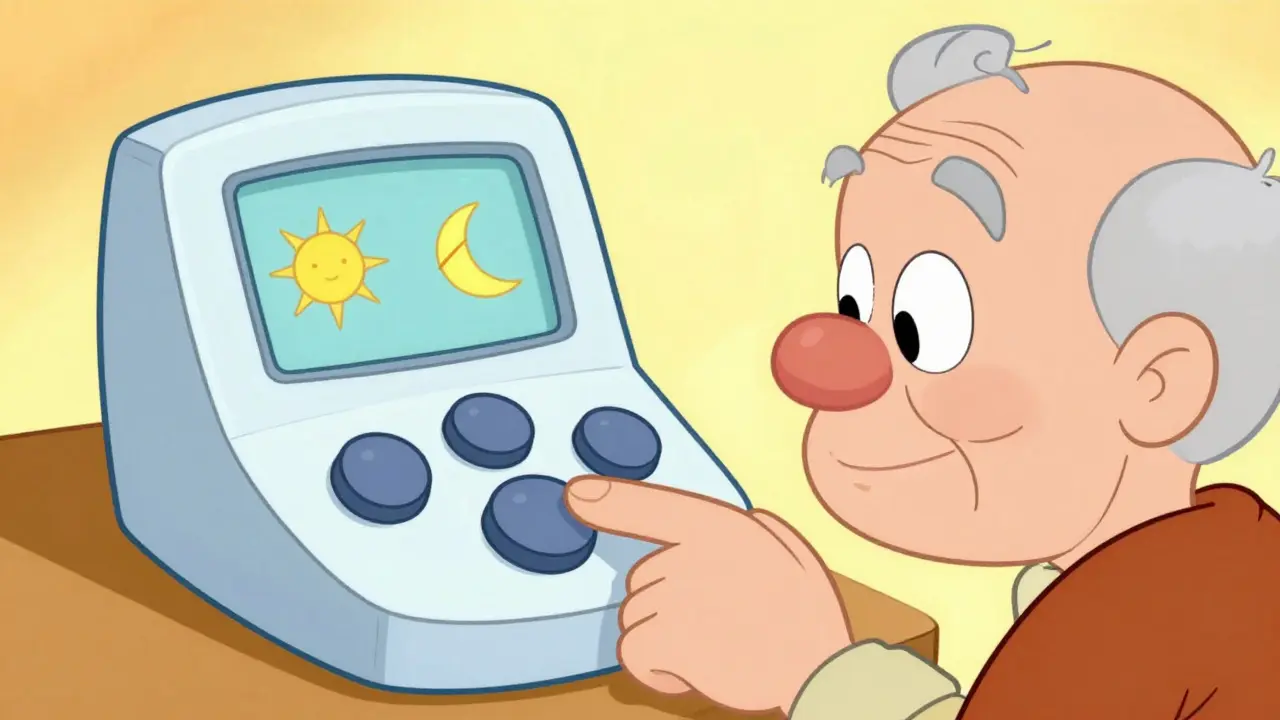
Next, consider a smart medication dispenser. Devices like the Hero dispenser automatically release pills at set times. They have touch screens for reminders and can alert caregivers if a dose is missed. A NIH study found these devices achieve 98% adherence over six months-significantly better than older methods.
Digital platforms like HomeMeds also help. Launched in 2024, HomeMeds uses your smartphone camera to scan medication labels. It tracks what you've taken and flags potential drug interactions. The platform will add AI features in Fall 2025 to cut assessment time by half.
Comparing Medication Safety Systems
| System Type | Cost | Features | Best For | Limitations |
|---|---|---|---|---|
| Basic pill organizers | $5-$25 | Simple compartments for AM/PM doses | Single medication regimens | No reminders or tracking |
| Smart dispensers (e.g., Hero) | $150-$300 upfront + $15-$50/month | Automated dispensing, reminders, caregiver alerts | Multiple daily doses, visual/cognitive challenges | Requires setup assistance |
| Digital platforms (e.g., Ennoble Care) | $50-$100/hour for in-home services | Label scanning, real-time tracking, medication reviews | Complex regimens, frequent changes | Needs professional involvement |
Setting Up Your System Step-by-Step
Follow these steps to create your own no-mistake medication system:
- Inventory all medications: Take 20-30 minutes to list every pill, liquid, cream, and supplement. Include dosage, frequency, and reason for taking. The CDC recommends updating this list before every doctor's visit.
- Simplify where possible: Work with your doctor to reduce the number of daily doses. The NIH study found this step reduces dose times by 23% on average.
- Choose the right system: Match your needs to the system. For simple regimens, a basic pill organizer works. For multiple daily doses, consider a smart dispenser like Hero.
- Set it up: Initial setup takes 2-4 hours. This includes configuring the dispenser, entering medication details, and training caregivers.
- Engage caregivers: Involve family or home health aides. The NIH study showed 76% of successful cases included caregiver involvement.
- Check regularly: Schedule follow-ups every 30-90 days. This ensures the system stays updated with any medication changes.

Common Pitfalls to Avoid
Even with the best system, mistakes can happen. Watch out for these:
- Not updating when medications change: A 2023 study found 32% of patients with complex regimens had trouble when doses were adjusted. Always involve a healthcare provider during changes.
- Ignoring power supply issues: Electronic dispensers need consistent power. Use backup batteries or surge protectors to avoid disruptions.
- Skipping visual or cognitive checks: 42% of older adults have trouble with technology due to vision or memory issues. Choose systems with large buttons or voice assistance.
What's Next in Medication Safety Technology
The field is evolving fast. The NIH is funding a $2.1 million project at Johns Hopkins to develop voice-activated dispensers for visually impaired users. By 2027, 68% of premium systems will include AI-driven interaction checks. However, experts like Dr. Sarah Chen, a geriatric pharmacologist, warn that technology alone isn't enough. She says, "Technology alone cannot solve medication safety issues; patient education and regular medication reviews remain essential components." The CDC's 2023 roadmap also highlights the need for better integration with electronic health records-currently only 32% of home systems can do this.
How often should I update my medication list?
Update your medication list before every doctor's visit and whenever you start or stop a medication. The CDC recommends this to prevent errors. Keep a physical copy in your wallet and a digital version on your phone for emergencies.
Can smart dispensers handle complex medication regimens?
Yes, but they require careful setup. Smart dispensers like Hero can manage multiple daily doses, but regimens with more than four doses per day may need professional help. A 2023 study found 32% of patients with complex regimens experienced usability issues. Always consult a pharmacist or healthcare provider for setup.
What's the best way to store medications at home?
Store medications in a cool, dry place away from sunlight. Keep them in original containers with labels intact. Avoid bathroom cabinets due to humidity. For certain drugs like insulin, refrigeration is needed. Always check storage instructions on the label.
Are there affordable options for low-income seniors?
Yes. Many Medicare Advantage plans now offer home medication management support at no extra cost. Nonprofits like AARP Foundation also provide subsidies for medication safety devices. The National Council on Aging reports that $1 invested in these programs saves $4.30 in healthcare costs, so many programs are expanding access.
How do I know if a medication safety system is right for me?
Ask yourself: Do I take more than two medications daily? Do I have trouble remembering doses? Are there visual or cognitive challenges? If yes, a smart dispenser or digital platform may help. Consult your pharmacist for a free assessment-they can recommend the best fit based on your specific needs.
 Hyaluronic Acid Injections for Knee Osteoarthritis: What Really Works
 Boost Your Immunity and Energy with Bee Pollen: Nature's Miracle Dietary Supplement
 Celiac Disease in Children: Growth, Testing, and Diet Adherence
 How Disulfiram Helps Treat Alcohol-Induced Liver Disease
Katharine Meiler
February 6, 2026 AT 02:17Medication errors are a critical issue; the CDC states they cause 5-41% of hospital admissions. Implementing a structured system is crucial. Smart dispensers like Hero improve adherence to 98% over six months. For older adults on multiple meds, this is non-negotiable.
Danielle Vila
February 6, 2026 AT 15:41Yeah, but have you considered the real reason behind all this? Big Pharma is pushing these "safety systems" to keep us dependent on their drugs. They control the CDC and NIH studies. The $37.6 billion cost? Total BS-actually, they're making billions off the confusion. I've seen reports that these devices are designed to fail so we keep buying more. Wake up people! 😈
Matthew Morales
February 7, 2026 AT 04:02totalll agree! i've had issues with meds before, but this guide is helpful. the hero dispenser sounds cool. just make sure to charge it lol 😅
Georgeana Chantie
February 7, 2026 AT 10:57USA is the only country that gets medication safety right. Other nations have chaos, but we've got the best systems. This guide is good but too soft. We need more military-style precision. 💪
Carol Woulfe
February 9, 2026 AT 05:22Your conspiracy theories are baseless and unscientific. The NIH study is peer-reviewed and transparent. The $37.6 billion figure is well-documented. Your claims lack evidence and are irresponsible. This is not a discussion for conspiracy theorists.
Kieran Griffiths
February 10, 2026 AT 20:27Great point about the medication list. I always recommend writing it down and keeping it updated. Also, involving caregivers is key-76% success rate when they do. Keep it simple and consistent. You've got this!
Tehya Wilson
February 10, 2026 AT 23:23This is pointless.
Brendan Ferguson
February 12, 2026 AT 04:56Medication safety is a multifaceted issue that requires a comprehensive approach. While smart dispensers and digital platforms like HomeMeds are helpful, they're not the only solution. It's important to remember that patient education and regular medication reviews are equally crucial. For instance, a 2023 study by the CDC found that 32% of patients with complex regimens had issues when doses were adjusted, highlighting the need for professional oversight. Additionally, storage conditions play a significant role; keeping medications in cool, dry places away from sunlight prevents degradation. Many people overlook this aspect, leading to ineffective treatments. Furthermore, the integration of home medication systems with electronic health records is still lacking, with only 32% of systems currently capable of this. This gap must be addressed to improve overall safety. In my experience, involving pharmacists in the setup process reduces errors by up to 40%. It's also worth noting that cultural factors influence how patients adhere to medication regimens; in some communities, family involvement is key. For example, in Hispanic cultures, multigenerational households often help manage medications. Similarly, Asian cultures may rely on traditional remedies alongside prescribed drugs, requiring careful coordination. The NIH study on caregiver involvement (76% success rate) underscores this point. Moreover, power supply issues for electronic devices can disrupt medication schedules, so having backup batteries is essential. Finally, while technology is advancing rapidly, it's important not to rely solely on it-human judgment remains irreplaceable. As Dr. Sarah Chen wisely noted, "Technology alone cannot solve medication safety issues; patient education and regular medication reviews remain essential components."
jan civil
February 13, 2026 AT 12:39Medication lists are essential. Update before every visit. Simple but critical step.
Jennifer Aronson
February 14, 2026 AT 22:36Medication safety varies across cultures. In some communities, family involvement is key. This guide's advice on caregiver engagement aligns with global best practices. Well-structured.
Kate Gile
February 16, 2026 AT 17:01Yes! Taking control of your meds is empowering. Start with the list, then build from there. Small steps make a big difference. You're doing great!
Gregory Rodriguez
February 18, 2026 AT 04:44Sure, Brendan. Let's all just "focus on practical solutions" while ignoring the real problems. Because clearly, the $50 billion in costs is just a figment of imagination. 😏
Johanna Pan
February 19, 2026 AT 13:27Medication safety is imporant in all cultures. In my country, we use family to help. This guide is good but needs more cultural examples. Good job though! 😊
Jenna Elliott
February 20, 2026 AT 21:04This is why America is failing. No real safety measures. Just more government nonsense.