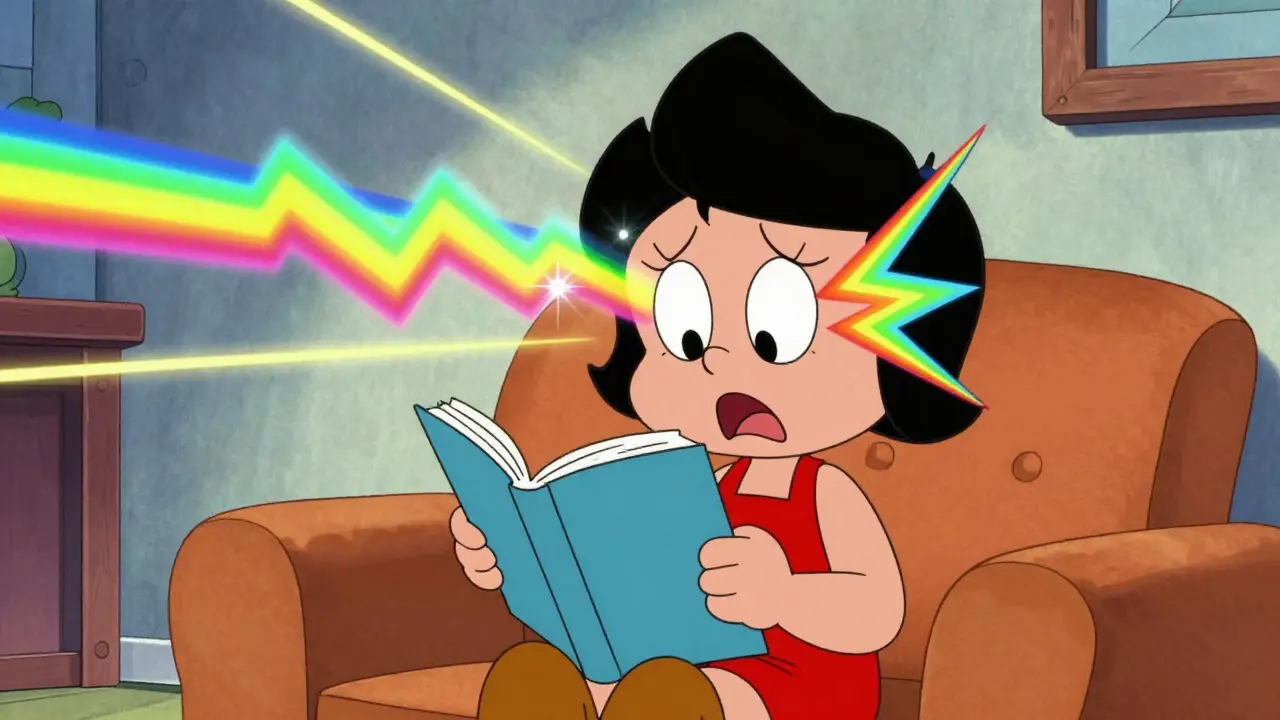
Ocular Migraines is a term frequently used to describe visual disturbances associated with migraines, but clinically it refers to retinal migraines which affect only one eye. While people use the phrase casually, doctors distinguish between Retinal Migraine and Migraine with Visual Aura based on where the problem starts and which eyes are affected.
Is It Your Brain or Your Eye? The Big Difference
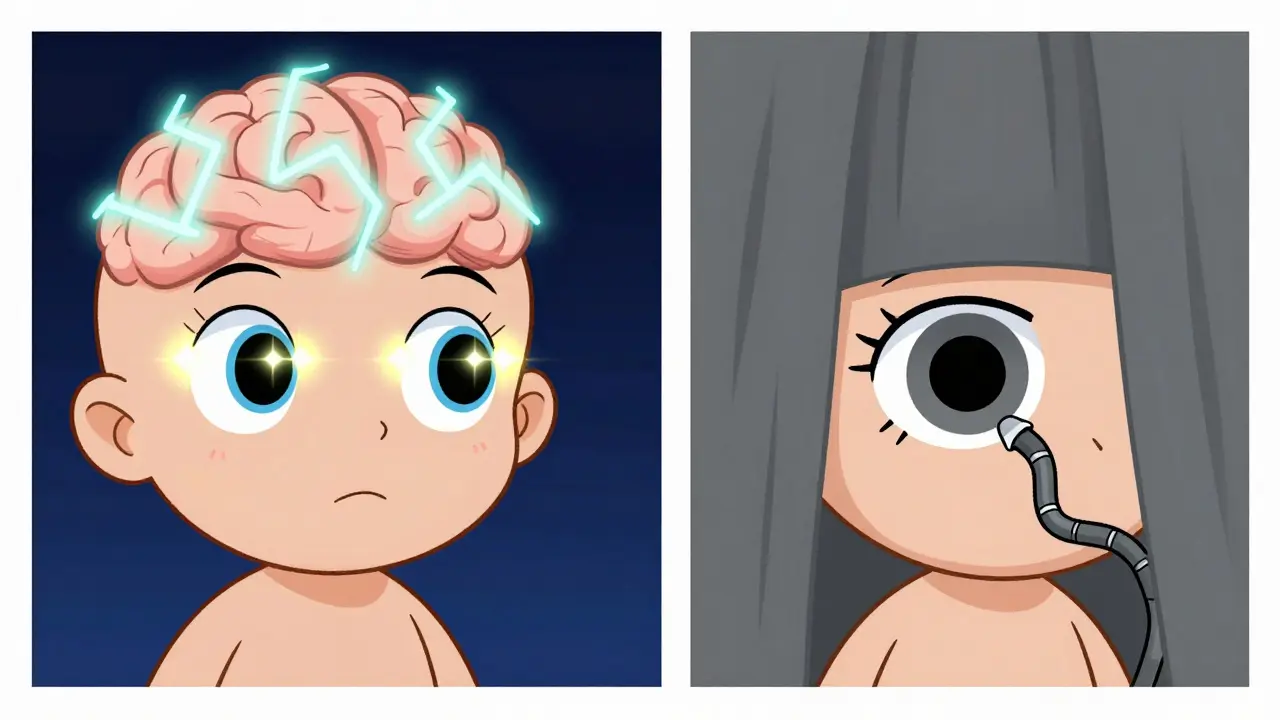
The first thing you need to figure out is whether the visual glitch is happening in one eye or both. This is the "golden rule" of differentiating these conditions. Migraine with Visual Aura happens in the brain's visual cortex. Because your brain processes images from both eyes, the aura appears in both visual fields. If you close your left eye, you still see the flashing lights; if you switch to your right eye, they are still there. This is caused by Cortical Spreading Depression, which is essentially a slow-moving wave of electrical activity that temporarily disrupts your neurons. It's relatively common, affecting about 25% of migraine sufferers.
On the flip side, a true Retinal Migraine is a rare beast-affecting less than 1% of cases. This isn't a brain event; it's a vascular event in the eye itself. It affects only one eye. If you cover the affected eye, the symptoms vanish instantly. This is likely caused by a vasospasm, where the blood vessels in the retina tighten up and restrict blood flow. While a brain-based aura is like a software glitch in your computer, a retinal migraine is more like a kink in the power cord leading to the monitor.
| Feature | Migraine with Visual Aura | Retinal Migraine |
|---|---|---|
| Affected Eyes | Both eyes (Bilateral) | One eye only (Unilateral) |
| Typical Duration | 20 to 60 minutes | 10 to 20 minutes |
| Visual Effect | Zig-zags, flashing lights, shimmering | Graying out, total blindness in one eye |
| Origin | Visual Cortex (Brain) | Retina/Optic Nerve (Eye) |
| Prevalence | Common (~25% of migraines) | Rare (<1% of migraines) |
What Does a Visual Aura Actually Feel Like?
If you have a typical visual aura, the experience usually follows a predictable pattern. It often starts as a tiny flickering point in the center or periphery of your vision. Over about 20 to 30 minutes, this point expands into a "scintillating scotoma"-a shimmering, blind spot surrounded by jagged, rainbow-colored lines. Many people describe these as "fortification spectra" because they look like the walls of an old fortress.
It's not just about sight, though. Because this is a neurological event, you might notice other strange things. About 32% of people experience a sensory aura, like a tingling feeling in their fingertips or face. Some might even struggle to find the right words for a few minutes. Usually, this entire phase acts as a warning signal; once the visual distortions fade, a pounding headache often follows, though some people get the aura without any pain at all (this is called an acephalgic migraine).
Retinal migraines are different. You aren't usually seeing rainbows or zig-zags. Instead, you might experience a "graying out" of vision or a complete loss of sight in one eye. It feels more like a curtain closing over your vision. The pain associated with this is also different; while a standard migraine might feel like a general throb, retinal migraine pain is often concentrated directly behind the affected eye.
Common Triggers: Why Is This Happening Now?
Both types of visual disturbances share similar triggers. Your brain and your blood vessels are both sensitive to a few key things. Stress is the biggest culprit, cited by nearly 80% of patients. When you're under high pressure, your body releases chemicals that can trigger that wave of cortical spreading depression.
Hormones also play a massive role, which is why women are significantly more likely to experience these episodes, particularly between the ages of 35 and 45. Beyond biology, some dietary triggers are surprisingly consistent. Aged cheeses and red wine are classic offenders due to certain compounds that affect blood vessel constriction. Even artificial sweeteners can be a trigger for some. If you've noticed a pattern-like an episode always happening after a glass of Cabernet or a stressful Monday morning-you're already halfway to managing the condition.
When to Worry: The Red Flags
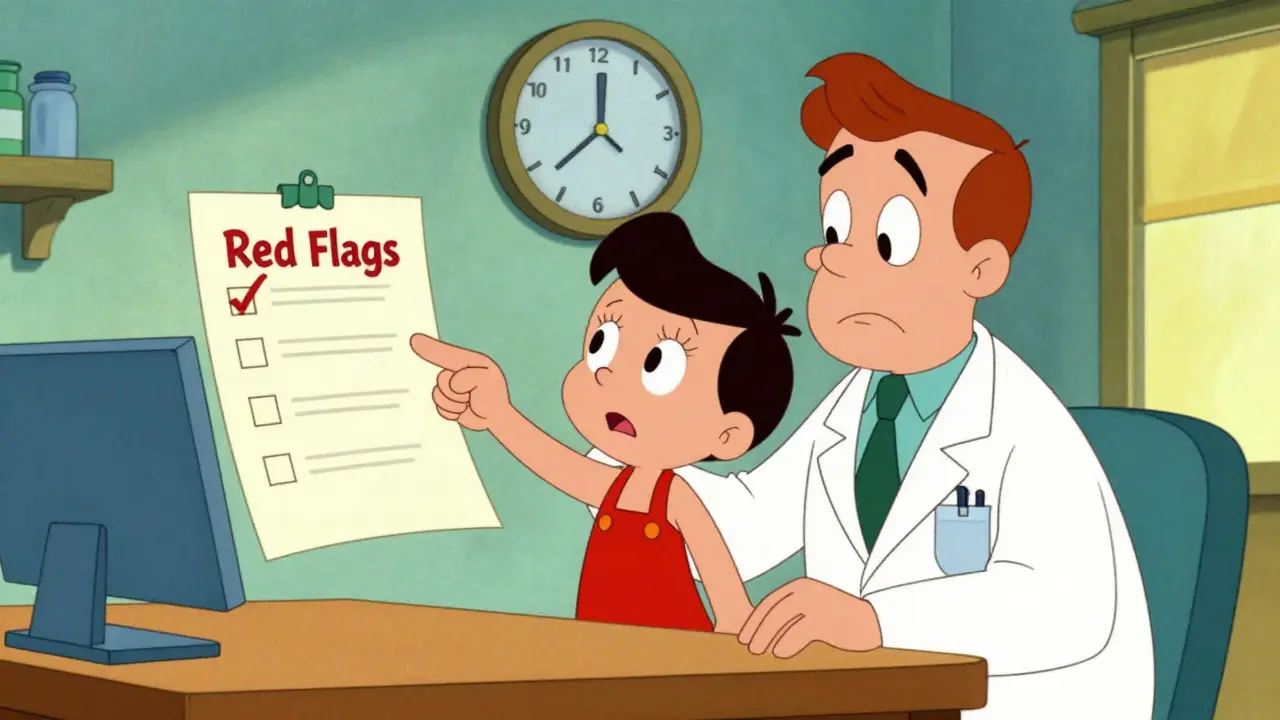
This is the most important part of the conversation. Most visual auras are harmless, but because they mimic strokes and TIAs (Transient Ischemic Attacks), you need to know when to stop waiting it out and head to the ER. Stroke can look exactly like a migraine aura to the untrained eye.
You should seek immediate medical attention if you experience any of the following:
- The 60-Minute Mark: If your visual symptoms last longer than one hour, it's a red flag. Typical auras resolve within an hour; symptoms that linger are more characteristic of a stroke.
- New Onset After 50: If you've never had auras in your life and suddenly start having them after age 50, don't assume it's just a migraine. This is a high-risk indicator for posterior circulation strokes.
- Motor Weakness: If the visual glitch is accompanied by weakness on one side of your body, a drooping face, or an inability to lift your arm, call emergency services immediately.
- The "Silent" Danger: If you have a total loss of vision in one eye without a headache, it could be a retinal artery occlusion (a blockage in the eye's blood supply), which is a medical emergency.
There is also a condition called Giant Cell Arteritis. This is an inflammation of the lining of your arteries. If you are over 50 and have visual disturbances combined with scalp tenderness (it hurts to brush your hair) or jaw pain when chewing, you need an immediate blood test (ESR and CRP). If left untreated, this can lead to permanent blindness within a week.
Managing Your Symptoms and Treatment
Treatment depends entirely on the diagnosis. For those with migraine with aura, doctors often suggest triptans or newer medications called gepants to stop the headache phase. For long-term prevention, beta-blockers or CGRP monoclonal antibodies can reduce how often these episodes happen. Some people find success with 600mg of magnesium daily, which has been shown to reduce aura frequency in clinical trials.
However, there is a critical warning for those with true retinal migraines: avoid vasoconstrictors. Because a retinal migraine is already caused by a narrowing of the blood vessels in the eye, taking a medication that further constricts those vessels (like some triptans) could theoretically increase the risk of ischemia (lack of blood flow) to the retina. This is why getting the correct diagnosis from a neuro-ophthalmologist is non-negotiable.
Lifestyle tweaks are the first line of defense. A consistent sleep schedule is one of the most effective ways to stabilize your brain's excitability. Mindfulness-based stress reduction has also shown a 32% reduction in aura episodes. Essentially, the goal is to keep your nervous system "calm" and avoid the spikes of stress or hormonal shifts that trigger the wave.
Can ocular migraines cause permanent blindness?
For the vast majority of people with migraine with visual aura, the prognosis is excellent, and vision returns to normal. However, true retinal migraines are a different story. Because they involve blood flow to the eye, untreated retinal migraines-especially if they are a symptom of an underlying vascular disease-can occasionally lead to permanent visual field defects. This is why a professional diagnosis is critical.
Why do I see zig-zags during a migraine?
Those zig-zags (fortification spectra) are caused by Cortical Spreading Depression. A wave of electrical activity moves across the visual cortex of your brain. As the neurons are depolarized and then suppressed, your brain interprets this abnormal activity as flashing lights, shimmering lines, or blind spots.
Is it possible to have a visual aura without a headache?
Yes. This is called an "acephalgic migraine" or a "silent migraine." You experience all the visual disturbances, and perhaps some tingling or speech issues, but the actual pain phase never happens. While less distressing than a full migraine, the same "red flag" rules apply-especially if you are over 50.
Does smoking increase the risk of stroke for people with auras?
Yes, significantly. Evidence suggests that women under 45 who experience migraine with aura and also smoke or use oral contraceptives have a 2.16-fold increase in stroke risk. If you fall into this category, it's very important to discuss your risk factors with a doctor.
How can I tell if my vision loss is in one eye or both?
The simplest way is to cover one eye at a time. If the visual disturbance remains exactly the same regardless of which eye is covered, it is bilateral (affecting both eyes) and likely a brain-based aura. If the vision loss disappears when you cover the affected eye and the other eye sees perfectly, the issue is unilateral (one eye) and could be a retinal migraine or another ocular emergency.
 Zithromax Alternatives: 8 Options Explained For Real-Life Treatment Choices
 Routine Monitoring to Catch Medication Side Effects Early: Essential Tests and Timelines
 Benzodiazepine Tapering: Safe Strategies to Reduce Dependence
 Chronic Gastroenteritis: Causes, Symptoms, and Management
 Bioavailability Studies for Generics: What They Test and Why It Matters for FDA Approval