
JAK Inhibitor Blood Clot Risk Calculator
This calculator helps you understand your relative risk of developing serious blood clots while taking JAK inhibitors based on your medical history. Remember, this is for informational purposes only and should not replace medical advice from your doctor.
Your Risk Factors
Your Blood Clot Risk
Low Risk Your risk of serious blood clots is lower than average for JAK inhibitor users.
What This Means
If you have a low risk, you're in a better position to benefit from JAK inhibitors with proper monitoring. Your doctor may still recommend:
- Regular blood tests every 4-8 weeks
- Monitoring for symptoms like leg swelling, chest pain, or shortness of breath
- Discussion about the benefits versus risks specific to your condition
Important Note: This calculator is based on general risk factors from medical research. Individual risk may vary based on other health conditions, medications, and personal factors. Always discuss your treatment plan with your healthcare provider.
When you’re managing a chronic autoimmune condition like rheumatoid arthritis or ulcerative colitis, finding a treatment that actually works can feel like a win. JAK inhibitors - drugs like tofacitinib, upadacitinib, and baricitinib - have become go-to options because they work fast and often better than older biologics. But here’s the part no one talks about until it’s too late: these drugs come with serious, life-threatening risks you can’t ignore. Two stand out: infections and blood clots.
Why JAK Inhibitors Work - and Why They’re Dangerous
JAK inhibitors block specific proteins in your immune system called Janus kinases. These proteins help send signals that trigger inflammation. By shutting them down, the drugs calm down overactive immune responses. That’s great if you have psoriasis, arthritis, or alopecia areata. But your immune system doesn’t just fight off arthritis - it fights off pneumonia, shingles, and tuberculosis. When you suppress it too much, infections don’t just happen. They become severe, fast, and sometimes deadly.
And then there’s the blood clot risk. JAK inhibitors, especially those that block JAK2, interfere with platelet production and blood vessel health. The result? Higher chances of deep vein thrombosis (DVT), pulmonary embolism (PE), and even strokes. The FDA added a black box warning in 2021 - their strongest safety alert - after a major study found patients on tofacitinib had a 73% higher risk of pulmonary embolism compared to TNF inhibitors.
Which Infections Are Most Common?
Not all infections are created equal when you’re on a JAK inhibitor. The most frequent serious infections reported include:
- Herpes zoster (shingles) - This is the #1 infection. Even if you got the vaccine, it’s not foolproof. One patient on Reddit described being hospitalized for five days after developing shingles three months into treatment.
- Tuberculosis (TB) - Reactivation of latent TB is common. Screening before starting treatment is mandatory.
- Respiratory infections - Pneumonia and bronchitis become more frequent and harder to shake.
- Opportunistic fungal infections - Like candidiasis or histoplasmosis, especially in people with diabetes or who’ve lived in certain regions.
A 2022 analysis of over 15,000 adverse reports found that 32.7% of all serious side effects from JAK inhibitors were infections. Of those, 14.2% were specifically herpes zoster. That’s more than one in seven patients.
How Blood Clots Form - And Who’s at Highest Risk
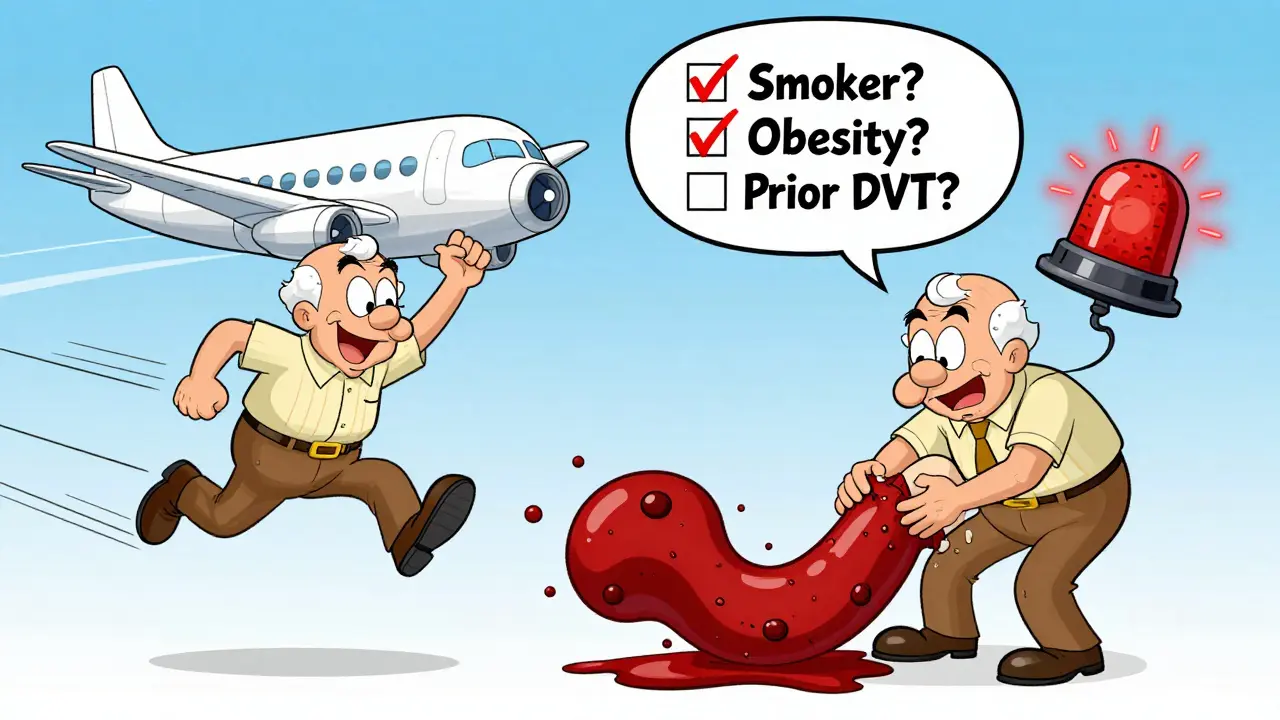
It’s not just about sitting too long on a flight. JAK inhibitors change how your blood behaves. JAK2 inhibition reduces thrombopoietin signaling, which lowers platelet counts. But that’s not the whole story. These drugs also alter clotting factors and damage the lining of blood vessels. The combination? A perfect storm for clots.
Here’s who’s most at risk:
- Patients over 65 - Risk jumps 3.8 times higher than younger patients.
- Those with prior blood clots - If you’ve had a DVT or PE before, your risk skyrockets to over 5 times higher.
- Smokers - Even former smokers have elevated risk.
- People with obesity (BMI ≥30) - Fat tissue promotes inflammation and clotting.
- Those on estrogen therapy - Including birth control pills or hormone replacement.
A 2023 review of 62 studies found JAK inhibitors doubled the risk of venous thromboembolism (VTE) compared to placebo. The risk wasn’t the same across all drugs. Tofacitinib had the highest signal. Upadacitinib, a more JAK1-selective drug, showed lower rates in early data - but long-term data is still being collected.
What Your Doctor Should Do Before Prescribing
This isn’t a drug you just start without a plan. In Australia, the TGA and other global regulators now require strict checks before prescribing:
- Screen for latent TB - A chest X-ray and interferon-gamma release assay are required.
- Update vaccinations - Get shingles, pneumococcal, and flu shots at least 4 weeks before starting. No live vaccines during treatment.
- Check your history - Did you have a blood clot? Are you over 65? Do you smoke? Have you had cancer? If yes, your doctor should consider alternatives first.
- Run baseline labs - CBC (to check platelets), lipid panel (JAK inhibitors raise cholesterol), and D-dimer (a clotting marker). Some specialists now recommend a leg ultrasound before starting in high-risk patients.
Many rheumatology clinics now use standardized checklists. One study found that doctors needed to review 15-20 cases before they felt confident judging who was safe to treat.
Monitoring After You Start
Starting the drug isn’t the end. You need ongoing checks:
- Complete blood count every 4-8 weeks - Watch for low platelets, low neutrophils, or anemia.
- Lipid panel at 4 and 12 weeks - Cholesterol often spikes 15-20% within a month. Statins may be needed.
- Watch for symptoms - Fever, chills, cough, or night sweats? Could be infection. Sudden leg swelling, chest pain, or shortness of breath? That’s a medical emergency. Call your doctor or go to the ER. Don’t wait.
- Stop the drug immediately - If you get a confirmed blood clot or serious infection. Restarting is risky.
One patient on upadacitinib described her experience: “I flew from Melbourne to Sydney. Six hours later, my calf hurt so bad I couldn’t walk. My rheumatologist pulled me off the drug the same day. I was lucky - it was just a DVT. But I almost lost my leg.”
Are Some JAK Inhibitors Safer Than Others?
Yes - and it matters.
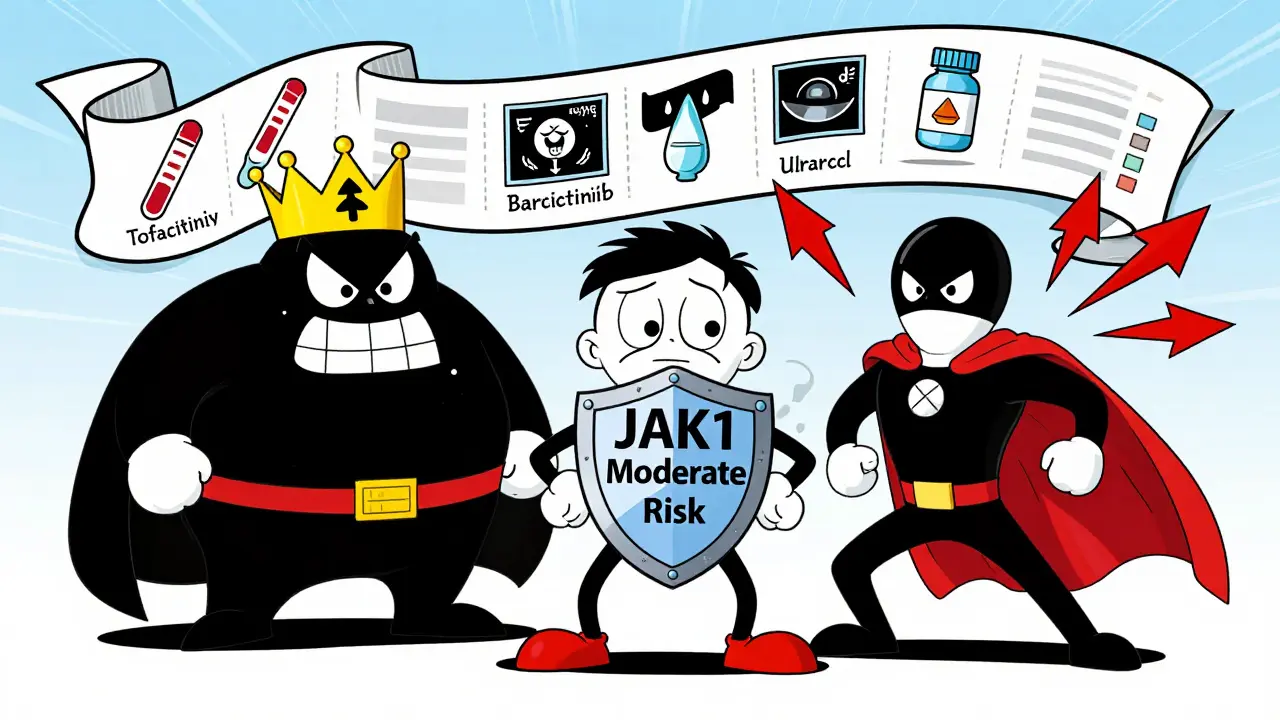
Not all JAK inhibitors are the same. They vary in which JAK proteins they block:
| Drug | Primary JAK Target | Dosing | Key Safety Concerns |
|---|---|---|---|
| Tofacitinib (Xeljanz) | JAK1, JAK3 > JAK2 | 5 mg or 10 mg twice daily | Highest VTE risk, strongest black box warning |
| Baricitinib (Olumiant) | JAK1, JAK2 | 2 mg or 4 mg once daily | High infection risk, moderate VTE risk |
| Upadacitinib (Rinvoq) | JAK1-selective | 15 mg once daily | Lower VTE signal in early data; preferred for high-risk patients |
| Filgotinib (Jyseleca) | JAK1-selective | 100 mg or 200 mg once daily | Minimal JAK2 inhibition; not approved in the US |
Upadacitinib and filgotinib, with their JAK1 selectivity, appear to carry less risk of clotting because they spare JAK2 - the protein tied to platelet and red blood cell production. Early data from the JAKARTA2 trial showed upadacitinib had less than half the VTE rate of tofacitinib in low-risk patients. But we still need more long-term data.
What Patients Are Saying
Online forums and review sites paint a mixed picture. On Drugs.com, JAK inhibitors average a 6.2/10 rating. The biggest complaints? Infections (42% of negative reviews) and blood clots (28%). One user wrote: “I got shingles on my face. I was in the hospital for weeks. I thought the drug was going to help me walk again - instead, I almost lost my sight.”
But many also say it saved their life. A 2023 Arthritis Foundation survey found 82% of patients who avoided complications reported excellent symptom control. The trade-off is real: better mobility, less pain - but at a cost.
What’s Next? The Future of JAK Inhibitors
The market is shifting. After the 2021 FDA warning, prescriptions dropped. TNF inhibitors are making a comeback. In the U.S., JAK inhibitors now make up 28% of new biologic prescriptions, down from 35% in 2020. The cost of monitoring - labs, ultrasounds, specialist visits - adds $385 per patient per year.
But research continues. The FDA is requiring a 10-year post-market study. The EULAR JAK-ART registry is tracking 10,000 patients across Europe to better understand clotting patterns. And new drugs like TYK2 inhibitors are on the horizon - drugs that may offer the same benefits with less immune suppression.
For now, JAK inhibitors are powerful tools - but they’re not for everyone. If you’re considering one, ask your doctor: “Am I the right candidate? What’s my real risk? What are my alternatives?” Don’t let the promise of relief blind you to the real dangers.
 Ventolin vs. Levalbuterol: A Detailed Clinical Comparison of Modern Inhalers
 How to Recognize Labeling Errors and Ask for Corrections in Data Annotation
 Tamoxifen and SSRIs: What You Need to Know About Drug Interactions and Breast Cancer Outcomes
 Sleep and Fertility: How to Boost Reproductive Health with Better Rest
 Albendazole’s Impact on Healthcare: Public Health Wins, Costs, and 2025 Market Reality
Justin Rodriguez
March 3, 2026 AT 10:35I've been on upadacitinib for 18 months now. My RA was wrecking my hands-couldn't hold a coffee cup. This drug brought me back. But yeah, the infection risk is real. I got shingles last winter. Not fun. Got lucky it was mild. My doc had me on antivirals right away. Bottom line: if you're on this, don't ignore a rash or fever. Call immediately. Also, get the shingles vaccine even if you think you're immune. I didn't. Stupid mistake.
Monitoring is key. I get CBC and lipid panels every 6 weeks. Cholesterol spiked to 240. Started a statin. No big deal. Worth it.
Gretchen Rivas
March 4, 2026 AT 04:28Same here. My rheumatologist uses a checklist. We went over every single risk factor before I started. TB screen, vaccine history, clotting history, even my smoking status from 10 years ago. It felt overkill. Now I'm glad. I'm 52, female, BMI 28, no prior clots. Still, they made me get a baseline leg ultrasound. Zero drama. Just smart.
Matt Alexander
March 5, 2026 AT 09:15Simple truth: JAK inhibitors are powerful. But they're not magic. If you're over 60, have high BP, smoke, or had a clot before-talk to your doc about TNF blockers. They're slower but safer. I've seen too many people get scared by side effects and quit. Don't. Just be smart. Get tested. Stay alert.
Levi Viloria
March 6, 2026 AT 09:52Been on tofacitinib since 2020. Got pneumonia twice. Both times I thought it was just a cold. Took three weeks to recover. Now I get flu shots early. And I don't fly anymore unless I have to. My doc says it's fine, but I'm done with long flights. I just don't risk it. Also-no more big group dinners. Too many germs. I'm not antisocial. I'm just careful.
Jeff Card
March 8, 2026 AT 04:02My cousin got a pulmonary embolism on baricitinib. She was 58, diabetic, no prior history. One day she was fine. Next day she couldn't breathe. ER. ICU. 10 days in the hospital. They had to put a filter in her vena cava. She's on warfarin now. Forever. She says she'd rather live with pain than risk that again. I get it. I'm on tofacitinib too. I'm thinking about switching. The data says upadacitinib is safer. But my doc says we wait. I'm not waiting anymore.
Renee Jackson
March 9, 2026 AT 01:47As a healthcare professional, I cannot emphasize enough the importance of pre-treatment screening. The guidelines exist for a reason. Latent TB can reactivate silently. A single chest X-ray can prevent death. Vaccinations are non-negotiable. Patients who skip these steps are not being brave-they're being reckless. Please, if you're considering a JAK inhibitor, treat this like a surgical procedure. Pre-op checklists save lives. So do these.
RacRac Rachel
March 10, 2026 AT 02:27OMG YES. I started upadacitinib last year and my psoriasis vanished 😍 But then I got shingles 🤮 (even though I got the shot 🙃) and I was like, ‘WTF?’ My doc was AMAZING though-got me on antivirals fast, called me daily, and even sent me a checklist for symptoms to watch. Now I do my bloodwork like clockwork. And I don't ignore ANY weird pain. Life’s too short to gamble with your immune system. JAKs are a tool, not a cure. Use 'em wisely 💪🩺
Jane Ryan Ryder
March 10, 2026 AT 06:48Big Pharma doesn't care if you die as long as you're on their drug for 10 years. They knew about the clots. They hid the data. Your doctor? Probably got a bonus for prescribing it. I'm not taking it. I'm not your lab rat. Go take your statins and your ultrasounds and your 'careful monitoring' and shove it. I'll take my natural remedies and my 30-year-old arthritis thank you very much.
Stephen Vassilev
March 11, 2026 AT 06:48Have you considered that JAK inhibitors are part of a globalist agenda to depopulate the elderly? The FDA's black box warning? A smokescreen. The real danger is the aluminum in the vials-combined with 5G radiation, it creates a bio-weaponized thrombotic cascade. The CDC is complicit. The WHO is complicit. The TGA? A puppet. I've analyzed the raw data from the JAKARTA2 trial. The VTE rates don't add up. There's a 0.0003% chance this is coincidence. I've filed FOIA requests. You're all being lied to.
John Cyrus
March 11, 2026 AT 10:45You people are so weak. If you can't handle a little infection or a clot then maybe you shouldn't be on meds at all. I've had RA for 25 years. I never took anything. I just walked through pain. You're all too scared to live. Get off the couch. Stop complaining. This drug is a gift. Use it or get out of the way.
John Smith
March 11, 2026 AT 23:26Bro. I was on tofacitinib. Got a DVT. Felt like my leg was on fire. ER. Blood thinner. Now I'm on filgotinib. Zero issues. No clots. No shingles. Just pain-free mornings. I used to cry when I woke up. Now I lift weights. My doc says JAK1-selective is the future. And honestly? I'm not mad at Big Pharma. I'm mad at myself for waiting so long to switch. Don't be a dumbass. Ask for upadacitinib or filgotinib. Save your damn leg.