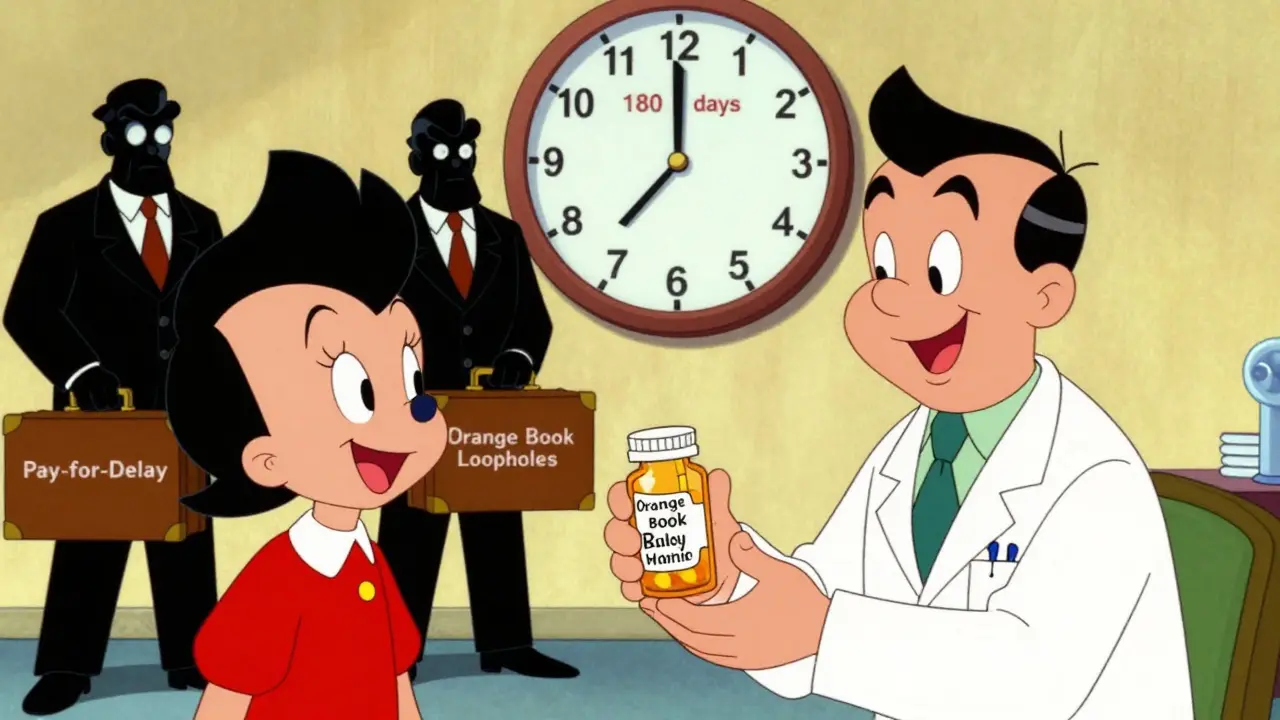
When you walk into a pharmacy and pick up a generic version of a prescription drug, you’re benefiting from a decades-old legal framework designed to keep drug prices low. But behind that simple act lies a complex battle between innovation, profit, and fair competition - one that antitrust laws are meant to police. In the U.S., generic drugs now make up 90% of all prescriptions filled, saving consumers over $200 billion in a single year. That’s not luck. It’s the result of the Hatch-Waxman Act of 1984, a law that tried to balance the needs of brand-name drugmakers with the public’s right to affordable medicine. But over time, loopholes, legal tricks, and corporate strategies have emerged to undermine that balance - and regulators are finally catching on.
How the Hatch-Waxman Act Was Supposed to Work
Before 1984, getting a generic drug approved was nearly impossible. Companies had to repeat the same expensive clinical trials that the original maker had already done. The Hatch-Waxman Act changed that. It let generic manufacturers file an Abbreviated New Drug Application (ANDA), proving their drug was bioequivalent to the brand-name version without redoing all the testing. In return, they had to certify whether they believed the branded drug’s patents were invalid or wouldn’t be infringed. The law gave the first generic company to file a Paragraph IV certification - meaning they challenged a patent - 180 days of exclusive market access. That was the incentive: be the first to break the patent, and you get to be the only generic seller for half a year. That’s when prices usually drop the most. The FTC found that the first generic entry cuts prices by at least 20% in a year. With five competitors on the market, prices can fall by 85%. This system worked. By 2016, generics accounted for 90% of prescriptions. Between 2005 and 2014, they saved U.S. consumers $1.68 trillion. But as savings grew, so did the temptation to block them.Pay-for-Delay: The Biggest Threat to Generic Competition
The most notorious tactic is called “pay-for-delay.” It sounds absurd: a brand-name company pays a generic maker to stay out of the market. But it happens. And it’s legal - or at least, it used to be. Here’s how it works: a generic company files a Paragraph IV challenge. The brand-name company sues for patent infringement. Instead of letting the courts decide, they settle. The brand pays the generic millions - sometimes hundreds of millions - to delay launching its cheaper version. The generic gets a big payout. The brand keeps its monopoly. Patients pay more. The Supreme Court finally took notice in 2013 with FTC v. Actavis. The court ruled these deals could violate antitrust laws if they involve “large, unexplained reverse payments.” That didn’t make them illegal overnight, but it opened the door for regulators to challenge them. Since then, the FTC has pursued 18 pay-for-delay cases between 2000 and 2023, with settlements totaling over $1.2 billion. One of the biggest was in 2023, when Gilead Sciences paid $246.8 million to settle allegations it paid a generic maker to delay an HIV drug. The case wasn’t just about money - it was about access. Thousands of patients waited longer for affordable treatment because of a corporate deal.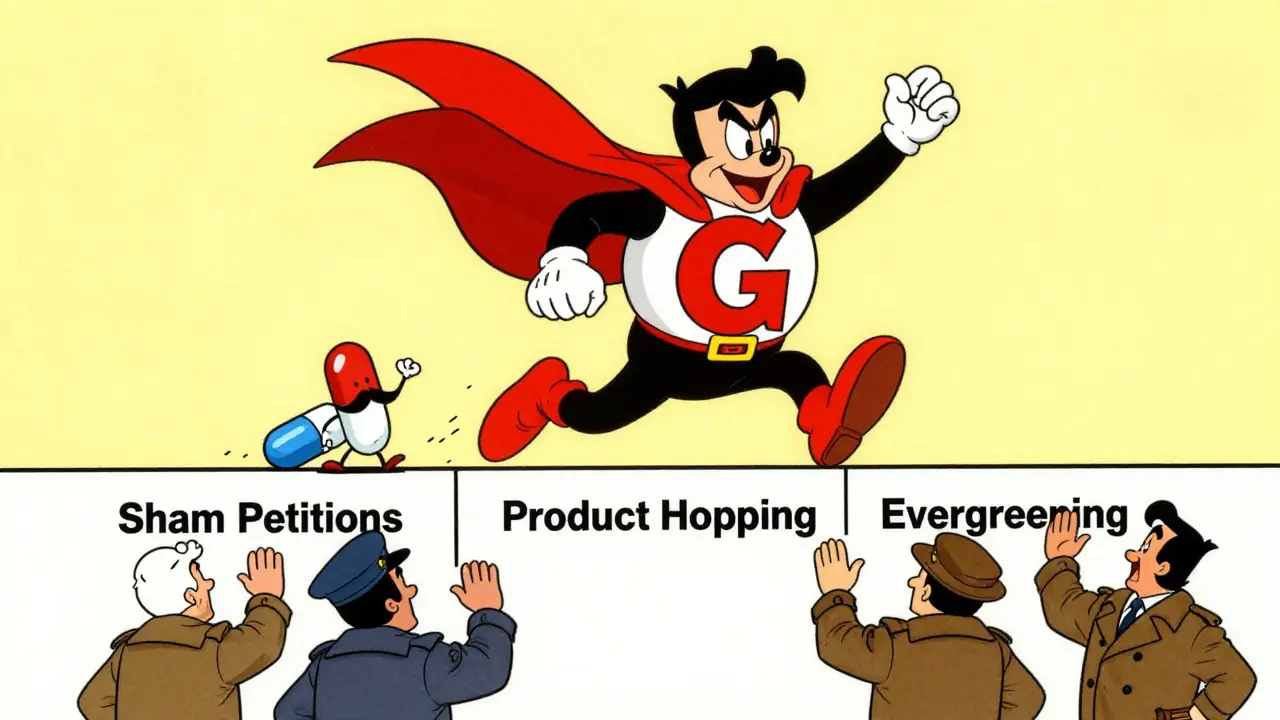
Other Tricks: Product Hopping, Sham Petitions, and Patent Thickets
Pay-for-delay isn’t the only game in town. Companies have gotten creative. One tactic is “product hopping.” A brand-name company makes a tiny change to its drug - say, switching from a pill to a tablet, or adding a coating - right before the patent expires. Then it markets the new version as “improved” and pushes doctors and pharmacies to switch. Patients who can’t afford the new version are stuck paying full price for a drug that’s barely different. The AstraZeneca Prilosec/Nexium case is the classic example. Prilosec was losing patent protection. Nexium came out - essentially the same molecule, just slightly modified. Sales shifted. Generics couldn’t enter the market as quickly. The FTC called it a strategy to “extend monopolies.” Then there are “sham citizen petitions.” Companies file formal complaints with the FDA, claiming a generic drug is unsafe or ineffective. These petitions are often baseless, but they tie up the approval process for months or years. In 2023, the FTC sued Teva Pharmaceuticals for filing dozens of these petitions to delay generic versions of its multiple sclerosis drug Copaxone. The case is still pending. And then there’s the “Orange Book” - the FDA’s official list of patents for brand-name drugs. Companies sometimes list patents that don’t even cover the drug’s active ingredient, just the packaging or manufacturing method. These are called “evergreening” tactics. In 2003, the FTC fined Bristol-Myers Squibb for improperly listing patents to block generics. The list isn’t just a directory - it’s a weapon.Global Differences: How Europe and China Handle It
The U.S. isn’t alone in this fight, but it’s not the only way. In the European Union, regulators focus more on regulatory manipulation. Companies have been accused of withdrawing marketing authorizations in certain countries to prevent generics from entering. Others make false claims to patent offices to extend protection. The European Commission found that delays in generic entry cost European consumers €11.9 billion a year. Between 2018 and 2022, 60% of its 27 pharmaceutical antitrust cases involved blocking generic competition. China took a hardline approach in January 2025 with its new Antitrust Guidelines for Pharmaceutical Sector. It identified five “hardcore restrictions” that are automatically illegal: price fixing, output limits, market division, joint boycotts, and blocking new technology. By Q1 2025, six cases had been penalized - five involved price fixing through messaging apps and algorithms. Chinese authorities are now using AI to track pricing patterns across online pharmacies and detect collusion in real time. The U.S. still leads in enforcement volume, but China’s aggressive, tech-driven approach could become the model for the future.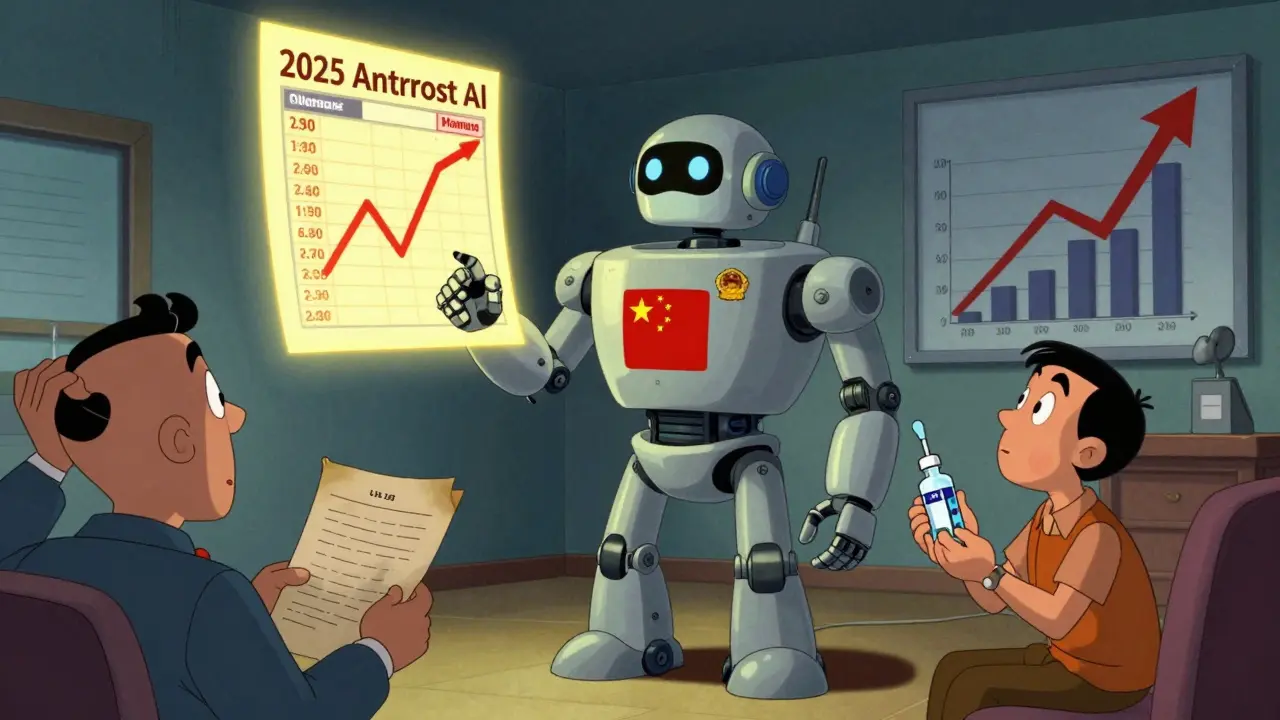
Who Really Pays the Price?
It’s easy to think of antitrust cases as abstract legal battles. But the real cost is felt by patients. A 2022 Kaiser Family Foundation survey found that 29% of U.S. adults skipped or cut back on medication because of cost. That’s not just inconvenience - it’s health risk. When generics are delayed, people don’t just pay more. They don’t take their drugs at all. The Congressional Budget Office estimates generic competition reduces drug prices by 30% to 90%. That’s not a small difference. For someone on insulin, a 70% price drop could mean the difference between life and death. For someone managing high blood pressure, it could mean sticking to their regimen instead of stopping because they can’t afford it. And it’s not just individuals. Hospitals, insurers, and government programs like Medicare and Medicaid pay billions more when generics are blocked. Those costs get passed on - through higher premiums, taxes, or reduced services.What’s Next? The Fight Isn’t Over
The FTC is pushing for stronger rules. In 2022, it held a workshop on “Generic Drug Entry after Patent Expiration,” highlighting how product hopping and sham petitions still work. There’s growing pressure to reform the Orange Book system, so only relevant patents are listed. Some lawmakers want to ban pay-for-delay outright. Meanwhile, generic manufacturers are getting smarter. They’re using data to prove their drugs are just as safe. They’re filing more Paragraph IV challenges. And they’re teaming up with patient advocacy groups to push back against misleading marketing. But the biggest change might come from technology. AI is already being used in China to detect price collusion. In the U.S., regulators are exploring similar tools to spot suspicious patent filings or unusual settlement patterns. The next frontier isn’t just law - it’s data. The system was built to save lives. It still can - if we don’t let corporate loopholes erase its purpose.What is the Hatch-Waxman Act and how does it affect generic drugs?
The Hatch-Waxman Act of 1984 created a legal pathway for generic drug manufacturers to bring cheaper versions of brand-name drugs to market without repeating expensive clinical trials. It lets generics file an Abbreviated New Drug Application (ANDA) and gives the first company to challenge a patent 180 days of exclusivity. This system boosted generic drug use from 19% of prescriptions in 1984 to 90% today, saving consumers over $1.6 trillion since 2005.
What are pay-for-delay agreements and why are they illegal?
Pay-for-delay agreements happen when a brand-name drug company pays a generic manufacturer to delay launching its cheaper version. These deals prevent competition, keeping prices high. The U.S. Supreme Court ruled in 2013 that such agreements can violate antitrust laws if they involve large, unexplained payments. Since then, the FTC has sued over 18 cases, with settlements totaling more than $1.2 billion.
How do companies use patent listings to block generics?
Brand-name companies list patents in the FDA’s Orange Book - even ones that don’t cover the drug’s active ingredient, like packaging or method-of-use patents. This creates barriers for generics, since they must certify against all listed patents. The FTC fined Bristol-Myers Squibb in 2003 for this tactic, calling it an abuse of the system designed to delay competition.
What is product hopping and how does it hurt consumers?
Product hopping is when a drugmaker makes a minor change to its medication - like switching from a pill to a tablet - right before the patent expires. It then markets the new version as superior and pushes doctors to switch prescriptions. This delays generic entry because the old version becomes harder to access. The AstraZeneca Prilosec/Nexium case is a well-known example, where patients were forced to pay more for a nearly identical drug.
How does China’s 2025 antitrust policy differ from the U.S. approach?
China’s 2025 Antitrust Guidelines for Pharmaceutical Sector treat five practices - including price fixing and blocking new technology - as automatically illegal. It’s more aggressive than the U.S., which relies on case-by-case lawsuits. China also uses AI to monitor pricing on online platforms and detect collusion in real time. As of Q1 2025, six cases had been penalized, five involving digital price-fixing via messaging apps and algorithms.
Why do delayed generic entries affect patient health?
When generics are blocked, drug prices stay high. A 2022 Kaiser Family Foundation survey found 29% of U.S. adults skipped or cut back on medication because of cost. For chronic conditions like diabetes or hypertension, missing doses can lead to hospitalizations or death. Generic competition can reduce prices by 30% to 90%, making life-saving drugs accessible to millions who otherwise couldn’t afford them.
What role do sham citizen petitions play in delaying generics?
Sham citizen petitions are fake complaints filed with the FDA, claiming a generic drug is unsafe or ineffective. These petitions don’t have scientific merit but tie up the approval process for months or years. In 2023, the FTC sued Teva Pharmaceuticals for filing dozens of these petitions to delay generic versions of its multiple sclerosis drug Copaxone. The case is ongoing, but it shows how regulatory systems can be weaponized to protect profits.
 Why Generic Drug Prices Vary So Much Between States
 Compare Isoptin (Verapamil) with Alternatives: What Works Best for Heart Conditions
 How to Check for Drug Interactions Before Starting New Medications: A Simple Step-by-Step Guide
 Levonorgestrel Explained: Complete Guide to Uses, Safety, and How It Works
 Insulin Therapy Side Effects: Managing Hypoglycemia and Weight Gain
Malik Ronquillo
January 23, 2026 AT 08:27Brenda King
January 24, 2026 AT 01:20Keith Helm
January 24, 2026 AT 21:54Daphne Mallari - Tolentino
January 25, 2026 AT 14:19Alec Amiri
January 26, 2026 AT 02:38Lana Kabulova
January 27, 2026 AT 09:47arun mehta
January 28, 2026 AT 04:49Chiraghuddin Qureshi
January 28, 2026 AT 13:23Patrick Roth
January 29, 2026 AT 17:14Kenji Gaerlan
January 31, 2026 AT 15:04Oren Prettyman
February 1, 2026 AT 12:08Tatiana Bandurina
February 3, 2026 AT 04:03Philip House
February 4, 2026 AT 21:30