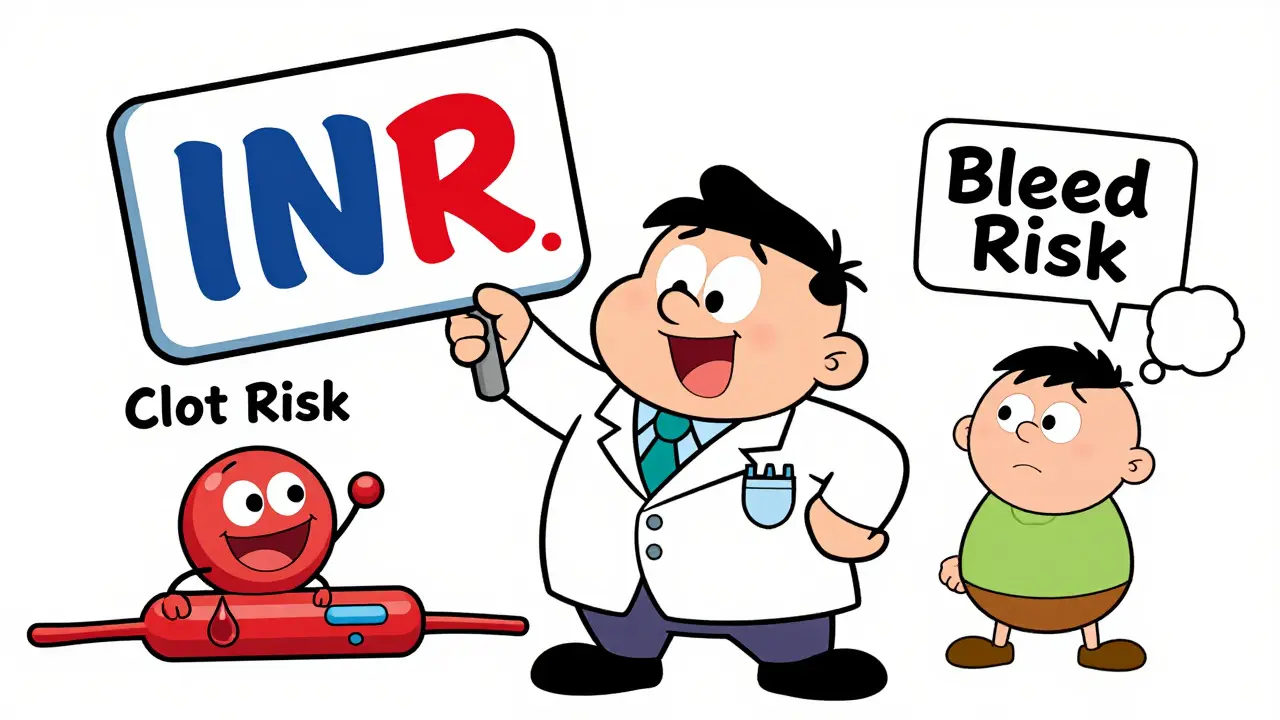
When your blood clots too easily-or doesn’t clot enough-it can be life-threatening. Clotting disorders aren’t just one condition; they’re a group of problems that can lead to strokes, heart attacks, or dangerous clots in the legs and lungs. At the same time, treating them with blood thinners carries its own risks: too much thinning, and you bleed. The balance is delicate, and the tools we use to manage it-like INR tests and DOACs-are changing how care is delivered. If you or someone you know is on blood thinners, understanding how these work-and what to watch for-isn’t just helpful. It’s essential.
What INR Really Measures
INR stands for International Normalized Ratio. It’s not a fancy term. It’s a simple number that tells doctors how long it takes your blood to clot. The higher the number, the longer it takes. For most people on warfarin, the target is between 2.0 and 3.0. That’s the sweet spot: low enough to avoid clots, high enough to prevent dangerous ones. But if your INR goes above 4.0, your risk of major bleeding jumps 2.5 times, according to data from the New England Journal of Medicine. That’s why weekly blood tests are common when starting warfarin. Once stable, you might test every 2 to 4 weeks.
Why does INR matter so much? Because warfarin’s effect varies wildly from person to person. Your genes, what you eat, even your liver function can change how it works. The CYP2C9 and VKORC1 gene variants explain up to half the difference in how much warfarin someone needs. A 65-year-old woman who eats a lot of leafy greens might need a completely different dose than her neighbor who avoids spinach. That’s why warfarin requires constant monitoring. No other blood thinner does.
DOACs: The New Normal
Direct oral anticoagulants-DOACs-changed everything. Drugs like apixaban (Eliquis), rivaroxaban (Xarelto), dabigatran (Pradaxa), and edoxaban (Savaysa) came on the market between 2010 and 2015. They don’t need INR checks. You take the same dose every day. No diet changes. No frequent blood draws. For most people with atrial fibrillation (AFib) who aren’t on mechanical heart valves, DOACs are now the first choice, according to the American Heart Association and American College of Cardiology guidelines from 2019.
Here’s why: apixaban cuts major bleeding risk by 31% compared to warfarin, based on the ARISTOTLE trial. Rivaroxaban and dabigatran are also effective, but they carry a higher risk of stomach bleeding-25% to 30% more than apixaban, according to real-world data from the American Academy of Family Physicians. And while all DOACs are more expensive than warfarin ($350-$550 per month versus $4-$30), most patients say the convenience is worth it. A 2023 Cleveland Clinic survey found 92% of DOAC users were satisfied. Eighty-seven percent said they liked not needing regular blood tests.
But DOACs aren’t perfect. They’re cleared through the kidneys. If your creatinine clearance drops below 15-30 mL/min, you can’t use them. Elderly patients or those with kidney disease often can’t take them. And if you bleed? Reversal agents exist, but they’re expensive. Andexanet alfa, used to reverse apixaban and rivaroxaban, costs about $18,000 per dose. Idarucizumab for dabigatran runs $5,000 per vial. Insurance often covers them, but out-of-pocket costs can be brutal if you’re uninsured.
When Warfarin Still Wins
Despite all the hype around DOACs, warfarin hasn’t disappeared. It’s still the only option for two key groups: people with mechanical heart valves and those with moderate-to-severe mitral stenosis. DOACs simply don’t work well in these cases. The data doesn’t support them. The 2019 AHA/ACC/HRS guidelines give warfarin a Class I recommendation-meaning it’s the standard-for these patients.
There’s also cancer-related clotting. For people with gastrointestinal or genitourinary cancers, low molecular weight heparin (LMWH) injections are still preferred over DOACs. The Hokusai VTE Cancer trial showed DOACs increase bleeding risk by 55% in these patients. That’s why oncologists often stick with daily injections for now.
And cost. For many, especially Medicare beneficiaries without supplemental insurance, DOACs are unaffordable. A 2023 JAMA Internal Medicine study found 28% of Medicare patients stopped their DOAC within a year because they couldn’t afford it. Warfarin, at $25 a month with a copay, is still the only option for some.
Safety First: Bleeding Risks and What to Watch For
All anticoagulants increase bleeding risk. That’s the trade-off. Bruising is common-78% of users report it. But serious bleeding? That’s the real fear. Signs include:
- Unexplained bruising or large bruises
- Bleeding gums or nosebleeds that won’t stop
- Dark, tarry stools or blood in stool
- Red or pink urine
- Severe headaches, dizziness, or weakness (could mean brain bleed)
- Heavy menstrual bleeding
If you’re on warfarin and your INR hits 4.0 or higher, your doctor will likely hold your dose and give you vitamin K. For DOACs, there’s no quick fix. That’s why timing matters. If you’re having surgery, you need to stop DOACs 24-48 hours beforehand. For warfarin? You stop 5 days before, and often need a bridge with heparin or LWMH to keep you protected.
One overlooked risk? Spinal procedures. The FDA has boxed warnings for DOACs and epidural catheters. An epidural hematoma-bleeding around the spinal cord-is rare, but it can cause permanent paralysis. That’s why doctors check your last dose and kidney function before any spinal needle or catheter placement.
Real People, Real Choices
Juliet, a nurse, ignored her own symptoms of a pulmonary embolism because she was focused on her child. She wasn’t alone. Reddit threads on r/anticoagulants show the same pattern: people who know the risks still forget to take their meds. One user wrote, “I missed a dose of Eliquis for three days. I didn’t think it mattered. I almost got a clot.”
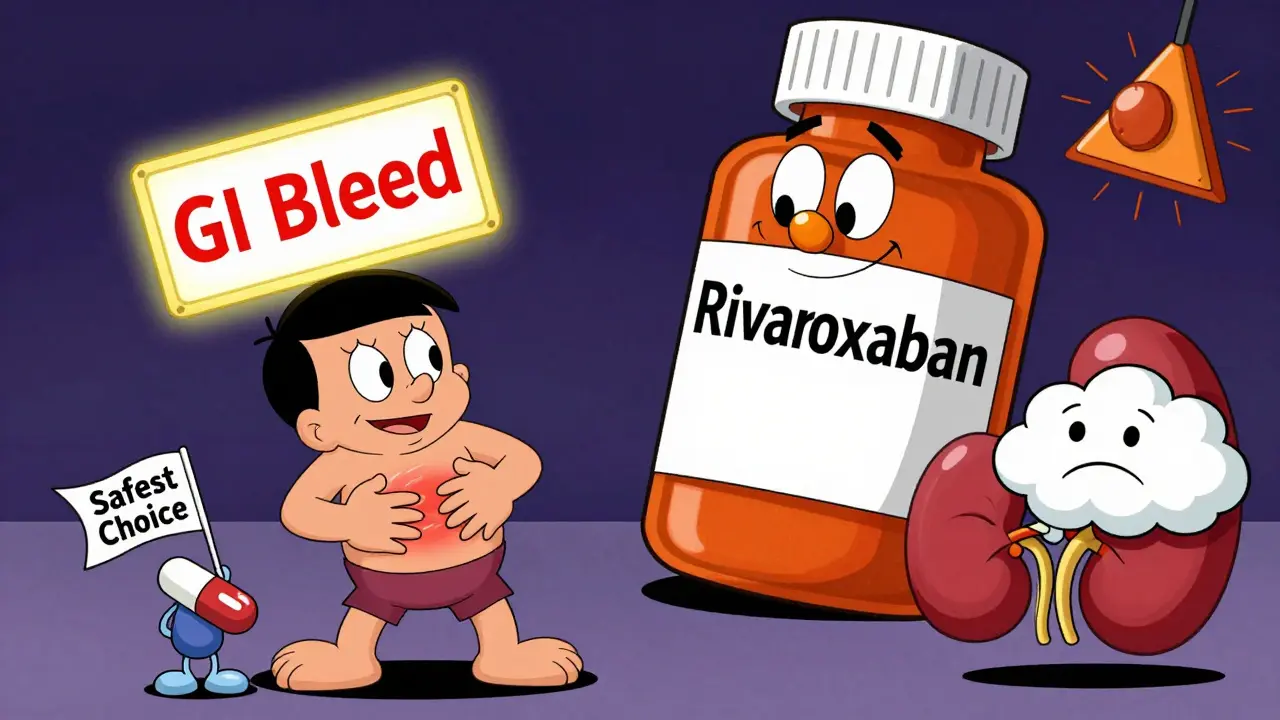
Another common issue? GI side effects. In a 2022 Hematology.org survey, 41% of rivaroxaban users reported stomach pain or nausea. Apixaban users? Only 18%. That’s why some patients switch-even if their doctor didn’t suggest it.
And adherence. A 2023 study found 30% of DOAC users missed at least one dose per week. Why? Cost. Side effects. Forgetfulness. But skipping doses increases clot risk. For AFib patients, missing even one dose can raise stroke risk by 20%.
What’s Next? The Future of Blood Thinners
New drugs are coming. Milvexian, a factor XIa inhibitor, showed 22% less bleeding than apixaban in phase 2 trials. It’s not approved yet, but it’s promising. Researchers are also testing RNA-based drugs like fitusiran, which targets antithrombin. If it works, it could offer long-lasting protection with fewer doses.
And then there’s AI. A 2023 Nature Medicine study showed an algorithm could predict bleeding risk with 82% accuracy by analyzing age, kidney function, medications, and past bleeding history. That’s not science fiction-it’s coming to clinics soon.
For now, the choice is between warfarin and DOACs. And it’s not just about which drug works better. It’s about your life. Can you handle weekly blood tests? Do you have kidney problems? Can you afford the copay? Are you worried about bleeding during surgery? There’s no one-size-fits-all answer. The best treatment is the one you can stick with.
What does an INR of 3.0 mean?
An INR of 3.0 means your blood takes three times longer to clot than a standard reference sample. For most people on warfarin-like those with atrial fibrillation or a history of deep vein thrombosis-that’s the target range. It balances clot prevention with bleeding risk. If your INR is below 2.0, you’re at higher risk for clots. Above 4.0, bleeding risk rises sharply.
Can I switch from warfarin to a DOAC?
Yes, if you have non-valvular atrial fibrillation, a history of DVT or PE without mechanical valves, and no severe kidney disease. Your doctor will check your kidney function, current INR, and bleeding risk before switching. The transition is done carefully: you stop warfarin, wait until your INR drops below 2.0, then start the DOAC. No overlap needed. But if you have a mechanical heart valve, you can’t switch.
Why do DOACs cause more stomach bleeding than warfarin?
DOACs, especially rivaroxaban and dabigatran, directly affect clotting factors in the gut lining. Warfarin works more broadly and has a slower onset, so it doesn’t concentrate in the stomach. Real-world data shows rivaroxaban users have 25-30% higher rates of gastrointestinal bleeding. Apixaban is the safest in this category, with bleeding rates closest to warfarin. If you have a history of ulcers or GERD, your doctor may avoid rivaroxaban and dabigatran.
Do I need to stop my blood thinner before dental work?
For simple procedures like fillings or cleanings, you usually don’t need to stop. For extractions or gum surgery, DOACs are typically held for 24 hours before and resumed 24 hours after. Warfarin is often continued, especially if your INR is under 3.0. Never stop without talking to your doctor. The risk of a clot from stopping is often higher than the bleeding risk from continuing.
Is there a blood test to check DOAC levels?
Yes, but it’s not routine. Anti-Xa assays can measure apixaban, rivaroxaban, and edoxaban levels. Dabigatran can be measured with a thrombin time test. But these tests aren’t standardized, and guidelines from the American Society of Hematology say they’re not needed for most patients. They’re used only in emergencies-like major bleeding, kidney failure, or before urgent surgery. Routine monitoring isn’t required.
What to Do Next
If you’re on a blood thinner, ask yourself: Do I understand why I’m taking it? Do I know the signs of bleeding? Can I afford my medication? Can I stick to the schedule? If any answer is no, talk to your doctor. There are options. Maybe a different drug. Maybe a financial aid program. Maybe a pill organizer or reminder app. Don’t assume you’re stuck with what you got. Anticoagulation isn’t one-size-fits-all. The goal isn’t just to prevent clots-it’s to help you live without fear, without constant hospital visits, and without the burden of a treatment that doesn’t fit your life.
 Top 10 Alternatives to Canada Pharmacy Store in 2025
 Generic Drug Prices: Why Americans Pay Less Than Europeans
 Trazodone vs. Alternatives: 2025 Comparison Guide
 The Connection Between Tendonitis and Lyme Disease: What You Need to Know
 Understanding Drug Labels: A Complete Medication Label Breakdown
Sumit Mohan Saxena
February 28, 2026 AT 01:55The clinical nuances presented here are meticulously articulated. INR as a standardized metric remains indispensable in warfarin management, particularly given the pharmacogenomic variability attributable to CYP2C9 and VKORC1 polymorphisms. The data from the NEJM on INR >4.0 correlating with a 2.5-fold increase in major hemorrhage is unequivocal. DOACs, while convenient, introduce distinct challenges in renal impairment and lack of routine monitoring, which may compromise safety in non-adherent populations. The cost-benefit calculus must be individualized, not commoditized.
Katherine Farmer
February 28, 2026 AT 23:27How quaint. The article reads like a pharmaceutical whitepaper masquerading as patient education. DOACs are not ‘the new normal’-they’re a corporate triumph of convenience over clinical rigor. Apixaban’s 31% reduction in major bleeding? That’s relative risk. Absolute risk reduction is negligible for low-risk AFib patients. Meanwhile, we’re ignoring the elephant in the room: the systemic abandonment of INR monitoring has eroded clinician competence. We’ve outsourced vigilance to algorithms and pill bottles. And now we wonder why bleeding complications are rising in the elderly. This isn’t progress. It’s negligence dressed in marketing.
Angel Wolfe
March 2, 2026 AT 13:33DOACs are a globalist scam to make you dependent on Big Pharma while your doctor gets paid bonuses for prescribing them. They don’t need blood tests because they want you to die quietly and not ask questions. And that $18k reversal agent? That’s a kill switch. They know if you bleed they can just charge you for it. Warfarin is free, old-school, and you control it. The FDA is in bed with the drug companies. Wake up. This isn’t medicine-it’s a surveillance state for your blood.
Sophia Rafiq
March 2, 2026 AT 15:10Been on Eliquis for 3 years. No blood draws, no kale anxiety. My INR used to be all over the place-now I just take my pill and forget about it. The only thing I miss is the weekly trip to the lab, honestly. And yeah, the stomach stuff with rivaroxaban is real. My cousin switched after a GI scare and now she’s on apixaban and feels 10x better. DOACs aren’t perfect but they’re way less stressful. Also, no one ever tells you how much energy you save not having to track your vitamin K intake. Game changer.
Martin Halpin
March 3, 2026 AT 07:36Let’s not pretend this is about patient care. The entire anticoagulation landscape has been hijacked by economics, not evidence. The AHA/ACC guidelines say DOACs are first-line-but they’re funded by the same companies that make them. And let’s talk about the real elephant: why is warfarin still the only option for mechanical valves? Because no one’s invested in developing a DOAC that works in high-shear environments. It’s not science-it’s profit. And then we have the reversal agents priced like luxury sports cars. Andexanet alfa at $18,000? That’s not medicine. That’s extortion. And don’t get me started on how the FDA’s boxed warning for epidurals is ignored in rural hospitals because no one can afford the liability insurance. This system isn’t broken. It was designed this way.
Justin Ransburg
March 3, 2026 AT 10:11This is an excellent, well-researched overview. Thank you for highlighting the real-world challenges-cost, adherence, renal function, and bleeding risks. Many patients don’t realize that missing a single dose of a DOAC can significantly increase stroke risk. I encourage everyone to use pill organizers, set phone reminders, and talk openly with their providers about affordability. There are patient assistance programs, generic alternatives, and even pharmacy discount cards that can help. You are not alone in this journey. Your health matters, and there are solutions.
Brandie Bradshaw
March 5, 2026 AT 01:34There is, of course, a deeper philosophical question here: What does it mean to ‘manage’ a life-threatening condition with a drug that demands absolute precision, yet offers no feedback loop? We’ve replaced vigilance with automation. We’ve replaced understanding with convenience. We’ve replaced the ritual of care-the weekly blood draw, the dietary reflection, the doctor’s pause to ask, ‘How are you really feeling?’-with a pill and a calendar notification. And we call that progress? We are not just treating clots-we are outsourcing our autonomy to algorithms, corporations, and cost-benefit analyses. The tragedy is not that DOACs fail. The tragedy is that we no longer notice what we’ve lost.
Lisa Fremder
March 7, 2026 AT 00:23DOACs are why America’s healthcare system is collapsing. $500 a month for a pill when warfarin costs $25? And then you get a bleed and they hit you with an $18,000 reversal agent? That’s not healthcare-that’s a racket. And the fact that they won’t let you use warfarin if you’re ‘non-compliant’? That’s just punishing poor people. Meanwhile, doctors get paid more to prescribe DOACs. It’s all about the money. I’ve seen people skip doses because they can’t afford it. And then they have a stroke. And the system says, ‘Well, you should’ve taken your pill.’ Like it’s your fault. It’s not your fault. It’s the system’s fault.
Full Scale Webmaster
March 7, 2026 AT 03:43Okay so here’s the truth no one will say out loud: DOACs are a trap. They’re designed to look easy, but they’re not. You think you’re free from blood tests? You’re not. You’re just trapped in a silent, invisible system where if you bleed, you’re screwed. No INR, no way to know if you’re over or under. And when you go to the ER with a head bleed? They have to guess. They have to do expensive tests. They have to use a $18k drug that might not even work. Meanwhile, warfarin? You know where you are. You know what’s happening. You can adjust. You can control it. DOACs are the opioid crisis of anticoagulation-easy at first, devastating when it goes wrong. And now we’re stuck with it because the drug companies own the guidelines. Wake up. This isn’t science. It’s a corporate experiment on your body.
Noah Cline
March 8, 2026 AT 13:19Anti-Xa assays are not standardized because the industry doesn’t want them to be. If you could reliably measure DOAC levels, you could prove that many patients are underdosed or overdosed. That would expose the fallacy of ‘fixed dosing.’ It would show that renal clearance variability is far greater than claimed. And that would undermine the entire DOAC model. So they keep them as emergency-only tools. No routine monitoring. No transparency. That’s not clinical practice. That’s obfuscation. The same people who told us warfarin was too hard to manage are now telling us DOACs are too complex to monitor. Which is it? Pick one.