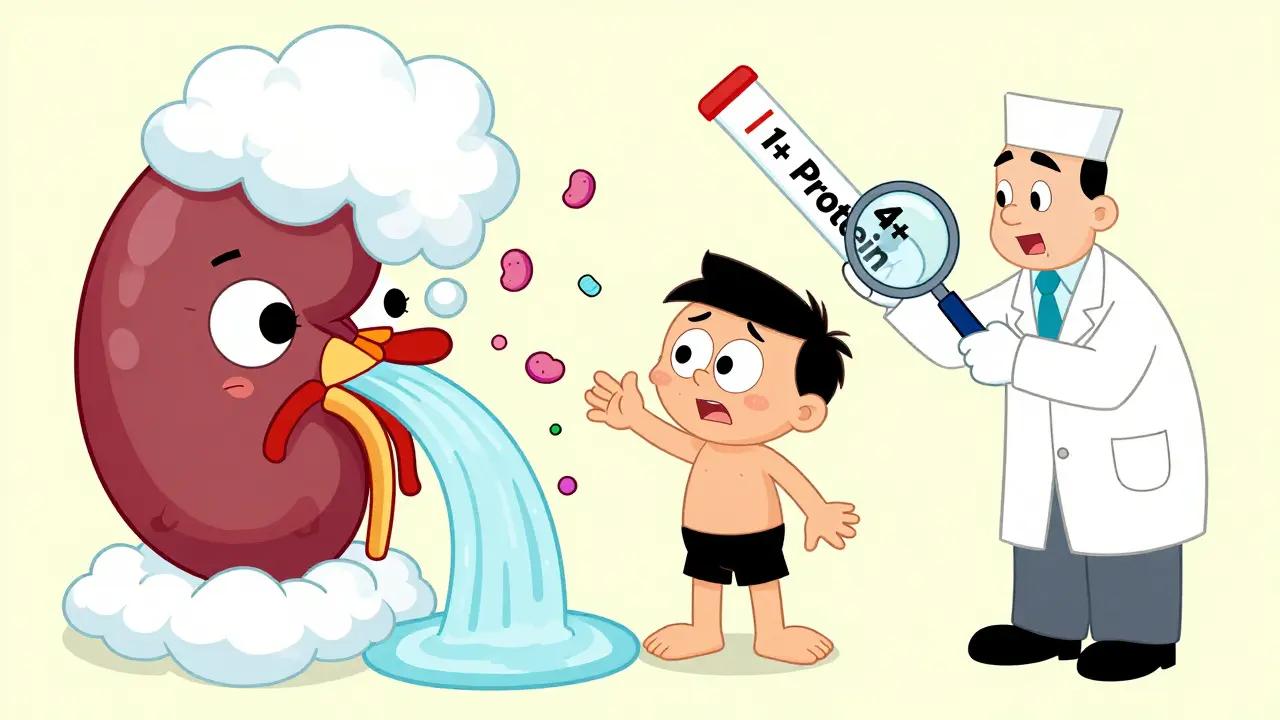
When your urine turns foamy and your ankles swell up for no reason, it’s easy to blame allergies, too much salt, or a bad day. But if the swelling doesn’t go away - especially around your eyes in the morning - and you’ve gained 10 pounds in a week without eating more, something deeper might be wrong. That’s often how nephrotic syndrome shows up. It’s not just a minor kidney glitch. It’s your kidneys leaking protein like a broken sieve, and your body paying the price in fluid, cholesterol, and risk.
What Exactly Is Nephrotic Syndrome?
Nephrotic syndrome isn’t a disease on its own. It’s a cluster of symptoms that point to serious damage in the filtering units of your kidneys - the glomeruli. These tiny structures normally keep big proteins like albumin inside your blood. When they get damaged, those proteins spill into your urine. That’s called heavy proteinuria - more than 3.5 grams of protein lost every day in adults. In kids, it’s measured by body surface area, but the effect is the same: your blood loses its ability to hold onto water.
That’s when the swelling, or edema, starts. It begins around your eyes, then moves to your legs, feet, and sometimes your belly or lungs. Your skin might feel tight. Your shoes won’t fit. You might notice your face looks rounder - not from weight gain, but from fluid trapped under the skin. This isn’t normal puffiness. It’s a sign your body is struggling to balance fluids because your blood protein levels have dropped below 3.0 g/dL.
Along with that, your liver tries to make up for the lost protein by cranking out more lipids. That’s why cholesterol and triglycerides often skyrocket - sometimes over 300 mg/dL. It’s not just about looking unhealthy. High fats in the blood raise your risk of heart problems and blood clots.
Why Does This Happen? The Real Cause
The problem starts in the podocytes - special cells in your kidneys that act like a mesh filter. Think of them as tiny feet with tiny bridges (slit diaphragms) between them. Proteins like nephrin and podocin hold these bridges together. When these proteins get damaged - by immune attacks, genetic mutations, or long-term stress from diabetes - the bridges break. Suddenly, albumin and other proteins slip through.
In children, the most common cause is minimal change disease. It’s called that because under a microscope, the kidney looks almost normal - no scarring, no inflammation. But the filters are still broken. It accounts for 80-90% of cases in kids under 10. The good news? Most respond quickly to steroids.
In adults, the picture changes. Focal segmental glomerulosclerosis (FSGS) is the top culprit, affecting about 40% of cases. This one actually scars parts of the glomeruli. Membranous nephropathy is next - often triggered by autoimmune issues or infections like hepatitis B or C. And then there’s diabetes. If you’ve had type 2 for more than 10 years, your kidneys are at higher risk. About 20-30% of adult nephrotic syndrome cases come from diabetic damage.
Less common but serious are genetic forms. Congenital nephrotic syndrome, caused by a mutation in the NPHS1 gene, shows up in babies under 3 months. These kids lose over 10 grams of protein a day - more than most adults in a week. It’s rare, but it needs urgent, specialized care.
How Is It Diagnosed? Don’t Rely on Symptoms Alone
Many parents think their child’s puffy eyes are just allergies. In fact, 78% of families report a delay of 7-10 days before getting the right diagnosis. That’s why testing matters.
The first step is a urine test. A dipstick showing 3+ or 4+ protein is a red flag. But the gold standard is a 24-hour urine collection. If you’re losing more than 3.5 grams of protein in a day, you meet the definition of nephrotic syndrome.
Blood tests follow. Low albumin (below 3.0 g/dL) confirms the leak. High cholesterol and triglycerides support the picture. Kidney function tests (creatinine, eGFR) check if the kidneys are still filtering well.
For adults and kids who don’t respond to steroids, a kidney biopsy is often needed. It tells you exactly what’s causing the damage - whether it’s FSGS, membranous disease, or something else. That’s critical because treatment changes based on the cause.
How Is It Treated? Beyond Just Steroids
There’s no one-size-fits-all fix. Treatment depends on age, cause, and how much protein you’re losing.
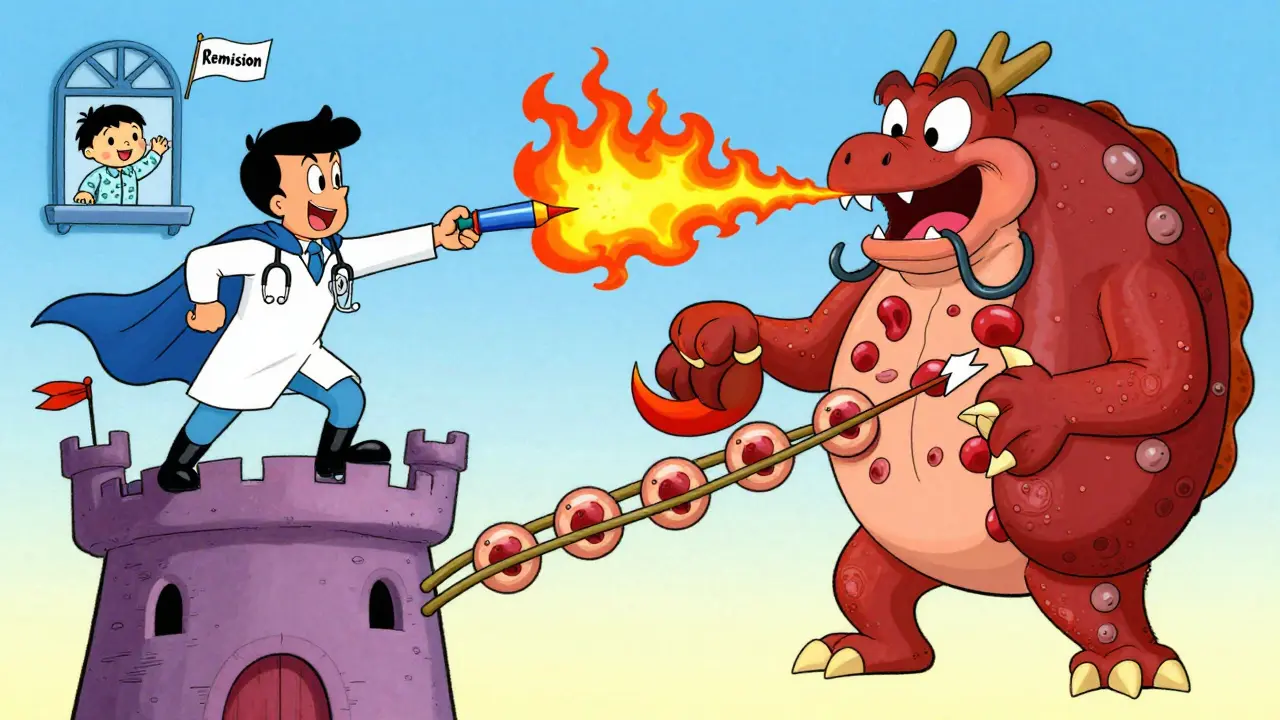
For children with minimal change disease: Prednisone is the first move. Dosed at 60 mg per square meter of body surface (up to 80 mg daily), most kids go into remission within 4 weeks. The trick is the taper - it takes 2 to 5 months to come off slowly. Stop too fast, and relapse is likely. About 60-70% of kids will have at least one relapse, often after a cold or flu.
For adults: Steroids still help, but response is slower and less reliable. About 60-70% respond, but half of them relapse. That’s why doctors add other drugs. Calcineurin inhibitors like tacrolimus or cyclosporine are common second-line choices. They’re stronger, with more side effects - high blood pressure, shaky hands, kidney toxicity - but they work when steroids fail.
For membranous nephropathy, especially if it’s autoimmune, rituximab is now used more often. It targets the immune cells causing the damage. Studies show it reduces proteinuria better than steroids alone in some cases.
Everyone needs ACE inhibitors or ARBs. These blood pressure drugs - like lisinopril or losartan - do more than lower pressure. They directly reduce protein leakage by 30-50%. The goal? Keep blood pressure under 130/80. Even if your pressure is normal, these drugs are still recommended.
Diet and Lifestyle: What You Can Actually Control
Medications help, but your daily habits make a huge difference.
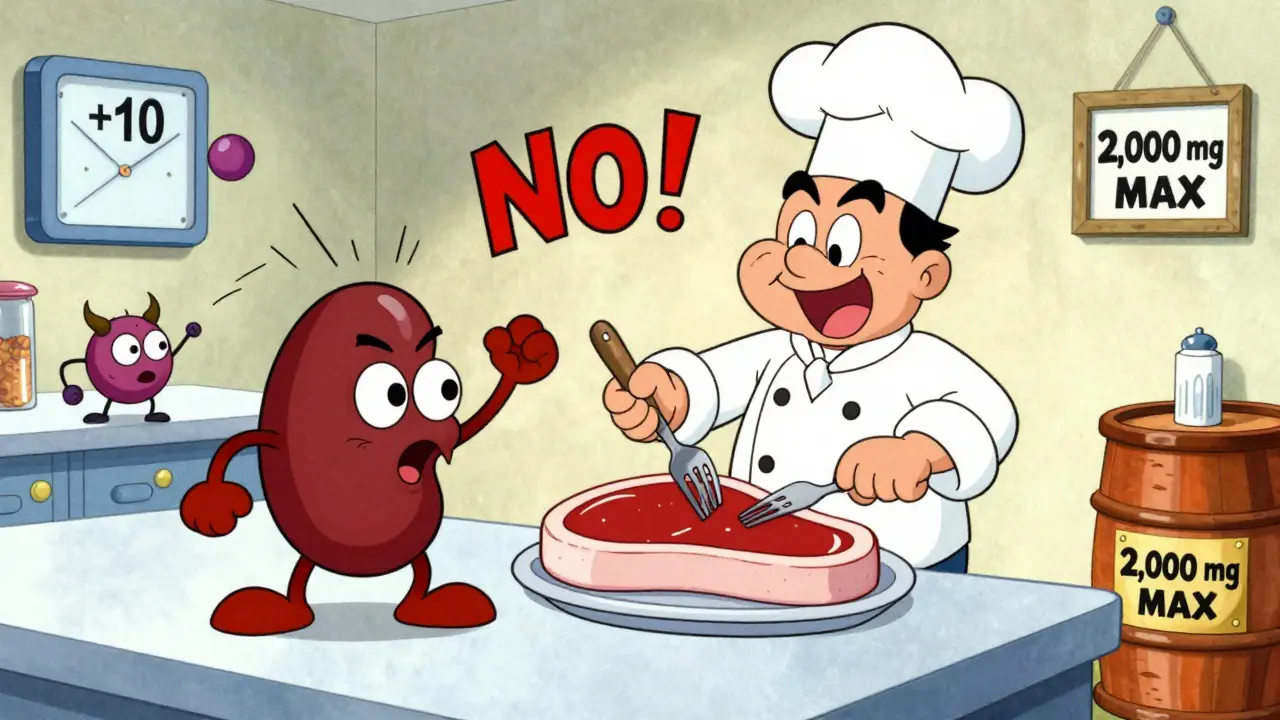
Salt restriction is non-negotiable. Cut sodium to under 2,000 mg a day. That means no processed foods, no canned soups, no soy sauce. It sounds extreme, but within 72 hours, many patients see noticeable reduction in swelling. One study showed a 30-50% drop in edema just from cutting salt.
Protein intake is tricky. You might think eating more protein replaces what you’re losing. But that’s wrong. Too much protein forces your kidneys to work harder, making the leak worse. Stick to 0.8-1.0 grams per kilogram of body weight. For a 70kg adult, that’s about 56-70 grams a day - a palm-sized portion of meat at each meal.
Fluid intake doesn’t need to be restricted unless you’re retaining massive amounts. Drink when you’re thirsty. Your body knows what it needs.
Vaccinations are critical. Steroids and other immunosuppressants weaken your immune system. Get flu, pneumonia, and hepatitis B vaccines before starting treatment. Avoid live vaccines like MMR or chickenpox while on high-dose steroids - they can cause serious infection.
The Hidden Dangers: Blood Clots and Infections
Many people don’t realize nephrotic syndrome makes you prone to blood clots. Your body loses proteins that prevent clotting, and your blood thickens. Renal vein thrombosis - a clot in the kidney’s main vein - happens in 10-40% of adults with severe hypoalbuminemia (below 2.0 g/dL). It can cause sudden flank pain, blood in urine, or even kidney failure.
Doctors often prescribe low-dose blood thinners like aspirin or warfarin for high-risk patients. Don’t ignore swelling that’s only on one side, or sudden pain in your side. These aren’t normal.
Infections are another big risk. Kids on steroids get more ear infections, pneumonia, and even rare ones like cellulitis. Keep skin clean, avoid sick people, and call your doctor if you have a fever - even a mild one.
What Does Remission and Relapse Look Like?
Remission means protein in your urine drops to trace or negative on a dipstick for three days in a row. That’s the goal. But relapse is common - especially in kids. A relapse shows as three consecutive 2+ or 3+ protein readings.
Relapses often follow viral infections. That’s why many parents notice a flare-up right after their child gets over a cold. It’s not coincidence. The immune system gets stirred up, and the damaged filters react.
For those who relapse frequently, doctors may switch to longer-term immunosuppressants or newer drugs like rituximab. Some kids end up on maintenance therapy for years.
New Treatments on the Horizon
Research is moving fast. In 2023, the FDA approved budesonide (Tarpeyo) for IgA nephropathy - a condition that sometimes overlaps with FSGS. Early results show it cuts proteinuria by 31-59% in some patients.
The PROTECT study in 2022 tested sparsentan, a new drug that blocks two pathways involved in kidney damage. It reduced proteinuria by nearly 48% - more than double the effect of standard ARBs.
Genetic testing is now recommended for babies under 1 year old or those with a family history. If it’s a genetic form, steroids won’t help. Avoiding them prevents unnecessary side effects.
Future treatments might target podocytes directly - drugs that stabilize the actin cytoskeleton inside these cells. Animal studies show up to 70% reduction in protein leakage. Human trials are coming.
What’s the Long-Term Outlook?
Prognosis depends almost entirely on the cause.
- Minimal change disease: 95% of patients keep good kidney function 10 years later.
- FSGS: Only 50-70% avoid kidney failure over the same period.
- Membranous nephropathy: 60-80% do well, especially if proteinuria drops below 1 gram/day.
- Diabetic nephropathy: Worst of all - only 40-50% survive 10 years without needing dialysis.
One rule holds true: if proteinuria stays above 1 gram/day after treatment, your risk of end-stage kidney disease jumps 4.2 times. That’s why doctors push so hard for complete remission - not just partial.
What Should You Do If You Suspect Nephrotic Syndrome?
If you or your child has persistent swelling, foamy urine, or unexplained weight gain:
- See a doctor immediately - don’t wait for it to get worse.
- Ask for a 24-hour urine protein test and serum albumin level.
- Get blood pressure checked - high or low, it matters.
- Request a referral to a nephrologist if proteinuria is confirmed.
- Start cutting salt now - even before diagnosis.
Early action saves kidneys. Delayed diagnosis means more damage, more relapses, and higher chances of needing dialysis.
Is nephrotic syndrome the same as nephritic syndrome?
No. Nephrotic syndrome is defined by heavy protein loss, low blood protein, swelling, and high cholesterol. Nephritic syndrome is different - it involves blood in the urine (hematuria), high blood pressure, reduced kidney function, and red blood cell casts in the urine. The causes and treatments are completely different.
Can nephrotic syndrome be cured?
In children with minimal change disease, yes - many outgrow it by adolescence with no long-term damage. In adults, especially with FSGS or diabetes, it’s usually a chronic condition. But remission is possible, and kidney failure can often be prevented with early, aggressive treatment.
Do steroids cause permanent side effects?
Most side effects like weight gain, moon face, or mood swings go away after stopping steroids. But long-term use (more than 6 months) can lead to osteoporosis, cataracts, or diabetes. That’s why doctors aim for the shortest effective course and use alternatives when possible.
Is a kidney biopsy always necessary?
Not for children with classic minimal change disease who respond quickly to steroids. But in adults, or in kids who don’t respond to steroids, a biopsy is essential. It tells you the exact cause - and that changes your treatment plan.
Can I still exercise with nephrotic syndrome?
Yes - unless you’re severely swollen or have a blood clot. Light to moderate exercise helps control blood pressure and keeps muscles strong. Avoid heavy lifting or contact sports if you’re on blood thinners. Always check with your nephrologist first.
What’s the biggest mistake people make when treating nephrotic syndrome?
Stopping medication too soon. Many feel better after a few weeks - swelling goes down, urine looks normal. But if you stop steroids or blood pressure meds early, proteinuria comes back - often worse. Stick to the full course, even if you feel fine.
 Buy Cheap Generic Celexa Online - Safe, Affordable, Quick
 Exploring 7 Effective Alternatives to Atarax for Anxiety Relief and Allergy Management
 FDA Inspection of Generic Manufacturing Facilities: What to Expect in 2026
 Menopause and Alcohol: How It Affects Your Symptoms
John O'Brien
January 26, 2026 AT 14:26Bro this post is straight fire. I had nephrotic syndrome in college and no one took me seriously until my face looked like a balloon. Cut salt like your life depends on it - it does. I lost 12 lbs in 3 days just by ditching chips and soy sauce. Steroids sucked but they saved my kidneys.
Paul Taylor
January 27, 2026 AT 11:55Man I’ve seen so many people misunderstand this condition thinking it’s just water retention or allergies or bad diet but it’s way deeper than that it’s your kidneys literally falling apart like a broken sieve and the protein just pouring out like a faucet and your body trying to compensate by making more cholesterol which then clogs everything and then you get clots and infections and nobody talks about that part the real silent killers are the hidden complications not the swelling itself
Desaundrea Morton-Pusey
January 28, 2026 AT 01:41So let me get this straight - you’re telling me we’re supposed to trust doctors who give us steroids that turn us into moon-faced zombies just to fix a problem that might be caused by Big Pharma pushing meds? I’ve seen this before. They always want to patch it with drugs when the real answer is detoxing and eating kale. Also why no mention of glyphosate?
Murphy Game
January 29, 2026 AT 09:14They’re hiding something. Why is FSGS so common in adults? Why do kids respond to steroids but adults don’t? Coincidence? I’ve been tracking this. The same labs that test for proteinuria also sell the drugs. And who funds the ‘research’? Big Pharma. You think they want you cured? No. They want you dependent. Watch your back.
Kegan Powell
January 30, 2026 AT 06:13Man this hit different 😔 I had a cousin go through this and the way he just kept pushing through even when he felt like garbage - that’s real strength. The salt thing? 100% true. I watched him go from puffy eyes to walking normal again just by swapping out ramen for eggs and veggies. And yeah steroids suck but they’re not the enemy - the delay in diagnosis is. If you feel off don’t wait. Go get tested. Your kidneys won’t wait for you to feel ready.
Harry Henderson
February 1, 2026 AT 02:00STOP WASTING TIME. If you have foamy urine and swelling you don’t need a seminar you need a nephrologist NOW. I’ve seen people wait months because they thought it was ‘just bloating’ and end up on dialysis. This isn’t a lifestyle blog. This is your body screaming. Act like your life depends on it - because it does.
suhail ahmed
February 2, 2026 AT 10:12Bro in India we call this ‘puffiness disease’ and everyone ignores it till the legs swell like balloons. My uncle had it - he ate 200g protein daily thinking it’d help. Big mistake. Kidneys went haywire. Then we cut salt like crazy and gave him losartan - boom 70% better in a month. Doctors here don’t explain the why - but this post? Perfect. Keep it real.
Candice Hartley
February 2, 2026 AT 13:34My son had this at 5. Foamy pee + puffy eyes. We thought allergies. Took 10 days to get diagnosed. Steroids worked but he cried every night. I’m so glad someone explained why salt matters. I’ll never buy canned soup again 🥲
Andrew Clausen
February 4, 2026 AT 01:26Incorrect. The 24-hour urine collection is not the 'gold standard' - it's notoriously inaccurate due to collection errors. The urine protein-to-creatinine ratio is more reliable and widely recommended in modern guidelines. Also, 'dipstick 3+ or 4+' is not diagnostic - it's screening. You're conflating screening with diagnosis. Fix this before misleading people.
Anjula Jyala
February 5, 2026 AT 23:20Minimal change disease is a myth. Podocyte injury is always structural. If biopsy shows nothing then the pathology is undetected. You're wasting time with steroids when you should be sequencing NPHS1 and podocin genes. Also anyone over 30 with proteinuria has FSGS until proven otherwise. And you didn't mention complement activation - that's the real driver. Amateur hour.
Kathy McDaniel
February 7, 2026 AT 04:18thank you for this i had no idea salt was that big of a deal 😅 i thought it was just about drinking less water lol my mom has this and we’ve been giving her soup 😳 we’re switching to fresh food today. also i’m getting her vaccinated. you’re a lifesaver