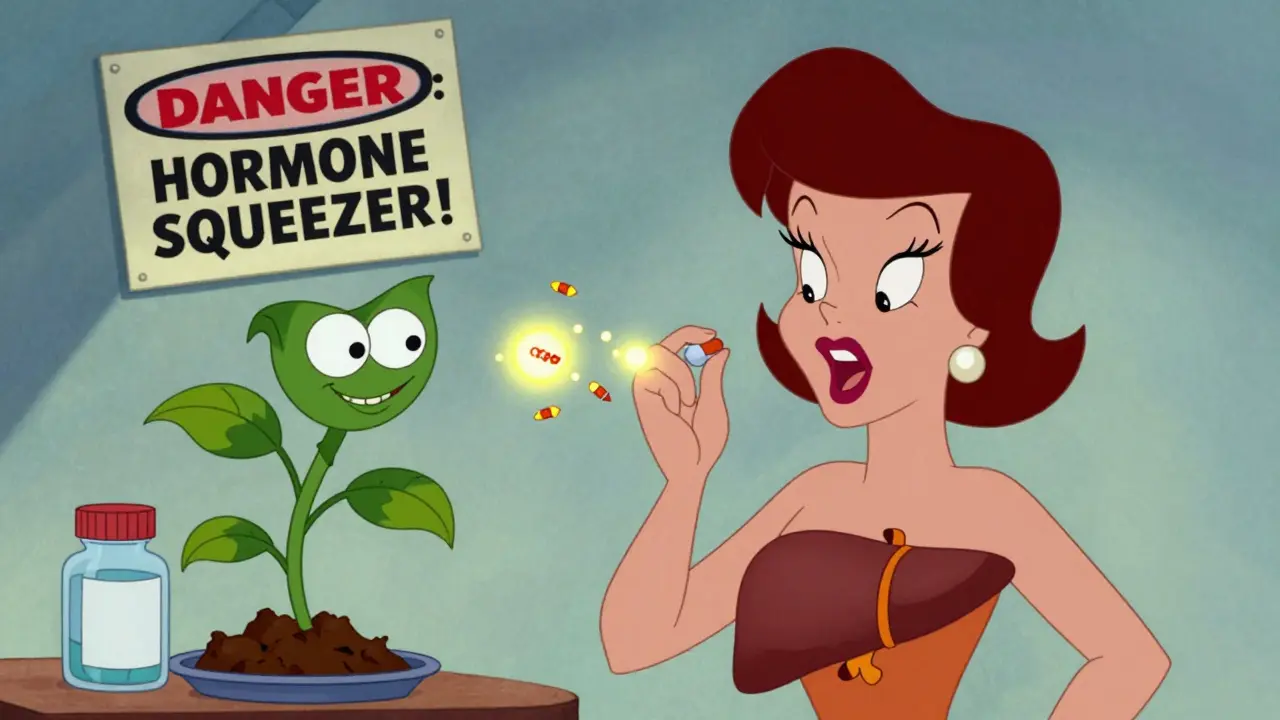
Many women take herbal supplements to support energy, mood, or hormonal balance-often without realizing they might be making their birth control less effective. It’s not a myth. St. John’s wort, one of the most popular herbal remedies for mild depression, has been proven in clinical studies to lower hormone levels in birth control pills enough to cause unplanned pregnancies. This isn’t rare. It’s well-documented, yet most people still take it without checking with their doctor.
How St. John’s Wort Breaks Down Birth Control
St. John’s wort contains a compound called hyperforin. This compound doesn’t just sit there-it triggers your liver to produce more of an enzyme called CYP3A4. That enzyme’s job is to break down toxins and drugs so your body can flush them out. But it doesn’t distinguish between harmful substances and the hormones in your birth control pill. When CYP3A4 ramps up, it starts metabolizing ethinyl estradiol and progestin faster than normal. The result? Less hormone circulating in your bloodstream when you need it most.
A 2003 study published in Contraception found that women taking 900 mg of St. John’s wort daily with a standard birth control pill (30 mcg ethinyl estradiol + 150 mcg levonorgestrel) saw a 15-25% drop in hormone levels. That’s not a small change. It’s enough to trigger breakthrough bleeding in 23% of users-compared to just 5% in those not taking the herb. Breakthrough bleeding isn’t just annoying; it’s a red flag that your pill isn’t working the way it should.
Other Herbal Supplements That Could Interfere
St. John’s wort is the biggest offender, but it’s not alone. Some other supplements carry risks, even if the evidence isn’t as strong.
- Soy isoflavones-found in soy protein powders, tofu, and supplements-act like weak estrogens in your body. They don’t speed up hormone breakdown, but they compete with birth control hormones for receptor sites. Think of it like two people trying to sit in the same chair. If soy fills up the receptors, your birth control can’t do its job properly.
- Grapefruit juice is often cited as a problem, but the science is messy. Some studies say it slows down how fast your body clears hormones, others say it doesn’t matter. Either way, if you’re drinking a lot of grapefruit juice daily, it’s worth asking your doctor.
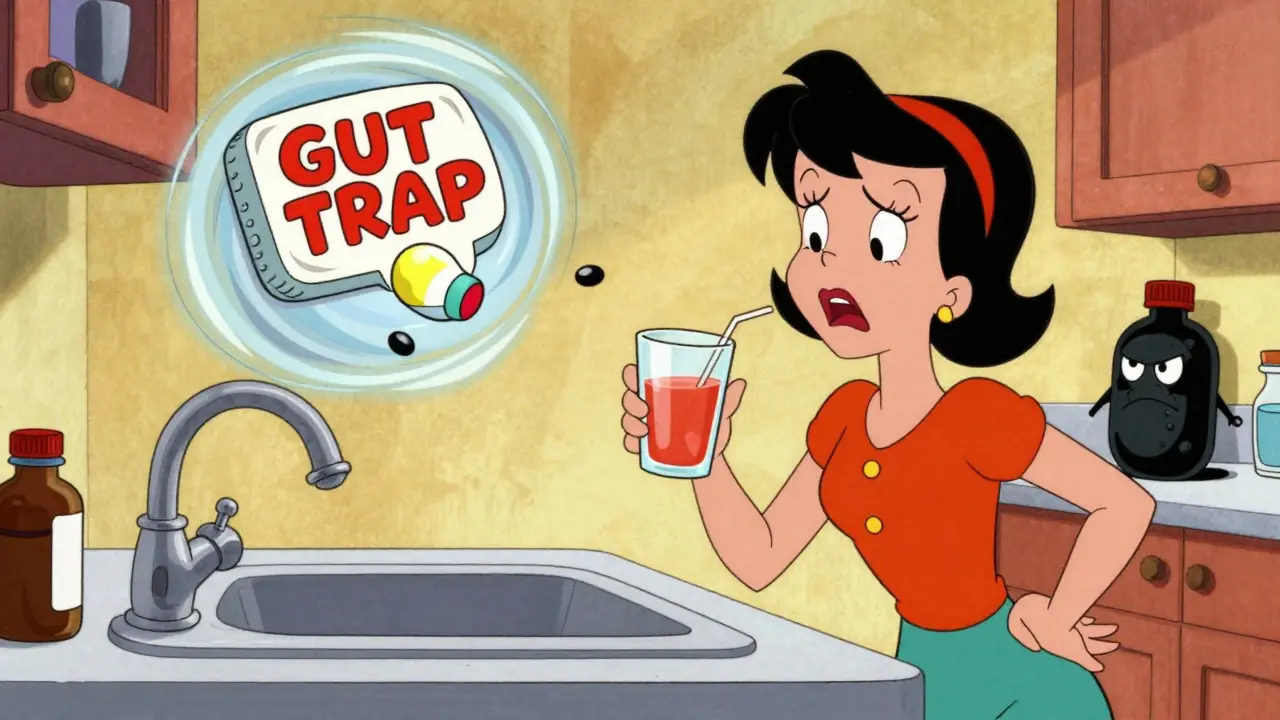
- Activated charcoal is used for detox or bloating. If you take it within four hours of your birth control pill, it can literally trap the hormones in your gut and stop them from being absorbed. One study showed up to a 30% reduction in hormone uptake.
- DIM (diindolylmethane), often taken for acne or estrogen balance, is generally safe at low doses (under 100 mg). But at doses above 500 mg, it may alter how your liver processes estrogen. That’s not a guaranteed risk, but it’s enough to warrant caution.
- Saw palmetto, garlic pills, and flaxseed have weak or anecdotal links to interference. No major studies prove they cause contraceptive failure, but they affect hormone pathways. If you’re using them long-term, it’s better to be safe.
Supplements That Are Probably Safe
Not all supplements are risky. Many are fine to take alongside birth control. Here’s what research says about the ones people ask about most:
- Ashwagandha: A 2015 study found no effect on CYP3A4 or other enzymes involved in breaking down birth control hormones. It’s generally considered safe, though high doses can cause stomach upset or, rarely, mild liver stress.
- Probiotics: No known interaction. They work in your gut, not your liver. Taking them won’t affect your pill’s absorption.
- Melatonin: No direct effect on hormone levels, but birth control can increase melatonin levels in your body. That might make you feel sleepier than usual, but it won’t reduce contraceptive effectiveness.
- Vitex (chasteberry): Some research suggests it may actually help balance hormones in women on birth control, especially during perimenopause. No evidence of interference.
- Vitamin D, B-complex, magnesium: These are basic nutrients. They don’t interact with hormonal pathways.
Why This Isn’t Common Knowledge
Herbal supplements aren’t regulated like prescription drugs. The FDA doesn’t test them for safety or interactions before they hit store shelves. A bottle of St. John’s wort might say “900 mg” on the label, but the actual hyperforin content can vary by 50% between batches. One study found that 40% of herbal products didn’t even contain the herb listed on the label.
People assume “natural” means “safe.” But natural doesn’t mean harmless. St. John’s wort is as potent as the antibiotic rifampin-which doctors explicitly warn patients to avoid while on birth control. Yet you can buy St. John’s wort at Walmart without a prescription, and no warning label is required.
What You Should Do
If you’re on birth control and taking any herbal supplement, here’s what to do:
- Stop taking St. John’s wort immediately if you’re using it. If you’ve been on it for more than a few weeks, wait a full month after stopping before relying on your pill alone. The enzyme boost can linger.
- Check every supplement-even ones you’ve taken for years. Ask yourself: “Does this claim to balance hormones, reduce stress, or support liver function?” If yes, research it.
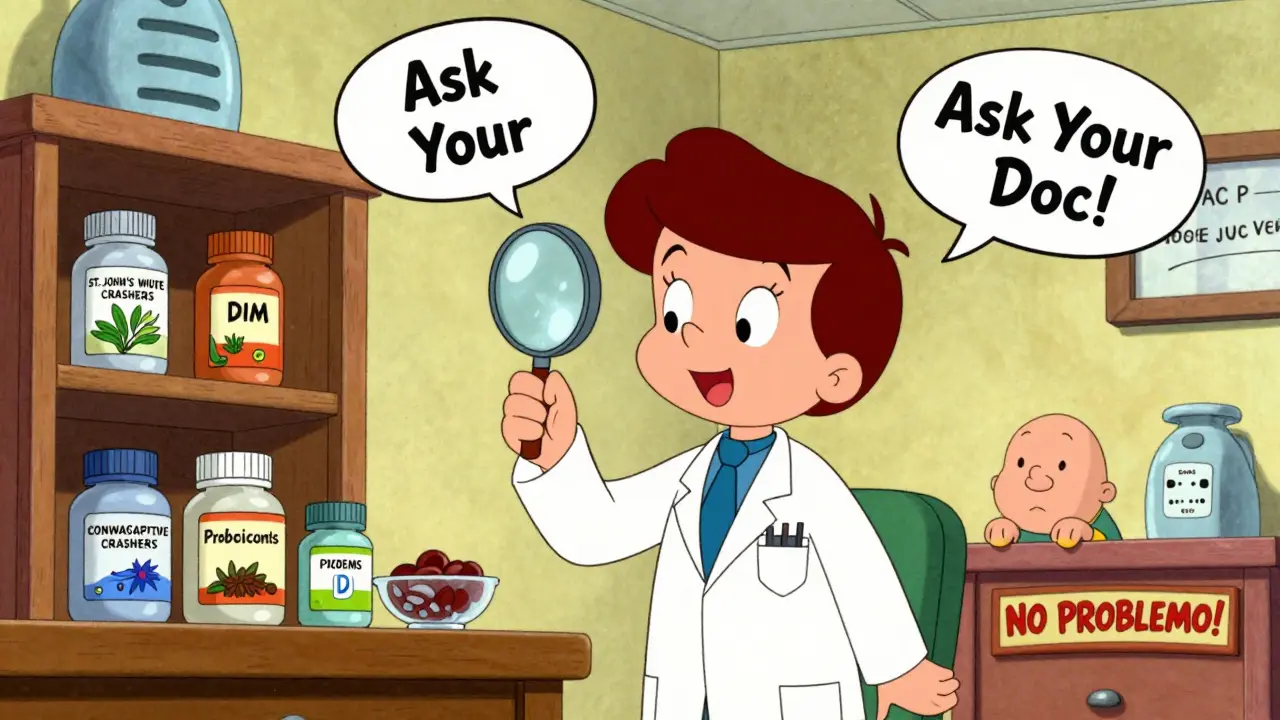
- Talk to your doctor or pharmacist. Don’t just say, “I take ashwagandha.” Show them the bottle. They can check for known interactions.
- Use backup contraception if you’re unsure. Condoms, a copper IUD, or a diaphragm are reliable options while you figure things out.
- Track your cycle. If you notice spotting between periods, heavier bleeding, or missed periods, it could be a sign your birth control isn’t working.
When to Worry About Side Effects
Some supplements don’t directly interfere with hormones-but they can still mess with your birth control indirectly. Ashwagandha, for example, can cause nausea or diarrhea in some people. If you vomit within two hours of taking your pill, or have severe diarrhea for more than 24 hours, your body may not absorb the hormones. That’s a failure risk, even if the supplement itself isn’t the cause.
Same goes for activated charcoal. Even if you’re not taking it with your pill, if you’re using it for detox or bloating, timing matters. Take it at least 4 hours before or after your birth control.
The Bottom Line
Most herbal supplements won’t touch your birth control. But a few can-and the consequences are serious. St. John’s wort is the biggest threat, with clear evidence, real cases of pregnancy, and no warning labels. Other herbs like soy isoflavones and activated charcoal carry measurable risks. Many others are safe, but you can’t assume.
Birth control is one of the most effective forms of contraception when used correctly. But if you’re adding supplements without checking, you’re adding risk. You wouldn’t take an antibiotic with your pill without asking your doctor. Don’t treat herbal supplements any differently. Your body doesn’t know the difference between a pill from a pharmacy and a capsule from the health food store. It only knows what’s in it-and how it reacts.
When in doubt, skip it-or ask. One conversation with your provider could prevent an unplanned pregnancy. That’s worth the 10 minutes it takes to look up your supplement and talk it through.
Can St. John’s wort cause pregnancy even if I take my birth control pill every day?
Yes. St. John’s wort speeds up how your body breaks down the hormones in birth control pills. Even if you take your pill at the same time every day, the hormone levels in your blood drop too low to prevent ovulation. Studies show women on both can experience breakthrough bleeding and have higher rates of contraceptive failure.
Is it safe to take ashwagandha with birth control?
Current research shows ashwagandha does not interfere with the enzymes that metabolize birth control hormones. It’s generally considered safe. However, high doses can cause stomach upset or liver stress, which might indirectly affect absorption. Stick to standard doses (300-500 mg daily) and avoid long-term use without medical supervision.
Do probiotics reduce the effectiveness of birth control?
No. Probiotics work in your gut to support digestion and microbiome health. They don’t interact with the liver enzymes or hormone receptors involved in birth control metabolism. You can safely take probiotics with your pill.
How long after stopping St. John’s wort is birth control effective again?
The enzyme-inducing effects of St. John’s wort can last up to a month after you stop taking it. Medical guidelines recommend using another form of contraception (like condoms or a copper IUD) for at least 30 days after discontinuing St. John’s wort before relying solely on your birth control pill again.
Can grapefruit juice make birth control less effective?
The evidence is mixed. Grapefruit juice can slow down the breakdown of some hormones, potentially increasing their levels-but in other cases, it may interfere with absorption. Because the effect is unpredictable and varies by person, it’s safest to avoid large amounts of grapefruit juice (more than one glass daily) while on birth control.
Should I stop taking all herbal supplements if I’m on birth control?
No. Most herbal supplements don’t interfere. But you should review each one individually. St. John’s wort, activated charcoal, and high-dose DIM are red flags. Ashwagandha, probiotics, and most vitamins are safe. Always check with your doctor before starting something new, especially if it claims to affect hormones.
 Psychosis Early Warning Signs: A Guide to Coordinated Specialty Care
 Rhabdomyosarcoma and Relationships: Supporting Your Partner Through Treatment
 FDA Inspection of Generic Manufacturing Facilities: What to Expect in 2026
 Comparing Diabetes Medications: Rybelsus Versus Ozempic Explained by Expert Betul
 Clindamycin as an Alternative Treatment for Helicobacter pylori Infections
MARILYN ONEILL
January 21, 2026 AT 01:37OMG I can't believe people are still taking this junk. I took St. John’s wort for a month and got pregnant even though I was on the pill. No one warned me. Like, how is this even legal? Walmart sells this like it’s candy.
Steve Hesketh
January 21, 2026 AT 07:20Y’all need to stop treating herbs like they’re harmless. My cousin in Nigeria got pregnant after taking garlic pills and birth control together. She thought ‘natural’ meant safe. Natural doesn’t mean safe-it means unregulated. Please, check with your doctor before popping anything. Your future baby deserves better than a guess.
Sangeeta Isaac
January 22, 2026 AT 18:00so like… i took ashwagandha for 2 years and never missed a pill. no drama. no spotting. just chill vibes. why is everyone acting like every herb is a bomb? 🤷♀️
shubham rathee
January 24, 2026 AT 09:39Jarrod Flesch
January 25, 2026 AT 22:59Just wanted to say thanks for this post. I’ve been taking DIM for acne and had no clue it could mess with my pill. Going to stop it for now and switch to zinc instead. Seriously, this is the kind of info that saves lives. 🙏
Barbara Mahone
January 25, 2026 AT 23:49As someone who’s lived in three countries and taken everything from turmeric to maca, I’ve learned: if it claims to ‘balance hormones,’ assume it interferes. Stick to vitamins with no claims. Simple. Safe. Effective.
Philip Williams
January 26, 2026 AT 06:33It’s alarming how little public health education exists around this issue. Medical professionals rarely screen for herbal supplement use during routine contraceptive counseling. This isn’t just about individual responsibility-it’s a systemic failure. Healthcare providers must proactively ask patients about supplements, not wait for them to volunteer the information. The burden shouldn’t fall solely on the patient to research every capsule they’ve ever taken.
Furthermore, the lack of standardization in herbal products compounds the problem. Two bottles labeled ‘St. John’s wort’ can have vastly different concentrations of hyperforin. Without regulation, we’re playing Russian roulette with our reproductive health. The FDA should mandate labeling that includes interaction warnings, just like OTC drugs.
It’s also worth noting that cultural attitudes toward ‘natural’ remedies vary widely. In many communities, herbal medicine is deeply rooted in tradition, and dismissing it outright can alienate patients. The solution isn’t to condemn these practices, but to integrate them with evidence-based guidance. Pharmacists should be trained to review supplement regimens as routinely as they do prescriptions.
Education campaigns targeting young adults, especially those using social media for health advice, are desperately needed. A simple infographic in a pharmacy or on a clinic waiting room wall could prevent countless unintended pregnancies. Knowledge isn’t power-it’s protection.
Jerry Rodrigues
January 27, 2026 AT 20:17Been on the pill for 8 years. Took ashwagandha for a month last year. No issues. Probiotics? Always. Melatonin? Daily. Zero problems. Just don’t take the big ones like St. John’s wort. Common sense goes a long way.
Ashok Sakra
January 28, 2026 AT 21:02you people are so dramatic its just a herb stop being scared of everything i took st johns wort for 6 months and my period was fine and i never got pregnant so your fear is just marketing
Alex Carletti Gouvea
January 30, 2026 AT 07:54Why are we letting big pharma control what we put in our bodies? Herbal supplements are cheaper, natural, and have been used for thousands of years. The fact that you can’t buy them without a warning label is proof the system is rigged. If your birth control is that fragile, maybe you shouldn’t be on it at all.
Kevin Narvaes
January 31, 2026 AT 05:31so like… i just stopped taking my pill because i read this and now i’m scared to take anything ever again. i mean what if my tea has st john’s wort in it? what if my smoothie has soy? what if i sneeze and my body decides to metabolize differently??
why does everything have to be a crisis? i just want to feel better without feeling like i’m gonna die from a vitamin.
Kelly McRainey Moore
January 31, 2026 AT 14:05My pharmacist literally told me to stop taking saw palmetto after I asked. Said it’s a ‘maybe’ but better safe than sorry. Took me 5 minutes to ask. You should too.
Uju Megafu
January 31, 2026 AT 21:11Oh my god. I’m so glad someone finally said this. I’ve been screaming into the void for years about this. My sister got pregnant because she thought ‘natural’ meant ‘safe’ and now her kid has a heart condition. And guess what? The supplement company didn’t even have a warning. That’s not negligence-that’s criminal. Someone needs to sue these companies. This isn’t just about birth control. It’s about corporate greed hiding behind the word ‘herbal.’