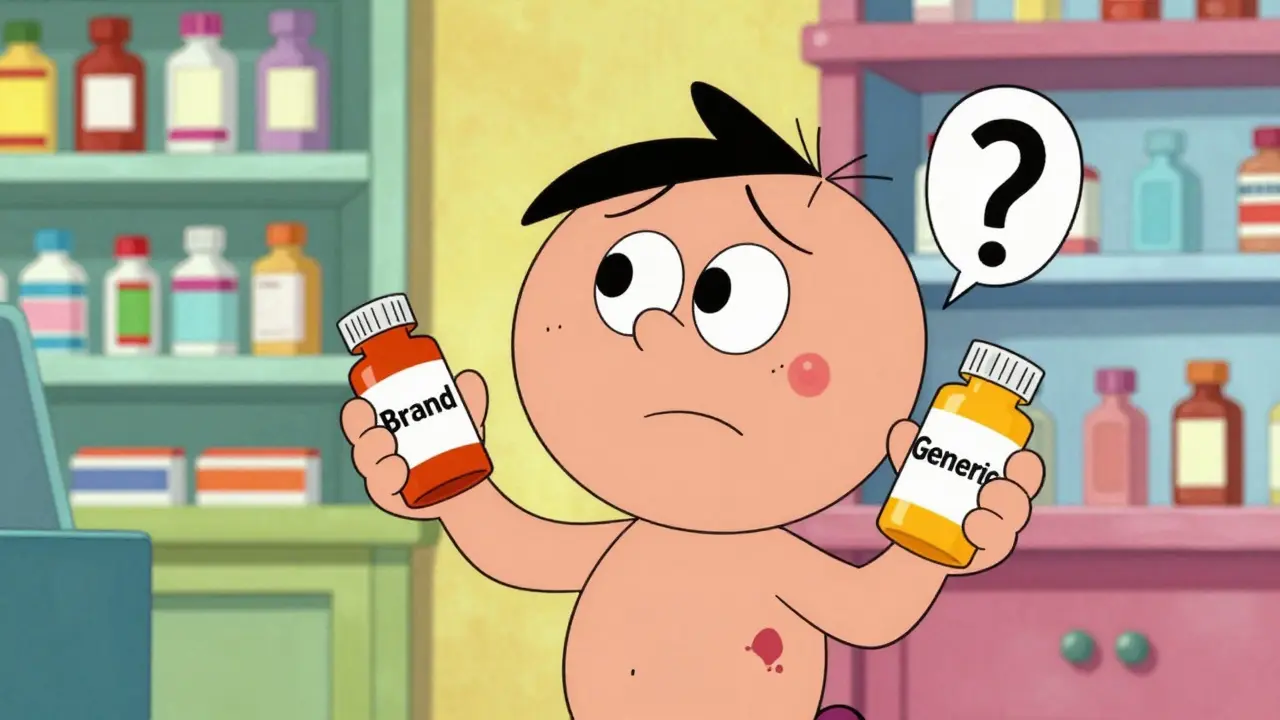
You've taken a medication for years without a hitch, but suddenly, after switching to a cheaper version, your skin breaks out in hives or your throat feels tight. It's a confusing and scary experience. Many people assume they are allergic to the drug itself, but the truth is often more nuanced. While the active medicine is the same, the "stuffing"-the dyes, fillers, and binders-can be completely different. Understanding the difference between a reaction to the medicine and a reaction to these hidden additives can be the difference between a minor annoyance and a life-threatening emergency.
| Severity | Common Symptoms | Required Action | Timeline |
|---|---|---|---|
| Mild | Itchy skin, localized rash, mild hives | Contact doctor or allergist | Within 72 hours |
| Moderate | Facial swelling, wheezing, nausea | Urgent care or physician visit | Within 24 hours |
| Severe | Throat tightness, fainting, gasping for air | Call emergency services (911/000) | Immediate |
Why generics can trigger allergies when brand names don't
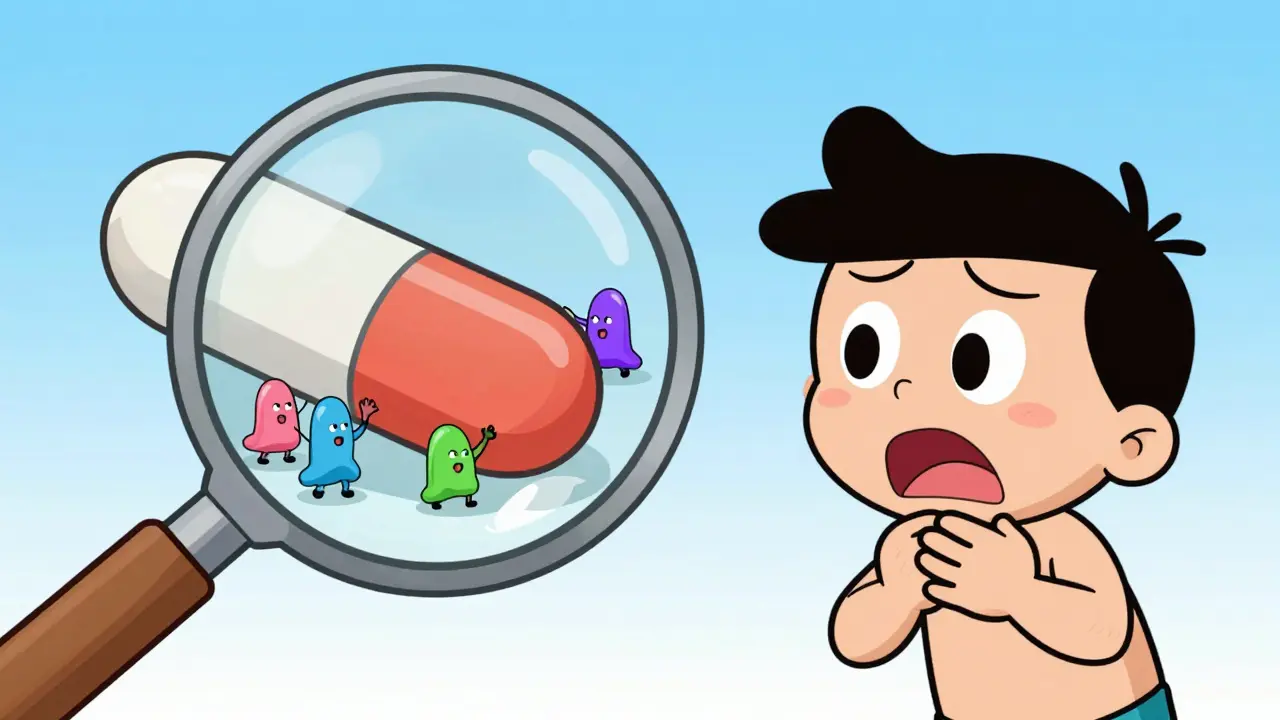
To understand why this happens, we have to look at how drugs are made. A Generic Medication is a pharmaceutical drug that is chemically equivalent to a brand-name product in terms of its active ingredient. However, the inactive ingredients-known as excipients-are not regulated to be identical. These include fillers, binders, and preservatives that give the pill its shape or the liquid its color.
According to data from the FDA, generics must be bioequivalent, but they can use different inactive components. Research from the American Academy of Allergy, Asthma & Immunology (AAAAI) indicates that about 5-10% of adverse reactions to generics are actually caused by these inactive ingredients. For instance, you might not be allergic to the drug itself, but you could be reacting to Lactose, Gluten, or specific dyes like Tartrazine (FD&C Yellow No. 5). In some severe cases, injectable generics may contain Peanut Oil, which can lead to anaphylaxis in highly sensitive individuals.
Spotting the signs: Mild to Severe reactions
Not all reactions look the same. Some creep up on you over several hours, while others hit like a freight train within minutes. Recognizing the patterns is key to staying safe.
Mild reactions are the most common. You might notice a rash (occurring in about 68% of mild cases) or persistent itching. While these aren't immediately dangerous, you shouldn't ignore them. The American Academy of Family Physicians notes that 65% of people who have a mild first reaction may experience a much more severe one the next time they take the drug. If you have hives that last more than six hours, it's time to call your provider.
Moderate reactions are more systemic. This means they affect more than one part of the body. You might experience facial swelling combined with nausea or a slight wheeze in your chest. These symptoms suggest your body is mounting a stronger immune response, and you should seek medical evaluation within 24 hours to prevent the situation from escalating.
Severe reactions, specifically Anaphylaxis, are a medical emergency. This is a systemic collapse where your blood pressure drops (often below 90 mmHg systolic) and your airways constrict. Symptoms like throat tightness and respiratory distress happen in the vast majority of these cases. Because 43% of these severe reactions happen within 15 minutes of taking the pill, you need to be ready to act instantly.
When to seek emergency medical care
There is a very clear line where "wait and see" becomes "call for help." Based on NIAID guidelines, you must use an epinephrine auto-injector and call emergency services immediately if you experience any of the following:
- Respiratory Failure: Severe wheezing, a high-pitched whistling sound when breathing (stridor), or breathing faster than 30 breaths per minute.
- Cardiovascular Crash: Feeling like you're going to faint (syncope) or a sudden, dramatic drop in blood pressure.
- Multi-System Involvement: If you have hives AND you're struggling to breathe, or if you have swelling in your face AND your stomach is cramping severely.
Timing is everything. Data from Food Allergy Research & Education (FARE) shows that 91% of medication-induced anaphylaxis cases require epinephrine within 5 to 15 minutes of the first symptom to ensure the best possible outcome.
How to protect yourself from future reactions
If you've had a reaction to a generic, you don't necessarily have to give up that medication forever. The goal is to identify the specific culprit-whether it's the active drug or a specific dye.
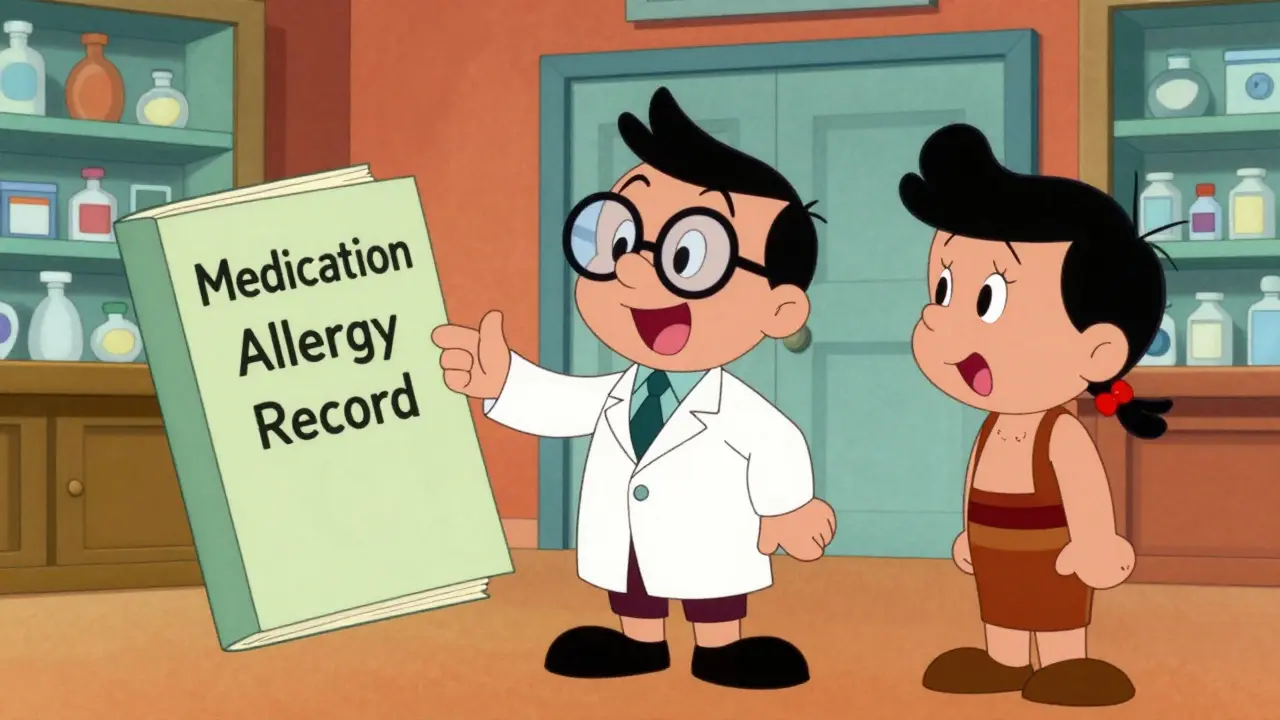
First, start a "medication allergy passport." This is a simple list of every drug and specific inactive ingredient that has caused you trouble. The American Pharmacists Association found that keeping such a record can reduce adverse drug events by 29%. Instead of just writing "Allergic to Penicillin," write "Reacted to generic Amoxicillin (suspected magnesium stearate)."
Second, talk to your pharmacist about "clean" generics. About 38% of manufacturers now offer specialized versions that are dye-free, gluten-free, or lactose-free. Your pharmacist can use the FDA's Inactive Ingredient Database to cross-reference different brands and find one that doesn't contain your trigger.
Finally, consider formal allergy testing. While it can cost between $350 and $600, it's a one-time investment that prevents you from avoiding necessary medications. As Dr. Kimberly Blumenthal from Massachusetts General Hospital points out, up to 90% of people labeled as allergic to penicillin can actually take it safely once a proper evaluation is done.
Can I be allergic to a generic drug but not the brand name?
Yes. While the active pharmaceutical ingredient is the same, the inactive ingredients (fillers, dyes, and binders) differ. You may be reacting to an additive like tartrazine or lactose present in the generic version but absent in the brand-name drug.
How quickly do generic drug allergies appear?
It varies. About 43% of severe reactions occur within 15 minutes, and 38% occur between 15 and 60 minutes. However, some delayed hypersensitivity reactions can take several hours to manifest.
What should I do if I develop a mild rash after switching to a generic?
You should contact your healthcare provider within 72 hours. Even mild reactions can progress to severe anaphylaxis upon second or third exposure, so it is critical to identify the allergen early.
Which inactive ingredients are the most common triggers?
The most frequent culprits include lactose (found in about 28% of oral generics), gluten (12%), dyes like FD&C Yellow No. 5 (15% of liquids), and peanut oil in some injectable formulations.
How can my pharmacist help me find a safer generic?
Pharmacists can use the FDA Inactive Ingredient Database to check the specific composition of various generic manufacturers. You can request a formulation that is free of specific triggers like dyes or gluten.
 Vitamin K Foods and Warfarin Interactions for INR Control
 How to Buy Cheap Generic Coumadin Online Safely
 Australia's Generic Market: PBS Overview and Impact
 Compare Atorlip 5 (Atorvastatin) with Alternatives: What Works Best for Cholesterol
 Why the First Generic Filer Gets 180 Days of Market Exclusivity