Respiratory Depression Risk Visualizer
Input Factors
Physiological Impact Simulation
BPM: --
Ready to calculate...
Select substance options to see the synergistic effect on your respiratory system.
Silence is often the last thing you notice before a tragedy happens. It's not always visible, but when two specific substances meet in your body, the result can be quiet and fatal. We are talking about the combination of alcohol and opioids. While many people think of these as separate issues, their pairing creates a unique danger zone that medical professionals call polysubstance use. It doesn't matter if it's prescription pills prescribed for pain or illicit drugs found on the streets; the biology remains unforgiving. By 2026, we have decades of data proving that mixing these depressants is one of the fastest ways to stop breathing. This isn't about fear-mongering; it's about understanding the mechanics so you can recognize the signs and stay safe.
The Biology Behind the Crash
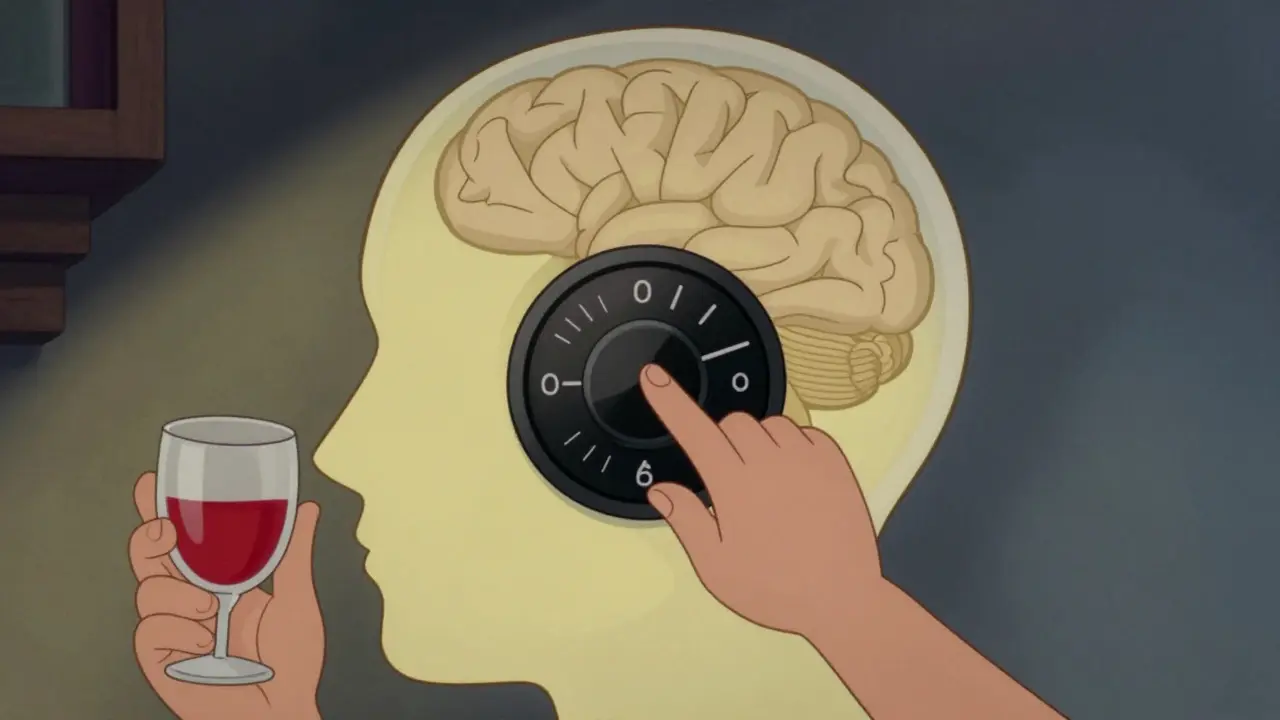
To understand why this mix is deadly, you need to understand what each substance does individually. Both alcohol and opioids act as central nervous system depressants. They slow down brain activity, relax muscles, and lower blood pressure. Sounds relaxing, right? That is exactly the trap. When you take them together, they don't just add up; they multiply their effect. Imagine turning down the volume on a TV. One cup of wine turns the knob down a bit. A pill turns it down more. Take both, and the signal might cut out completely.
This synergy targets the most critical function of all: breathing. Your brain stem controls your automatic urge to breathe. A study published in the Journal of Clinical Psychopharmacology back in 2017 showed just how delicate this balance is. Researchers found that taking 20mg of oxycodone alone reduced respiration by 28%. That's significant. But when participants drank enough alcohol to reach a blood alcohol concentration of 0.1%, respiration dropped by another 19%. This extra drop led to apnea, a temporary cessation of breathing, especially in older adults. Your lungs stop working because your brain forgets to tell them to work.
| Substance Combination | Effect on Respiration | Risk Level |
|---|---|---|
| Oxycodone Alone (20mg) | Reduced by 28% | Moderate |
| Alcohol (BAC 0.1%) + Oxycodone | Reduced by additional 19% | Severe |
| Fentanyl + Alcohol | Rapid respiratory arrest | Critical |
It gets worse when we talk about the potency of modern opioids. Synthetic options available on the market today are significantly stronger than the natural ones used historically. The presence of alcohol lowers the threshold needed to trigger fatal consequences. In post-mortem toxicology studies, researchers noted that alcohol makes lethal levels of opioids much easier to achieve. Even medications intended for pain management, such as buprenorphine, become dangerous. University of Florida researchers found that 30% of fatalities involving this medication also had alcohol in the system. The presence of one weakens your tolerance to the other.
The Numbers Tell a Tragic Story
You might think this happens to strangers far away, but the statistics bring it home close. According to the Centers for Disease Control and Prevention, polysubstance use is a massive driver of mortality. In the United States alone during 2022, nearly 108,000 people died from drug overdoses. Of those, a staggering 81.2% involved multiple substances. While data varies globally, the trend lines are consistent across Western nations. The involvement of alcohol in opioid deaths is rising steadily. Data from Texas between 2010 and 2019 revealed that 1,683 deaths were linked to this specific combo. That accounted for 37% of all alcohol-related polysubstance deaths in that state.
Why does this vary by type of opioid? It depends on what you are taking. Synthetic opioids like fentanyl are becoming the primary driver of overdose cases. Texas Department of State Health Services reported that alcohol involvement with fentanyl rose from 9% in 2010 to 17% in 2019. Prescription opioids remained relatively stable, hovering around 10-15%, while heroin usage fluctuated between 13% and 20%. The rise in synthetic opioids means the danger zone is shifting. These chemicals act faster and require less mass to kill, meaning even a few drinks can tip the scale toward fatality much quicker than in previous decades.
Methadone is another critical piece of this puzzle. Many patients rely on methadone for maintenance therapy to help with addiction. However, adding alcohol to that regimen multiplies the risk drastically. Research published in the journal Addiction found that patients receiving methadone who consumed alcohol faced a 4.6 times higher risk of overdose death compared to those who abstained. This isn't hypothetical advice; it is survival math. If you are in recovery programs involving these long-acting opioids, abstinence from alcohol isn't just suggested; it's medically vital for keeping your breathing rate steady.
Signs of Danger and Immediate Response
Recognizing an overdose before it's too late saves lives. When someone mixes these substances, the warning signs differ slightly from a sober overdose. You won't necessarily see frantic behavior first. Instead, look for profound lethargy. The person might fall asleep suddenly and be impossible to wake. Their skin may turn pale or clammy. The most concerning sign is the sound-or lack thereof. Gurgling sounds or snoring that is unusually deep indicates airway obstruction. If you see chest movements slow to less than 10 breaths per minute, you are witnessing imminent respiratory failure.
If you suspect someone is overdosing, time is the enemy. You need to administer Naloxone immediately. This medication works by kicking the opioids off the receptors in the brain, essentially waking up the respiratory system. However, it does not reverse the effects of alcohol. This distinction is crucial. Even if Naloxone reverses the opioid component, the alcohol damage remains. In fact, the National Institute on Drug Abuse noted that nearly 14% of opioid overdose deaths also involved benzodiazepines. With alcohol thrown into that mix, you create a triple threat where rescue efforts become harder. Field data from Massachusetts shows that 23% of naloxone reversals in 2022 involved these complex polysubstance scenarios. Carrying emergency doses in your home kit is no longer optional; it is standard safety practice, similar to having a fire extinguisher.
Medical Protocols and Harm Reduction
The medical community knows the risks well, yet co-prescribing and accidental combinations remain common. The FDA issued a black-box warning in 2016 requiring all prescription opioid labels to warn against mixing with alcohol. Despite this, concurrent prescribing habits haven't vanished overnight. Studies indicate that from 2002 to 2014, the simultaneous prescribing of opioids and benzodiazepines increased by 41%. While doctors screen for alcohol use disorder, the rates of co-involvement suggest many interactions happen unintentionally. The American Society of Addiction Medicine published guidelines requiring physicians to screen for alcohol abuse before writing a prescription, noting a 3.2 times higher risk of overdose for those with drinking disorders.
Governments and health bodies are adapting. The Substance Abuse and Mental Health Services Administration launched the "Don't Mix" campaign in early 2023, allocating funds specifically to target these combination risks. They projected a 10% reduction in deaths by 2025 through education. Looking at 2026, while progress exists, the CDC projects that without intervention, deaths would rise by 7.2% annually. Technology is stepping in too. Researchers at the University of Pittsburgh identified a biomarker-reduced heart rate variability-that could predict 83% of cases 30 minutes before respiratory arrest. Monitoring devices might soon alert users to the danger in real-time, giving a window of time to get help before it's gone.
Can one drink cause an overdose?
Yes, if taken with potent opioids. Because both suppress the central nervous system, even a small amount of alcohol can lower the lethal dose of the drug required. There is no "safe" limit once you are on strong opioids like fentanyl or hydrocodone.
Does Naloxone work if I've been drinking?
Naloxone reverses the opioid effect but does not neutralize alcohol. While it can restart breathing stopped by the drug, the alcohol-induced sedation remains, meaning medical attention is still required immediately after administration.
Which opioids are most dangerous with alcohol?
Synthetic opioids like fentanyl carry the highest risk due to their potency. However, prescription painkillers like oxycodone and Vicodin also pose severe risks, and methadone users face a 4.6 times higher risk of death when consuming alcohol.
Is it safe to mix with cold medicine?
Many cough medicines contain opioid derivatives like codeine. The FDA explicitly recommends avoiding these if you are taking alcohol or other depressants, as the interaction mimics a direct drug-drug reaction.
How do I spot someone overdosing?
Look for shallow or slow breathing, blue lips or fingertips, inability to wake up, and unusual gurgling sounds. If breathing stops, perform CPR and administer Naloxone immediately.
 Proton Pump Inhibitors and Antifungals: How They Interfere with Absorption and Effectiveness
 When Your Doctor Might Prescribe Brand-Name Only and Why
 Top 10 Reliable Alternatives to Drugwatch for Drug Information
 Diabetes Medications Safety Guide: Insulin and Oral Agents Explained
 Ventolin vs. Levalbuterol: A Detailed Clinical Comparison of Modern Inhalers
Arun Kumar
April 1, 2026 AT 03:24In my hometown in Kerala, people often mix meds with social drinking without realizing the risk. Last year, a neighbor passed because he took oxycodone for back pain and had a beer. We need more education, especially in communities where mixing substances is normalized. Together we can change habits.
James DeZego
April 2, 2026 AT 14:10Did you know 81% of opioid deaths involve polysubstance use? 😮 Scary! Always check interactions. Stay safe! 🛡️💙
Rocky Pabillore
April 4, 2026 AT 10:24Arun, your anecdotal evidence lacks scientific rigor. True solutions require elite understanding of pharmacology, not village stories. One must prioritize empirical data over emotional narratives. Truly, laymen cannot grasp complex mechanisms.
Eleanor Black
April 4, 2026 AT 22:08I deeply appreciate the thorough analysis presented herein. It brings tears to my eyes thinking of those lost 💔. The synergy between alcohol and opioids is indeed perilous. My uncle struggled with methadone and occasionally drank; sadly, he didn't survive. Please, everyone, heed these warnings! 🥺 Your life matters! ❤️
Sharon Munger
April 6, 2026 AT 12:41Thanks for the stats james. We can help spread awareness in our schools too. Community workshops might work better than pamphlets. Let's discuss organizing events soon
Christopher Beeson
April 8, 2026 AT 02:18In the theater of mortality, this mixture plays a brutal monologue. Our choices echo through the corridors of fate. Ignorance becomes a silent killer. Are we mere actors in our own destruction? The answer lies in vigilance...
Julian Soro
April 8, 2026 AT 08:12Folks, keeping naloxone handy saves lives! I carry mine everywhere. Small step for us, huge leap for safety. Let's look out for each other 👫
Cullen Zelenka
April 10, 2026 AT 02:44Progress is happening! More states now mandate naloxone training. Every statistic down is a life saved. We're learning, adapting, and growing stronger together.
Jenny Gardner
April 10, 2026 AT 13:07This is SO IMPORTANT!! EVERYBODY NEEDS TO KNOW!!! The statistics are shocking!!!! Don't ignore the signs!!!!! Please share this!!! #StaySafe!!! 💪✨
Cara Duncan
April 12, 2026 AT 09:32Alcohol + opioids = 🚨🛑 Never mix!! Even one drink changes everything 💯 Keep Naloxone nearby 😷❤️ Share the knowledge 📢
Owen Barnes
April 13, 2026 AT 19:10Its improtant for evryone to kno the risks. In my family, we talk openly abt this now. Education stops harm. Lets keep ur commnities safe!
Russel Sarong
April 15, 2026 AT 00:51Heartbreaking how many lose loved ones!!! This info could save someone TODAY!!! Please read!! Spread awareness!!! You matter! ❤️
Callie Bartley
April 16, 2026 AT 15:22This epidemic is a national disgrace!!! Politicians do NOTHING!!! Only hardline policies WORK!!! Stop coddling addicts!!! America FIRST! 🇺🇸
Molly O'Donnell
April 17, 2026 AT 05:03Fentanyl plus alcohol equals death.
Rod Farren
April 18, 2026 AT 08:16The combined CNS depressant effect results in profound respiratory compromise. Alveolar ventilation drops below metabolic demand. Immediate administration of antagonist therapy remains critical intervention. Pharmacokinetics dictate zero tolerance margin for error.