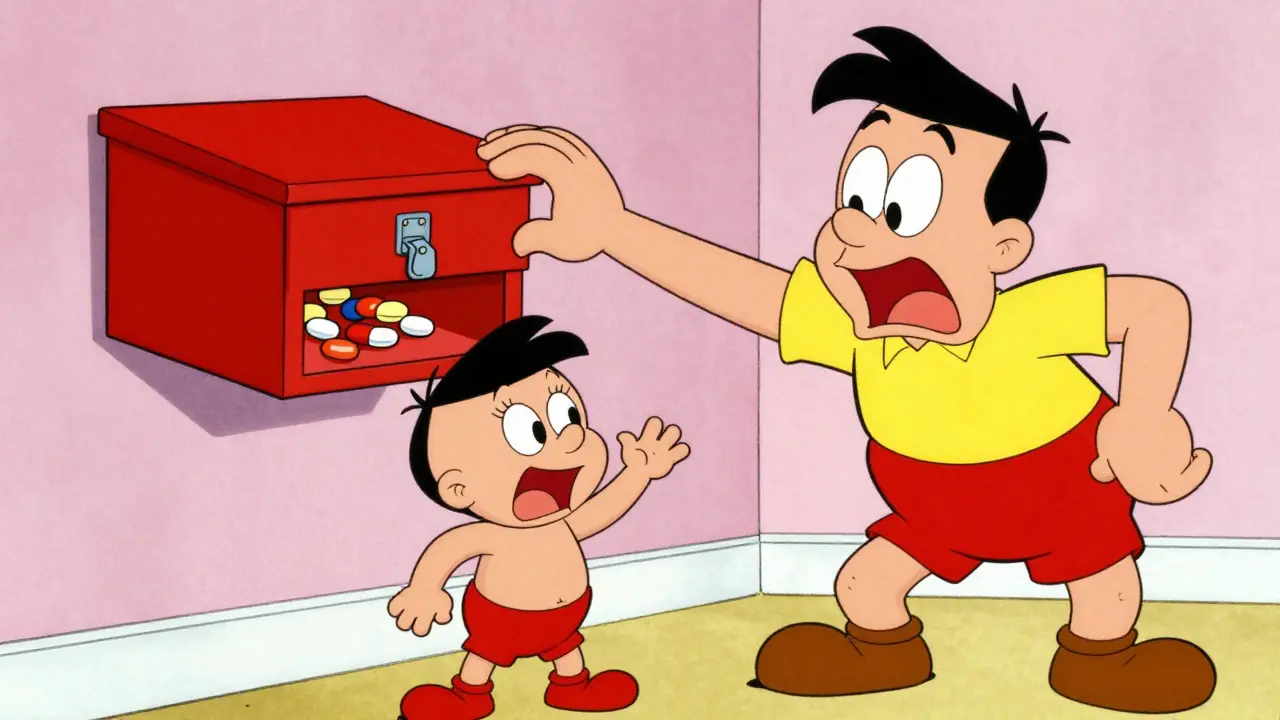
Every year in the U.S., around 60,000 children end up in the emergency room after accidentally swallowing someone else’s medication. Most of these cases happen at home - not because parents are careless, but because they didn’t have a reliable way to keep dangerous drugs out of reach. Child-resistant caps? They don’t work well enough. Hiding pills in a drawer? Kids find them. That’s where a medication lockbox changes everything.
Why Lockboxes Are Necessary
If you’re storing opioids like oxycodone or hydrocodone, benzodiazepines like Xanax, or stimulants like Adderall, you’re holding something that can kill a child in minutes - or be stolen by a teenager looking for a high. The CDC says prescription opioids alone caused over 16,700 overdose deaths in 2021. And while most people think their kids won’t touch medicine, research shows half of 4- to 5-year-olds can open a child-resistant bottle in under a minute. Hidden spots? A 2023 study found 72% of kids locate hidden stashes within 30 minutes. A lockbox isn’t just a good idea - it’s the only proven way to stop accidental poisoning and misuse. Studies show households using lockboxes improve safe storage by 92% compared to those relying on caps or hiding spots. The American Academy of Pediatrics now says locked storage is mandatory for all opioid medications in homes with children.What Counts as a High-Risk Medication?
Not all pills need a lockbox. But these do:- Opioids: Oxycodone (OxyContin, Percocet), hydrocodone (Vicodin, Norco), fentanyl patches
- Benzodiazepines: Alprazolam (Xanax), diazepam (Valium), clonazepam (Klonopin)
- Stimulants: Dextroamphetamine-amphetamine (Adderall), methylphenidate (Ritalin)
- Other high-risk drugs: Sleep aids like zolpidem (Ambien), certain pain patches, and any medication with a black box warning
Types of Lockboxes and What to Buy
Lockboxes come in three main types. Each has pros and cons:| Type | How It Works | Best For | Drawbacks |
|---|---|---|---|
| Key Lock | Uses a physical key | Simple, low-cost ($15-$25) | Keys can be lost or stolen; not ideal for households with multiple users |
| Combination Lock | 3-4 digit code | No keys to lose; good for 1-2 users ($20-$35) | Easy to forget code; hard for elderly or arthritic hands |
| Biometric (Fingerprint) | Opens with fingerprint | Fast, secure, no codes or keys ($35-$60) | More expensive; may fail if fingers are wet or dirty |
Where to Put Your Lockbox
Location is everything. Put it where you can reach it easily - but your kids, visitors, or teens can’t.- DO: Mount it on a wall in your bedroom or home office
- DO: Keep it in a closet behind clothes or on a high shelf you can access
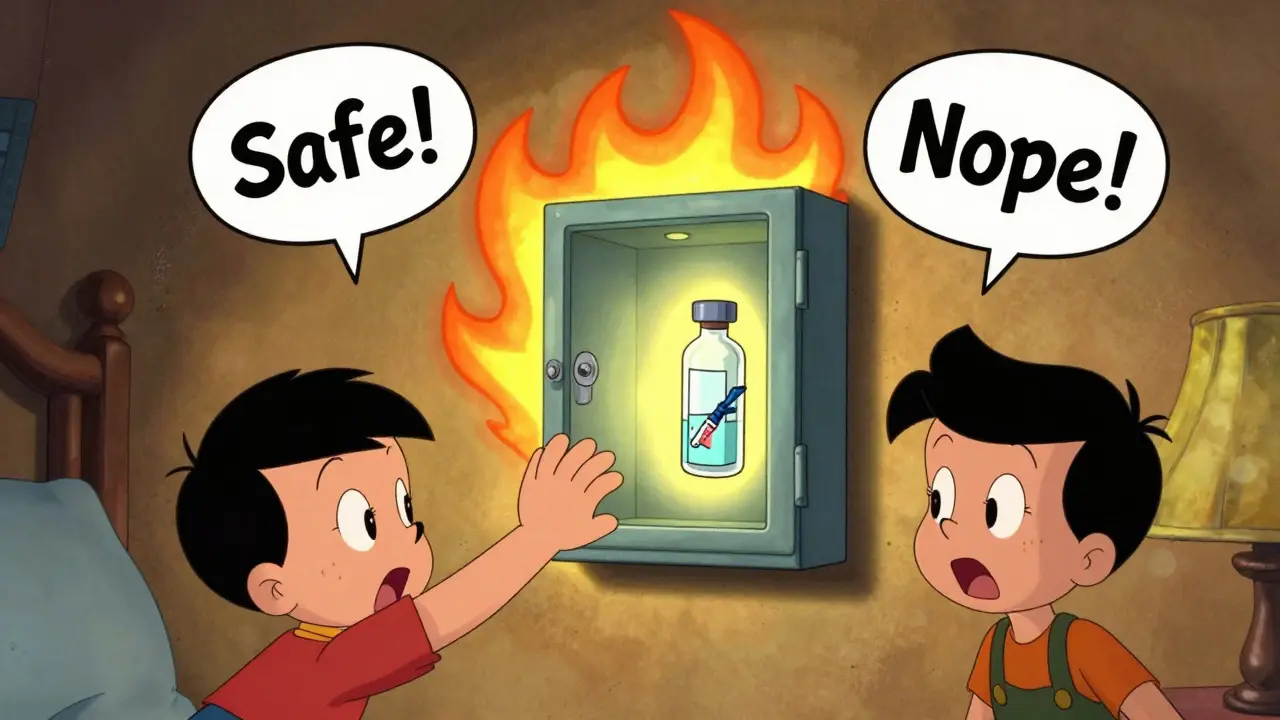
- DO NOT: Put it in the bathroom - humidity ruins pills and electronics
- DO NOT: Leave it on a nightstand, dresser, or under the sink
- DO NOT: Hide it in a toy box, cereal box, or fake book - kids search those places
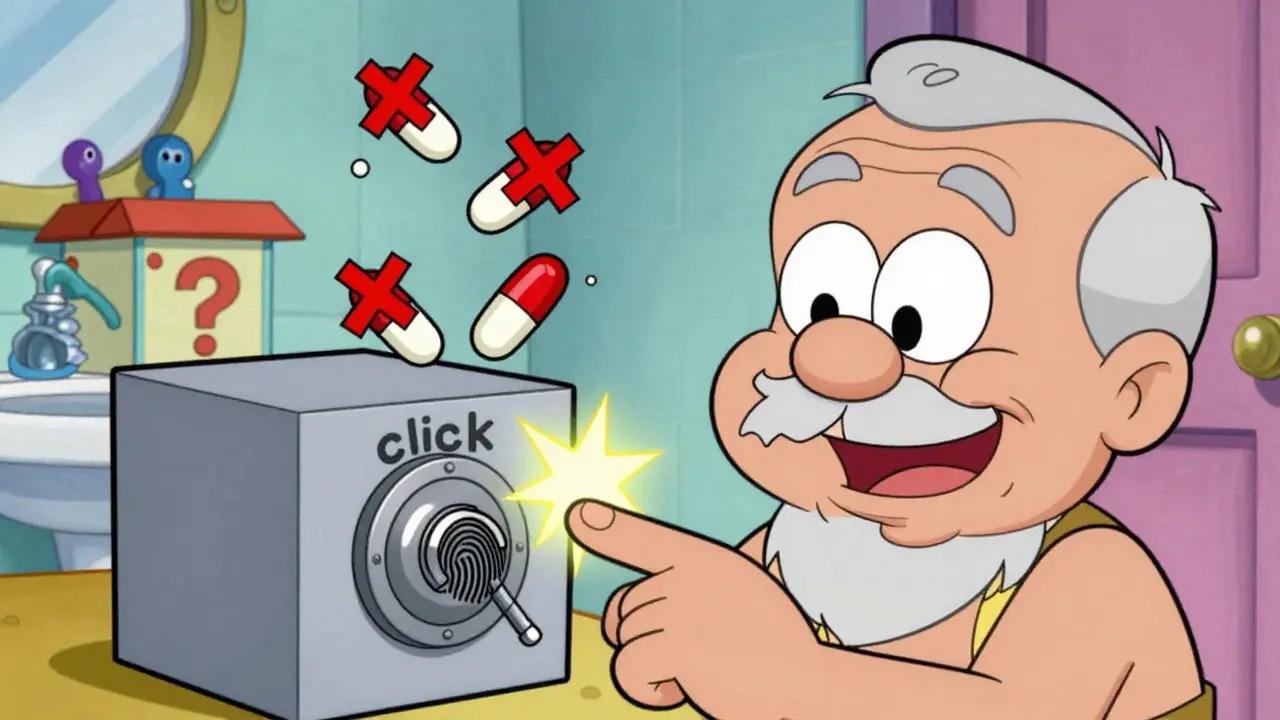
How to Set It Up - Step by Step
Follow this simple 5-step process:- Collect all high-risk meds: Go through every cabinet, drawer, and purse. Look for prescriptions you or someone in your home takes. Don’t forget over-the-counter drugs like sleep aids - they’re often overlooked.
- Choose your lockbox: Pick one that fits your needs. If you have elderly users, go biometric. If you’re on a budget, a combination lock works fine.
- Set your access: Only give the code or key to two people max - you and one other responsible adult. Don’t tell kids, even teenagers. Don’t write the code down on a sticky note.
- Install it securely: Screw it to the wall or place it where it can’t be moved. Test it yourself. Can a 3-year-old reach it? Can a 14-year-old find it?
- Check monthly: Make sure all the right meds are inside. Remove expired pills. If someone moves out or a new person moves in, reset the lock.
Special Cases: Insulin, Travel, and Elderly Users
Some medications need cold storage. If you use insulin, you’ll need a lockbox with a built-in cooler. These exist - look for models labeled “climate-controlled” or “refrigerated.” They’re pricier ($70-$100), but worth it for safety. For travel, buy a small, portable lockbox (4x3x2 inches). These fit in a suitcase and keep your meds secure on trips. Airlines allow them in carry-ons, and TSA won’t hassle you if you’re carrying prescribed medication. Elderly users often struggle with small dials or keys. A 2022 JAMA study found 15% of adults over 75 can’t reliably use combination locks. If you’re caring for an older parent, skip the combo lock. Go biometric. It’s $35 more, but eliminates the stress of forgotten codes.What Not to Do
Here are the biggest mistakes people make:- Thinking child-resistant caps are enough. They’re not. The law requires them - but they’re designed to slow kids down, not stop them.
- Using one lockbox for all meds. Keep high-risk drugs separate from vitamins and aspirin. If you need quick access to Tylenol, don’t lock it up.
- Forgetting to update access. If your teen moves out, change the code. If your partner passes away, reprogram the lock.
- Leaving the key or code with a child. Even if they’re responsible, they shouldn’t have access. That’s how misuse starts.
Real Stories - What Works
One mom on Reddit said her 3-year-old almost got into a fentanyl patch. After installing a Master Lock Medication Lockbox, she said: “Eight months later, zero incidents. I sleep better.” Another user, caring for her 80-year-old father, switched from a combo lock to a fingerprint model after he kept forgetting the code. “It cost $35 more,” she wrote, “but now he opens it in two seconds. No more yelling at him for being slow.” Consumer Reports surveyed 1,200 households. 78% said the lockbox gave them peace of mind. Only 22% said it was inconvenient - and most of those were the ones who still kept their meds out in the open.What’s Next for Medication Lockboxes
The technology is getting smarter. In May 2023, the FDA approved the first “smart” lockbox - the MediVault Pro - that records who opens it and when. It sends alerts to family members if someone tries to access it outside normal hours. The National Institute on Drug Abuse just gave $2.5 million to develop fingerprint-verified dispensers that only release the exact dose prescribed. By January 2024, new homes built with the “Healthy Home” certification will include a built-in lockbox in the bedroom. It’s no longer just a safety tool - it’s becoming standard.Final Thought
You don’t need to be a doctor or a safety expert to keep your family safe. You just need to act. A $20 lockbox can prevent a tragedy. A $60 biometric model can make life easier for everyone. There’s no excuse not to use one.If you have high-risk meds in your house, today is the day you lock them up. Not tomorrow. Not next week. Today.
Can I use a gun safe or filing cabinet instead of a lockbox?
Yes - if it locks securely and keeps medications dry and cool. But most gun safes are too big, heavy, or hard to access quickly. Filing cabinets often don’t lock well enough. A dedicated medication lockbox is designed for this exact purpose: small, secure, and easy to use. It’s the right tool for the job.
Do I need to lock up vitamins and pain relievers like Tylenol?
No. Vitamins, ibuprofen, and acetaminophen aren’t considered high-risk for accidental overdose in children. Focus your lockbox on opioids, benzodiazepines, stimulants, and sleep aids. Keep OTC meds in a separate, child-resistant container - but you don’t need to lock them.
What if I need to give my child their medicine and I’m not home?
Never leave the lockbox code with a babysitter or grandparent unless they’re a trusted, authorized user. Instead, use a biometric lockbox and program in two trusted people. If you’re away, ask someone to come over and open it for you. Never leave extra doses with someone who isn’t authorized - that’s how misuse starts.
Are there free lockboxes available?
Yes. At least 22 U.S. states run free lockbox distribution programs through public health departments, hospitals, or pharmacies. Check with your local health department or visit the Locks Save Lives website. Some programs require proof of a prescription for opioids or benzodiazepines - others give them to anyone with kids at home.
How often should I check the lockbox?
Once a month. Remove expired pills. Make sure all the right medications are inside. If someone in your home starts or stops taking a high-risk drug, update the lockbox immediately. Also, change the code or reset the biometric settings if someone moves out or if you suspect someone else has accessed it.
 Buy Cheap Generic Paxil Online - Safe Tips & Price Guide
 Buy Generic Prilosec (Omeprazole) Online in Australia: Cheap, Safe Options for 2025
 Proton Pump Inhibitors and Antifungals: How They Interfere with Absorption and Effectiveness
 Combimist L Inhaler vs Alternatives: Detailed Comparison Guide
 Tips for ensuring proper hygiene while using brimonidine tartrate eye drops
Cheryl Griffith
January 16, 2026 AT 14:22I never realized how many kids end up in the ER from meds until I read this. My sister’s neighbor had a 2-year-old swallow a fentanyl patch last year. He didn’t make it. This isn’t theoretical-it’s urgent. Lockboxes aren’t optional. They’re the bare minimum.
Nicholas Gabriel
January 17, 2026 AT 15:12Let’s be real: if you’re storing opioids, benzodiazepines, or stimulants-and you don’t have a lockbox-you’re not just being negligent; you’re playing Russian roulette with your child’s life. Child-resistant caps? Ha. I’ve seen toddlers open them in under 12 seconds. And hiding pills? Please. Kids aren’t dumb-they’re curious, and they’re relentless. I’ve got a biometric box. It cost $45. I sleep like a baby now. No excuses.
Melodie Lesesne
January 18, 2026 AT 01:55This is such a helpful guide! I just got a combo lockbox for my dad’s meds-he’s 78 and kept forgetting the code. We switched to a fingerprint one last week and he’s been opening it like a pro. No more yelling, no more stress. I wish more families knew this was even an option. And hey-free ones exist? I’m totally checking my local health dept. 🙌
waneta rozwan
January 18, 2026 AT 15:28Oh, so now we’re treating parents like criminals because they didn’t buy a $60 box? Wow. Next you’ll tell me I need to lock up my toothpaste because a kid might swallow a whole tube. You people are out of control. Not every family has the luxury of spending $60 on a box when they’re barely making rent. Maybe if you didn’t overprescribe these drugs in the first place, we wouldn’t need to turn our homes into Fort Knox.
Ryan Hutchison
January 19, 2026 AT 02:03And this is why America’s falling apart. We’ve got people who can’t even keep their own meds locked up. In my day, we didn’t need fancy gadgets-we just taught kids not to touch stuff that wasn’t theirs. Now? We’re building lockboxes for pills like they’re nuclear codes. Pathetic. Also, why are we letting the FDA dictate home safety? Next they’ll mandate childproof doorknobs.
Samyak Shertok
January 20, 2026 AT 09:26Lockboxes? How quaint. You’re treating medicine like a weapon because you’ve been sold the narrative that every pill is a ticking bomb. But what if the real problem is capitalism turning human suffering into profit-driven prescriptions? What if we stopped prescribing opioids like candy and started treating trauma instead? A lockbox is a Band-Aid on a hemorrhage, my friend. 🌍🧠
Joie Cregin
January 21, 2026 AT 09:42My cousin’s kid once ate a whole bottle of Xanax because it looked like candy. He’s fine now, but it took three hours in the ER and a lifetime of trauma. I bought a biometric box the next day. It’s not about being paranoid-it’s about being smart. And honestly? It’s kinda cool to open it with your thumb. Feels like a secret agent. 🔐😎
Jody Fahrenkrug
January 22, 2026 AT 04:32I’m glad this exists. I’ve got a 4-year-old and a 10-year-old, and I was just using the top shelf. But now I know that’s not enough. I’m getting a wall-mounted one this weekend. No more hiding pills in cereal boxes. I’m done pretending my kids won’t find them.
Kasey Summerer
January 23, 2026 AT 04:06Lockbox? Nah. I just keep my meds in my sock drawer. Kids don’t look there. 😎 Also, I’m from the South-we don’t do fancy gadgets. We do ‘don’t touch that’ and ‘you’ll get spanked.’ Works fine. 🤠
kanchan tiwari
January 23, 2026 AT 08:31THIS IS A GOVERNMENT TRAP. The lockboxes are tracked. They’re linked to your phone. They’re collecting your data so the CDC can monitor your family’s medication use. Next thing you know, they’ll shut off your prescriptions if you ‘overuse’ your box. They’re already watching. Don’t fall for it. 🔍📡
Bobbi-Marie Nova
January 25, 2026 AT 01:25Okay, but can we talk about how the ‘free lockbox’ programs are the real MVPs? My sister got one from her pharmacy after her husband’s opioid prescription. She cried. Like, actual tears. It’s not about the box-it’s about the message: ‘You’re not alone, and we care.’ That’s everything.
Allen Davidson
January 25, 2026 AT 17:41Great guide. Seriously. I’m a nurse and I see this every week. The saddest part? Parents who say, ‘But my kid’s too smart to do that.’ Spoiler: they’re not. Kids are little detectives. I’ve seen them open drawers with chopsticks. Lockboxes aren’t about suspicion-they’re about responsibility. Do it. It takes five minutes. Your future self will thank you.
john Mccoskey
January 26, 2026 AT 09:51Let’s dissect this. The CDC claims 60,000 ER visits annually from pediatric medication ingestion. But how many of those are accidental versus intentional? How many are from non-prescribed sources? How many are from caregivers who didn’t secure their own meds? The data is cherry-picked to sell products. Lockboxes are a $200 million industry. Who benefits? The manufacturers. Who pays? The middle class. The real issue is overprescribing, poor mental health infrastructure, and the pharmaceutical industry’s lobbying power-not whether your child can open a bottle. This is a distraction wrapped in a safety veneer. And don’t get me started on the ‘smart’ lockboxes. Surveillance disguised as safety. We’ve become a society that outsources responsibility to gadgets. Pathetic.
Stephen Tulloch
January 28, 2026 AT 05:19Wow. So we’re now living in a world where your medicine cabinet is a classified zone? Next we’ll need biometric authentication to open the fridge. 🤦♂️ I mean, I get it-safety matters. But this feels like a Silicon Valley dystopia dressed up as parenting advice. A $60 fingerprint box? For pills? I’m not even mad. I’m impressed. 😏🔐