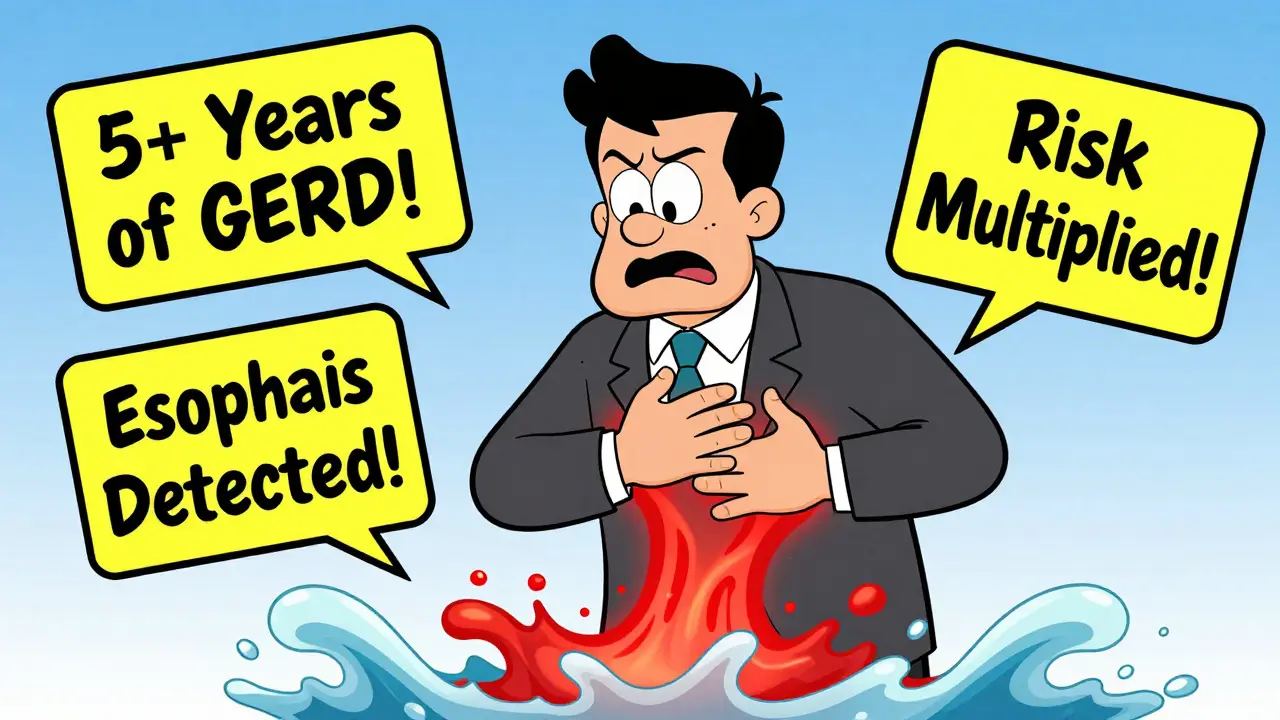
Chronic acid reflux isn’t just an annoyance-it’s a silent warning sign that could lead to cancer. If you’ve had heartburn for five years or more, especially if you’re a man over 50, overweight, or a smoker, your risk of esophageal cancer is significantly higher. The truth is, most people don’t realize how dangerous long-term GERD can be until it’s too late. By the time symptoms like trouble swallowing or unexplained weight loss show up, the cancer is often advanced. But here’s the good news: if you catch it early, survival rates jump from 21% to over 50%. The key is knowing what to watch for and when to act.
How GERD Turns Into Cancer
When stomach acid keeps flowing back into your esophagus, it doesn’t just burn-it changes your body. The lining of your esophagus isn’t designed to handle acid. Over time, your body tries to protect itself by replacing the normal cells with ones that look more like stomach lining. This is called Barrett’s esophagus, and it’s the only known precursor to esophageal adenocarcinoma, the most common type of esophageal cancer linked to GERD.
Research from a 2023 NIH study shows that people with chronic GERD have a 3.2 times higher risk of developing esophageal cancer compared to those without it. That risk jumps to 7 times higher if you have symptoms weekly. The process isn’t fast-it takes years. But once Barrett’s esophagus develops, the cells can slowly become abnormal, then precancerous, then cancerous. About 10-15% of people with long-term GERD develop Barrett’s. Of those, only about 0.2% to 0.5% per year will go on to get cancer. That sounds low, but because so many people have GERD (about 1 in 5 Americans), it adds up to thousands of cases every year.
Who’s at the Highest Risk?
Not everyone with GERD is equally at risk. Certain factors stack the odds. The biggest ones:
- Age over 50: 90% of cases happen in people over 55.
- Male sex: Men are 3 to 4 times more likely than women to develop this cancer.
- White non-Hispanic ethnicity: White Americans have 3 times higher rates than Black Americans.
- Obesity: A BMI of 30 or higher doubles or triples your risk by increasing pressure on your stomach.
- Smoking: Current or past smokers have 2 to 3 times higher risk.
- Family history: If a close relative had esophageal cancer, your risk goes up.
- GERD duration: Five or more years of symptoms-even if you take medication-counts as chronic.
Combine three or more of these, and your risk multiplies. For example, a 60-year-old white man who’s overweight, smokes, and has had heartburn for 15 years has a risk level that’s far beyond average. The BE MAPPED risk calculator, developed by the American Gastroenterological Association, uses these exact factors to estimate individual risk with 85% accuracy.
Red Flags That Demand Immediate Action
Most people with early esophageal cancer feel fine. That’s why symptoms like heartburn are often ignored. But when cancer starts to grow, your body sends unmistakable signals. Don’t wait. If you have any of these, see a doctor right away:
- Dysphagia-difficulty swallowing, especially solid foods first, then liquids. This happens in 80% of diagnosed cases.
- Unexplained weight loss-losing 10 pounds or more in six months without trying.
- Food impaction-feeling like food is stuck in your chest or throat, even after drinking water.
- Chronic hoarseness or cough-lasting more than two weeks, especially if you don’t have a cold or allergies.
- New or worsening heartburn after age 50-especially if you have other risk factors like obesity or smoking.
These aren’t vague complaints. They’re clinical red flags. The American Cancer Society says 75% of esophageal cancers are found at advanced stages because people dismiss these signs as “just GERD getting worse.” That’s why timing matters. If you’ve had GERD for five years and now you’re having trouble swallowing, don’t wait another month. Get an endoscopy.
What Screening Actually Looks Like
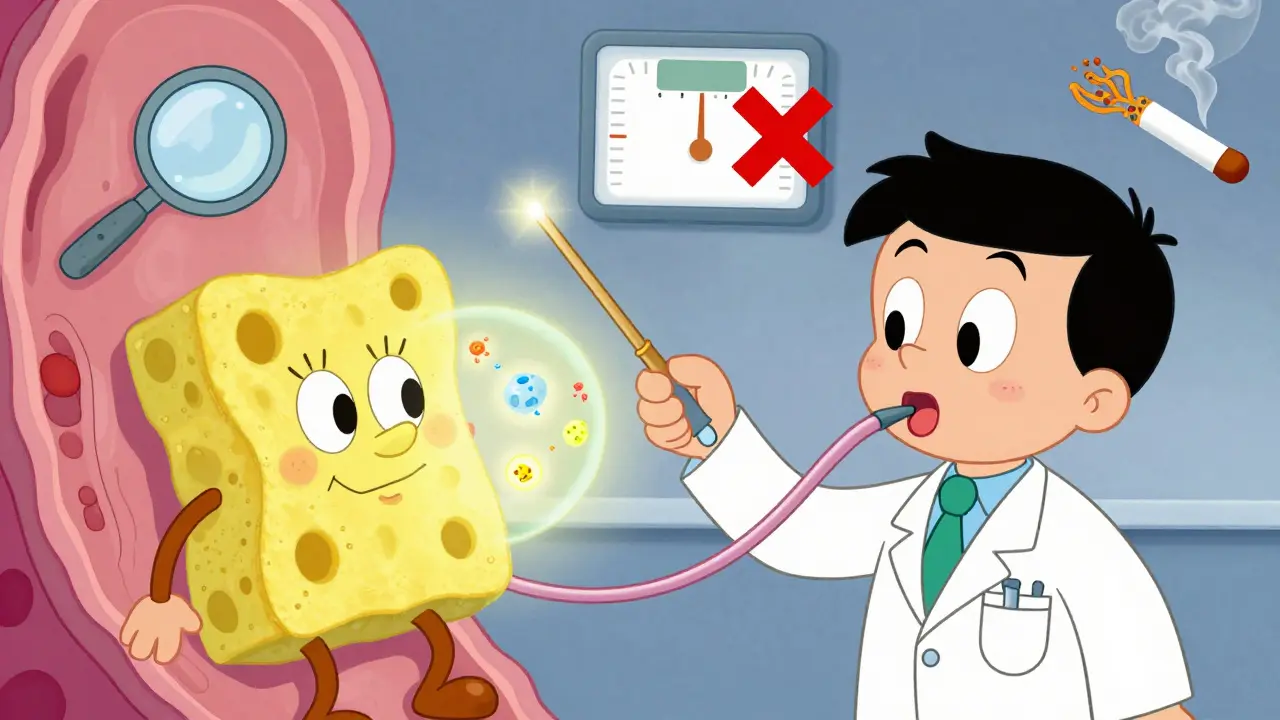
Screening isn’t for everyone. The American College of Gastroenterology recommends upper endoscopy for white men over 50 with chronic GERD (five+ years) and at least two other risk factors (like obesity or smoking). The procedure is simple: a thin, flexible tube with a camera goes down your throat to look at your esophagus. If Barrett’s esophagus is found, biopsies are taken to check for abnormal cells.
For people already diagnosed with Barrett’s, regular surveillance is critical. If you have low-grade dysplasia, you’ll need an endoscopy every 2 to 3 years. If you have high-grade dysplasia, your doctor may recommend removing the abnormal tissue using endoscopic techniques like radiofrequency ablation. Studies show this reduces cancer risk by 60-70%.
Newer tools are making screening easier. The Cytosponge-a pill-sized sponge on a string you swallow-collects cells from your esophagus and can detect Barrett’s with nearly 80% accuracy. It’s not yet standard everywhere, but it’s a promising alternative for people who avoid endoscopy.
How to Lower Your Risk
Even if you’ve had GERD for years, it’s not too late to reduce your risk. Here’s what works:
- Quit smoking: Within 10 years of quitting, your cancer risk drops by half.
- Lose weight: Shedding 5-10% of your body weight cuts GERD symptoms by 40% in obese people.
- Limit alcohol: Stick to one drink a day for women, two for men. Heavy drinking raises squamous cell cancer risk, but not adenocarcinoma as much.
- Take PPIs consistently: If you have Barrett’s esophagus, taking proton pump inhibitors daily for five+ years reduces cancer risk by 70%.
- Treat GERD early: Studies show early, consistent treatment can lower Barrett’s risk by 40-60%.
These aren’t just lifestyle tips-they’re proven medical interventions. The same 2023 NIH study found that GERD patients had lower risks of colorectal, liver, and pancreatic cancers, likely because they’re under more medical supervision. That’s a hidden benefit of managing GERD: you’re more likely to catch other problems early too.
Why This Is Getting Worse
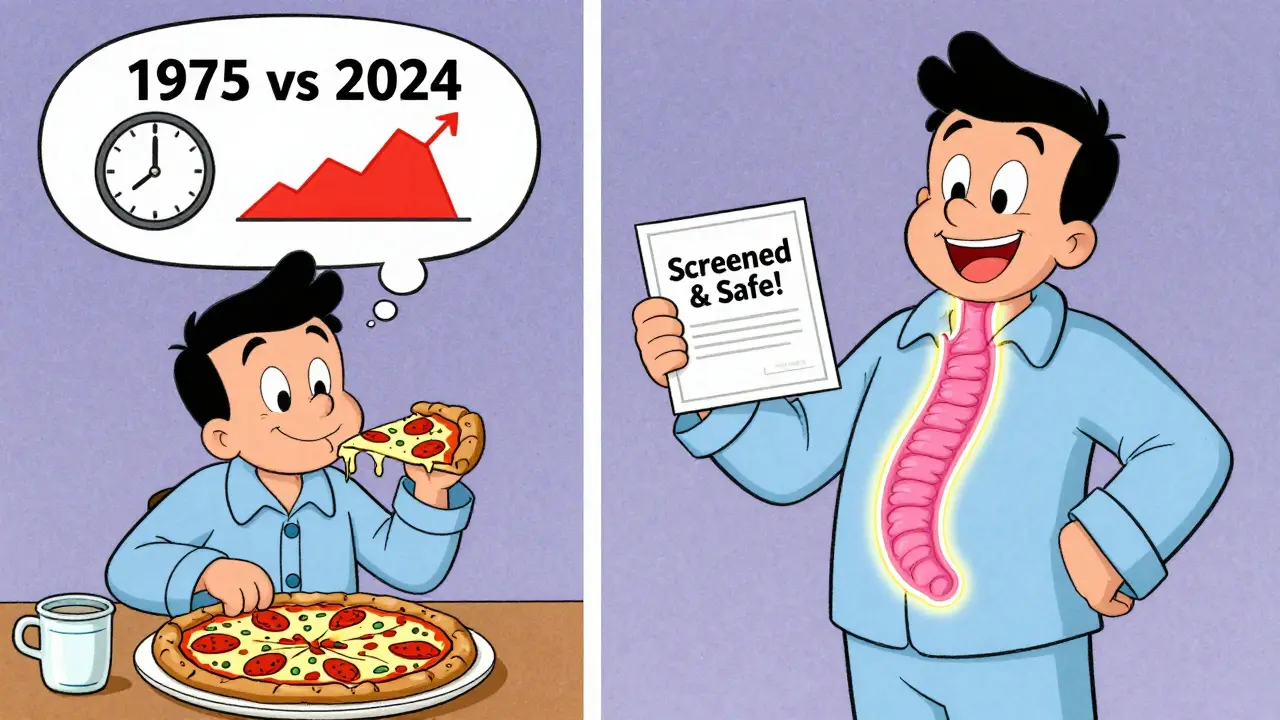
Since 1975, cases of esophageal adenocarcinoma have increased by 850%. Why? Because obesity rates have soared-from 15% of U.S. adults in the late 1970s to over 40% today. More weight means more pressure on the stomach, more acid reflux, and more Barrett’s esophagus. At the same time, squamous cell cancer (linked to smoking and alcohol) is declining because fewer people smoke.
The result? A growing epidemic of GERD-related cancer. Yet only 13% of high-risk people get screened. That’s a massive gap. If you fit the profile, don’t assume you’re fine because you “take pills.” Pills control symptoms-they don’t reverse cellular changes. Only endoscopic screening can do that.
What’s Next for Detection
Research is moving fast. Scientists are now looking at genetic markers-like variations in the CRTC1 gene-that can double or triple your risk of progressing from GERD to Barrett’s. Future screenings may combine your genetic profile with your BMI, smoking history, and GERD duration to give you a personalized risk score.
Endoscopic technology is also improving. Tools like narrow-band imaging and confocal laser endomicroscopy let doctors see cell changes in real time during the procedure, improving detection by 25-30%. These aren’t science fiction-they’re being used in top hospitals right now.
For now, the best tool you have is awareness. Know your risk. Know the red flags. Don’t wait for pain to become unbearable. If you’ve had chronic GERD and you’re over 50, especially if you’re male or overweight, talk to your doctor about screening. Early detection doesn’t just save lives-it saves your ability to eat, swallow, and live without fear.
Can GERD cause esophageal cancer even if I take medication?
Yes. Medications like PPIs reduce acid and relieve symptoms, but they don’t reverse existing damage to the esophagus lining. If you’ve had GERD for five or more years, you could still have developed Barrett’s esophagus-even if you feel fine. That’s why screening with endoscopy is critical for high-risk individuals, regardless of medication use.
Is esophageal cancer curable if caught early?
Yes, when caught at an early stage-before it spreads beyond the esophagus-the 5-year survival rate is 50-60%. That’s more than double the overall survival rate of 21%. Early detection through endoscopy allows doctors to remove precancerous tissue before it becomes cancer, often without major surgery.
How often should I get screened for Barrett’s esophagus?
If you’ve been diagnosed with Barrett’s esophagus, screening frequency depends on whether abnormal cells (dysplasia) are found. For no dysplasia, repeat endoscopy every 3-5 years. For low-grade dysplasia, every 6-12 months. For high-grade dysplasia, treatment is usually recommended immediately. Always follow your gastroenterologist’s specific advice.
Can I get screened if I’m not white or under 50?
Current guidelines focus on white men over 50 because they’re at highest risk. But if you have chronic GERD (5+ years) and multiple risk factors-like obesity, smoking, or family history-regardless of race or age, you should discuss screening with your doctor. Risk isn’t limited by demographics; it’s driven by biology and exposure.
Does losing weight really reduce cancer risk?
Yes. Losing just 5-10% of your body weight reduces GERD symptoms by 40% in obese individuals. Less acid reflux means less damage to the esophagus, which lowers the chance of developing Barrett’s esophagus-and eventually cancer. Weight loss is one of the most effective, evidence-backed ways to break the GERD-to-cancer chain.
Are there any new non-invasive tests for Barrett’s esophagus?
Yes. The Cytosponge is a pill-sized sponge on a string that you swallow. Once it reaches the esophagus, it expands and collects cells, which are then tested for Barrett’s markers. In a 2022 Lancet study, it detected Barrett’s with 79.9% accuracy. It’s not yet widely available, but it’s a promising alternative for people who avoid endoscopy due to discomfort or access issues.
If you’ve been ignoring heartburn for years, it’s time to stop. This isn’t about being overly cautious-it’s about acting on real data. Your esophagus can’t tell you it’s in danger. You have to listen to the signs. And if you’re at risk, don’t wait for a crisis. Get checked. Your future self will thank you.
 Blue Light and Eye Health: Screen Filters and Habits That Actually Work
 How to Manage Interactions When Starting a New Medication
 The Connection Between Tendonitis and Lyme Disease: What You Need to Know
 Ventolin vs. Levalbuterol: A Detailed Clinical Comparison of Modern Inhalers
 Understanding Anemia: Causes, Symptoms, and Treatments
Ian Cheung
January 10, 2026 AT 09:31Man I used to laugh at my dad for taking PPIs like they were candy until I started getting heartburn after every burrito night. Now I’m the guy who carries antacids in his backpack. Turns out my 15 years of ‘just spicy food’ was actually a ticking time bomb. Got my endoscopy last month - no Barrett’s yet but I’m on the list for annual checks. Don’t wait like I did. Your esophagus doesn’t get a do-over.
Jaqueline santos bau
January 11, 2026 AT 20:46Okay but why is no one talking about how this is a CLASS issue? If you’re poor, you don’t get endoscopies. You get told to ‘eat less junk’ and then die of cancer at 58 while rich white dudes get their esophagus scraped like a luxury spa treatment. I’ve seen this play out in my family - my uncle got diagnosed after collapsing at work, and the hospital only did the test because his daughter worked there. This isn’t medicine, it’s privilege.
Jay Amparo
January 12, 2026 AT 12:49As someone from India who moved to the US 12 years ago, I’ve seen this shift firsthand. Back home, GERD was ‘heat’ and we drank buttermilk. Here, it’s a full-blown medical emergency. My cousin in Delhi just got diagnosed with Barrett’s at 49 - he’s never smoked, not overweight, but he’s had acid reflux since he was 30. The diet change alone - more fried food, less fermented stuff - might be doing more damage than we think. We need global studies on this, not just US-centric data.
Also, the Cytosponge? That’s genius. My aunt hates needles and doctors, but she swallowed a pill last week and cried because it was ‘less scary than a dentist.’ We need more of this. Accessibility saves lives.
Lisa Cozad
January 13, 2026 AT 15:56I’m a nurse and I see this every day. Patients come in saying ‘I’ve had heartburn for years but I thought it was normal.’ Normal? No. It’s your body screaming. I had a patient last month - 56, male, smoker, BMI 34, GERD since 2010 - came in because he couldn’t swallow his own saliva. Endoscopy found high-grade dysplasia. He had RFA last week. No chemo. No major surgery. Just a scope and a burn. He’s back at work. Early detection isn’t optional. It’s everything.
Saumya Roy Chaudhuri
January 14, 2026 AT 19:12Everyone’s talking about endoscopies but no one mentions the real villain: sugar. You think it’s the spicy food? Nah. It’s the soda, the pastries, the ‘healthy’ granola bars loaded with fructose. That stuff triggers acid production like crazy. I’ve been off sugar for 18 months and my GERD vanished. No meds. No endoscopy needed. Stop blaming your genetics - blame your pantry. And yes, I’ve read the studies. Sugar alters gut pH and weakens the LES. It’s not a myth. It’s biochemistry.
anthony martinez
January 15, 2026 AT 01:23So let me get this straight. You’re telling me I need to get a camera shoved down my throat because I eat tacos and sleep on my side? Cool. I’ll just keep taking my omeprazole and pretending I’m not a walking time bomb. At least I’ve got the luxury of denial. And by luxury, I mean the American dream of ignoring everything until it kills you.
Mario Bros
January 16, 2026 AT 03:47Bro. I was the guy who thought ‘GERD’ was just a fancy word for heartburn. Then my cousin got diagnosed at 52. Now I’m the one asking my doctor about the Cytosponge. Lost 18 lbs, quit smoking, and I actually drink water instead of soda. I’m not trying to be a hero - I just don’t want to be another statistic. If you’re over 50 and have had acid reflux longer than your last relationship? Get checked. Your future self will high-five you.
Jake Nunez
January 17, 2026 AT 18:35My grandfather died of this. Never got screened. Thought it was ‘just indigestion.’ Now I make my dad get his endoscopy every three years. He’s 61, white, overweight, smoked for 30 years. He hates it. But he goes. Because I won’t let him be another name on a chart. This isn’t fear-mongering. It’s family legacy.