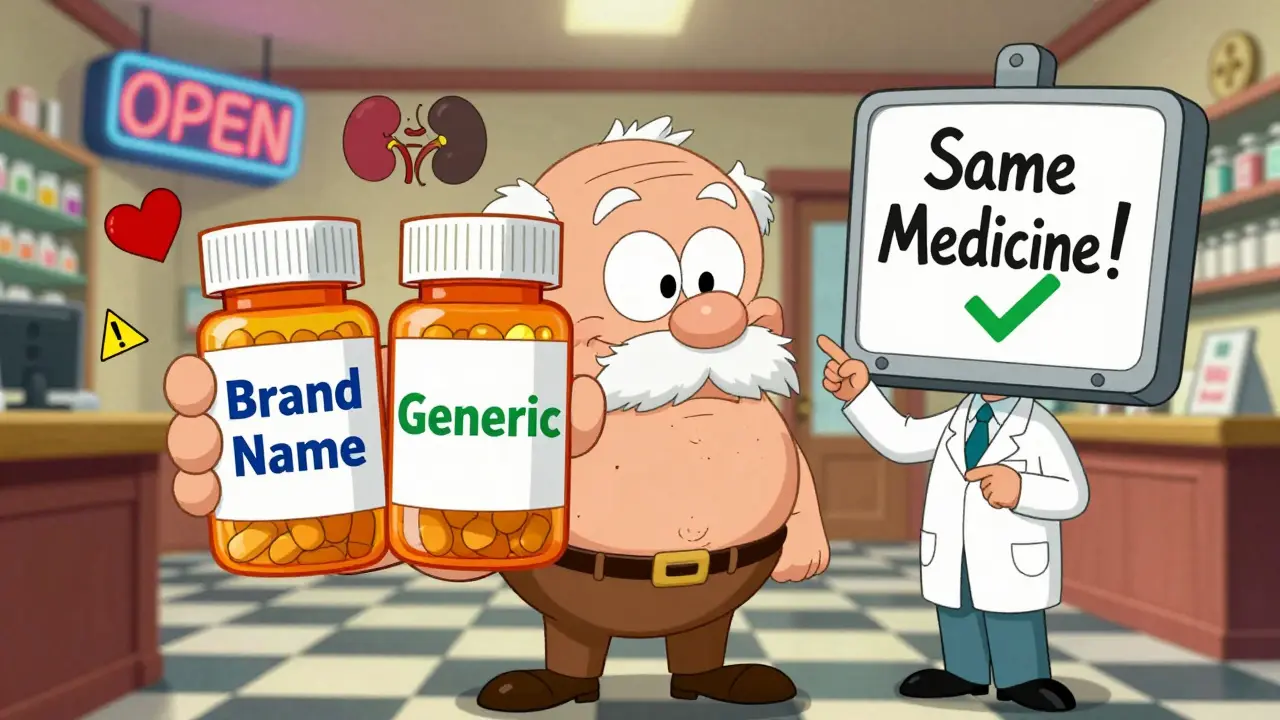
When older adults switch from brand-name medications to generics, it’s not just a cost-saving move-it’s a health decision with real consequences. For many seniors, the switch saves hundreds a year. But for others, it triggers confusion, anxiety, or even dangerous side effects. The truth? Generics are just as effective as brand-name drugs in most cases. But when you’re over 65, your body changes in ways that make even small differences matter.
Why Generics Are Usually Safe-But Not Always Simple
The FDA requires generic drugs to have the same active ingredient, strength, and dosage form as the brand-name version. They must also be bioequivalent, meaning they deliver the same amount of medicine into your bloodstream within a narrow range-80% to 125% of the brand. That sounds precise. And for most people, it is. But for older adults, that range isn’t always enough. As we age, our kidneys slow down. Liver function drops. Body fat increases and muscle mass declines. These changes affect how drugs are absorbed, broken down, and cleared from the body. A tiny difference in how fast a drug enters the bloodstream might not matter for a 30-year-old with healthy organs. But for an 80-year-old with a creatinine clearance under 50 mL/min, it can mean the difference between control and crisis. Take warfarin, a blood thinner used to prevent strokes. Even small shifts in blood levels can lead to dangerous clots or bleeding. A 2021 study of nearly 135,000 patients found that switching from brand-name warfarin to a generic version led to an 18.3% higher chance of an emergency room visit within 30 days. That’s why the American Geriatrics Society recommends against automatic substitution for elderly patients on warfarin unless doctors closely monitor INR levels.The Hidden Risk: Polypharmacy and the Perfect Storm
Most elderly patients aren’t taking just one medication. They’re taking five, ten, even fifteen. Nearly half of all Medicare beneficiaries use five or more prescriptions daily. That’s called polypharmacy-and it’s the biggest risk factor for bad outcomes when switching to generics. Why? Because each drug interacts with others. A change in one can throw off the balance of the whole system. A generic version of a blood pressure pill might be absorbed slightly slower. That might push another drug, like a diuretic, into a higher concentration. The result? Dizziness, falls, kidney stress. The American Geriatrics Society’s Beers Criteria lists over 50 medications that are risky for older adults. Using even one of these increases the chance of hospitalization by 91%. When you’re on multiple risky drugs, the risk multiplies. And here’s the kicker: many of these dangerous combinations involve over-the-counter meds. Four of the top 10 drugs used by seniors-ibuprofen, aspirin, acetaminophen, and diphenhydramine-are available without a prescription. Many are packed into multi-symptom formulas. One pill might contain three drugs. One 75-year-old might take two different nighttime sleep aids, not realizing both contain diphenhydramine. The result? A toxic buildup that lands them in the ER.Perception Matters More Than You Think
Even when generics are scientifically identical, many older adults don’t believe they work the same. A 2023 study of 315 Medicare patients found fewer than half thought generics were as safe or effective as brand-name drugs. That’s not ignorance-it’s experience. Many seniors remember switching to a generic and feeling worse. Maybe the pill looked different. Maybe it had a different shape, color, or size. Maybe they noticed a change in energy, sleep, or mood. In online forums like r/geriatrics, 73% of 147 commenters reported symptoms returning after switching from Synthroid (brand levothyroxine) to a generic version. Their stories aren’t all in their heads. Some patients do experience subtle changes in absorption, especially with thyroid meds, seizure drugs, or anticoagulants. The problem? Doctors often don’t ask. Patients don’t report it. They assume it’s just aging. But a 2022 Pharmacy Times analysis found that nearly half of seniors with low health literacy believed generics were less effective. That belief alone reduces adherence. If you think the pill won’t work, you’re less likely to take it. And skipping doses is just as dangerous as taking the wrong one.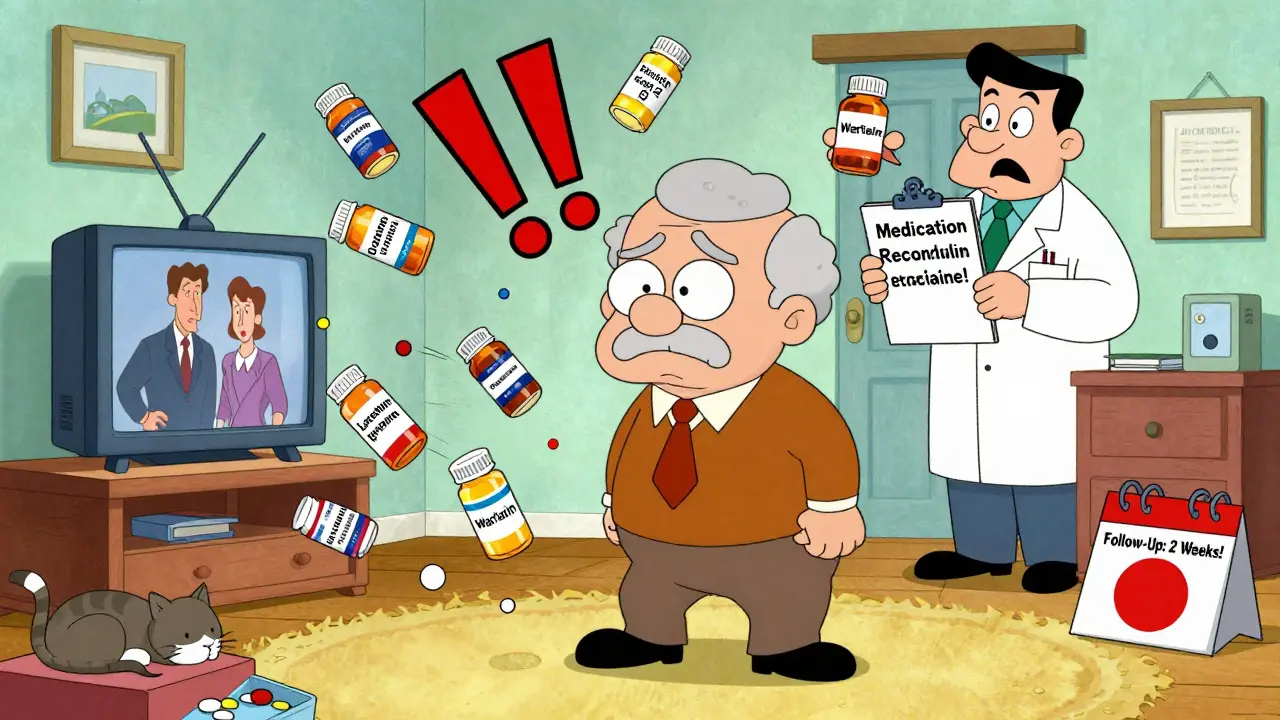
When Switching to Generics Makes Sense
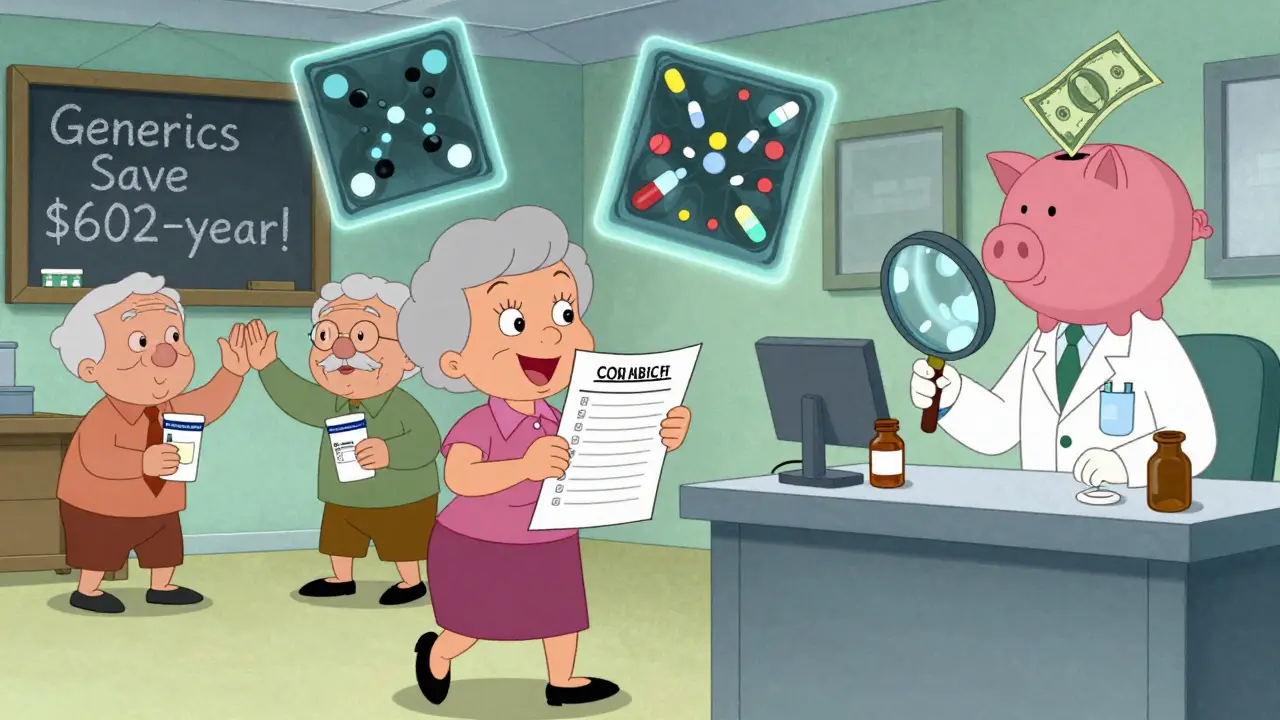
The good news? For most seniors, switching to generics is safe-and smart. Medicare Part D beneficiaries filled over 527 million generic prescriptions in 2022. That’s 89% of all prescriptions. The average savings? $602 per person annually. For someone on a fixed income, that’s groceries, heating, or rent. For common conditions like high blood pressure, high cholesterol, or type 2 diabetes, generics are just as reliable. A 2023 AARP survey found 82% of seniors on generic blood pressure meds reported no difference in how they felt. No dizziness. No fatigue. No worsening symptoms. That’s the norm. The key is knowing which drugs are safe to switch-and which aren’t. Here’s the simple rule:- Safe to switch: Statins (atorvastatin, simvastatin), ACE inhibitors (lisinopril), metformin, SSRIs (sertraline), most antibiotics.
- Proceed with caution: Warfarin, levothyroxine, phenytoin, lithium, cyclosporine, theophylline.
What Doctors and Pharmacists Should Do
Switching generics isn’t just a pharmacy decision. It’s a care coordination issue. A 2024 JAMA Network Open review showed that when clinical pharmacists joined the care team, they reduced inappropriate medications by 37%. That’s not magic-it’s attention. Here’s what works:- Medication reconciliation at every visit. Don’t just ask what you take. Show the patient the pills. Compare brand and generic side by side. Use pictures. Say: "This is your old pill. This is the new one. They have the same medicine inside. The only difference is the color and the name on it."
- Use the teach-back method. Ask: "Can you tell me why you’re taking this now?" If they can’t explain it, they won’t take it. Studies show this boosts adherence by 42%.
- Use tech to help. Computerized systems that flag risky combinations or duplicate prescriptions cut errors by nearly 30%.
- Don’t assume compliance. If a patient says they’re fine, ask: "Have you noticed any changes since we switched?" Don’t say: "Are you having side effects?" That sounds like something’s wrong. Instead, ask: "How are you feeling compared to before?"
What Seniors and Families Can Do
You don’t need to be a doctor to protect yourself. Here’s what you can do right now:- Keep a written list. Include the name, dose, purpose, and whether it’s brand or generic. Update it every time something changes.
- Ask about cost before switching. Sometimes, the brand is cheaper with a coupon or discount program. Don’t assume the generic is always cheaper.
- Track how you feel. Write down energy levels, sleep, mood, dizziness, or confusion. Bring it to your next appointment.
- Never stop or switch on your own. If you think a generic isn’t working, talk to your doctor. Don’t go back to the brand without checking.
- Check for OTC overlaps. Look at every bottle in your medicine cabinet. Are you taking two things with the same active ingredient? That’s how overdoses happen.
The Future Is Generic-But Only If We Get It Right
By 2030, 93.5% of Medicare prescriptions will be generic. That’s not a guess-it’s a projection from the Congressional Budget Office. The money saved will be enormous. But savings mean nothing if people get sicker because they stop taking their meds. The real challenge isn’t science. It’s communication. It’s trust. It’s making sure seniors understand that a white pill isn’t less powerful than a blue one. That a generic isn’t a bargain bin drug-it’s a regulated, tested, life-saving medicine. The system is improving. New guidelines from the American Geriatrics Society, updated in late 2024, now include pharmacist-led deprescribing programs in emergency departments. The National Action Plan for ADE Prevention is targeting NSAID overdoses, which cause 15% of all adverse events in seniors. But progress depends on you. If you’re caring for an older adult, ask the questions. If you’re the patient, speak up. Don’t let fear or silence cost you your health.Are generic drugs really as effective as brand-name drugs for elderly patients?
Yes, for most medications, generics are just as effective. The FDA requires them to contain the same active ingredient, in the same strength and dosage form, and to deliver the same amount of medicine into the bloodstream as the brand-name version. Studies show no difference in outcomes for common conditions like high blood pressure, cholesterol, or diabetes. But for drugs with a narrow therapeutic index-like warfarin, levothyroxine, or lithium-even small differences in absorption can matter. Close monitoring is needed when switching these.
Why do some elderly patients feel worse after switching to generics?
Some seniors report changes in energy, mood, or symptoms after switching. This isn’t always due to the drug itself. Changes in pill size, color, or shape can trigger anxiety or reduce adherence. For drugs like levothyroxine or warfarin, minor differences in how the body absorbs the medicine can have real effects-especially in older adults with slower metabolism or kidney issues. In rare cases, inactive ingredients (like fillers or dyes) may cause reactions. Always report changes to your doctor.
Which medications should seniors avoid switching to generics?
The American Geriatrics Society advises caution with drugs that have a narrow therapeutic index-where small changes in blood levels can cause harm. These include warfarin (blood thinner), levothyroxine (thyroid hormone), phenytoin (seizure control), lithium (mood stabilizer), and cyclosporine (immunosuppressant). Automatic substitution without monitoring isn’t recommended. Always consult your doctor before switching these.
How can I tell if my generic medication is working properly?
Track how you feel. Note changes in energy, sleep, mood, dizziness, or swelling. For some drugs, like warfarin or thyroid meds, your doctor will order blood tests before and after switching to check levels. If you’re on blood pressure or diabetes meds, monitor your readings at home. If you notice new or worsening symptoms after switching, contact your doctor. Don’t assume it’s just aging.
Is it safe to take multiple generic medications together?
It’s generally safe, but the risk of harmful interactions increases with the number of drugs you take. Nearly half of Medicare beneficiaries use five or more medications daily. This is called polypharmacy and raises the chance of side effects, falls, and hospitalizations. Always review your full list with your pharmacist or doctor. Ask if any drugs can be stopped or replaced. Over-the-counter meds like ibuprofen or diphenhydramine can be dangerous when mixed with prescriptions.
What should I do if I can’t afford my brand-name medication?
Don’t skip doses or split pills. Talk to your doctor or pharmacist. Ask if a generic is available and safe for your condition. Many drug manufacturers offer patient assistance programs. Medicare Part D has a low-income subsidy. Some pharmacies have $4 generic lists. You can also check nonprofit organizations like NeedyMeds.org for help. Never stop taking a medication because of cost-find help instead.
 Albendazole’s Impact on Healthcare: Public Health Wins, Costs, and 2025 Market Reality
 How Clavulanic Acid Revolutionizes Antibiotic Treatments for Resistant Infections
 How Budesonide Formoterol Helps Manage Chronic Obstructive Pulmonary Disease (COPD)
 Compare Isoptin (Verapamil) with Alternatives: What Works Best for Heart Conditions
William Liu
December 18, 2025 AT 19:09Generics saved me over $800 last year on my blood pressure meds. No difference in how I feel. My doctor says the science is solid. If it works, it works. No need to overcomplicate it.
jessica .
December 20, 2025 AT 11:02you think the fda is really watching this? lol. big pharma owns the system. they let the generics in but make sure the fillers are different so you get weird side effects. they want you dependent. watch the videos on youtube about the ‘pill swap scam’.
Ryan van Leent
December 22, 2025 AT 05:52why are we even having this conversation? if you’re old enough to need 10 pills a day you should just let someone else manage your meds. i’m not paying for your confusion. just take what they give you and stop complaining. this is why healthcare costs are insane.
Glen Arreglo
December 22, 2025 AT 07:59my mom switched from brand levothyroxine to generic and felt like a zombie for two weeks. we went back to the brand and she’s been fine. i’m not anti-generic. i’m pro-patient. if someone feels different, listen. not every body is a lab rat. doctors need to ask, not assume.
shivam seo
December 24, 2025 AT 04:18australia does this better. we have the tga and they test every batch. here? they let a generic company change the dye color and suddenly grandma’s dizzy. this isn’t science. it’s corporate greed dressed up as cost savings. and now we’re blaming the elderly for not being ‘adherent’.
Andrew Kelly
December 25, 2025 AT 10:01the real issue isn’t generics it’s that doctors don’t educate patients. i’ve seen people panic because their pill changed color. they think it’s fake. no one told them it’s the same. if you treat people like idiots they’ll act like idiots. simple as that.
Isabel Rábago
December 27, 2025 AT 04:22my uncle died from a bleeding ulcer because he switched to a generic blood thinner and didn’t tell his doctor. he thought it was fine because it was cheaper. now his family is in court. this isn’t just about side effects. it’s about accountability. someone should be held responsible.
Mike Rengifo
December 28, 2025 AT 20:43i’ve been on generic statins for 7 years. no issues. my cholesterol is stable. my wife switched from brand to generic for her antidepressant and said she felt ‘off’ for a week. went back. felt better. both are valid. context matters. not every switch is a disaster. not every brand is magic.
Laura Hamill
December 29, 2025 AT 03:18THEY’RE DOING IT ON PURPOSE!!! 🤯 the pills are different colors so you think you’re getting something weaker. they want you to think you’re broken so you keep buying more. i saw a documentary where the FDA let a company use a filler that causes seizures in seniors. they covered it up. #GenericsArePoison
Janelle Moore
December 30, 2025 AT 09:14my neighbor took 2 different sleep aids both with diphenhydramine and ended up in the er. she didn’t even know they had the same thing. this is why you need a pharmacist to sit with you and go through every bottle. no one else will do it. you have to ask.
Chris porto
January 1, 2026 AT 07:39we treat meds like they’re interchangeable like socks. but your body isn’t a washing machine. some drugs are delicate. some people are delicate. maybe the solution isn’t forcing generics everywhere but giving people the choice and the tools to understand it. dignity matters more than savings.
Erica Vest
January 2, 2026 AT 20:51for warfarin: always monitor INR before and 2-4 weeks after switching. for levothyroxine: check TSH. for phenytoin: check serum levels. for all others: if you feel fine, stay on it. if you feel worse, go back. simple protocol. pharmacists are trained to do this. use them.
Chris Davidson
January 3, 2026 AT 05:16stop making excuses. if you can’t afford your meds you made bad life choices. generics exist for a reason. take them or don’t. but don’t cry about it. the system isn’t broken. you are.
Kinnaird Lynsey
January 4, 2026 AT 21:38you know what’s funny? the same people who scream about generics being unsafe are the ones who buy ‘natural’ supplements that have zero regulation. ironic. also… your ‘brand’ pill was made in the same factory as the generic. just with a different label.