Why Your Eyes Feel Tired After Screens
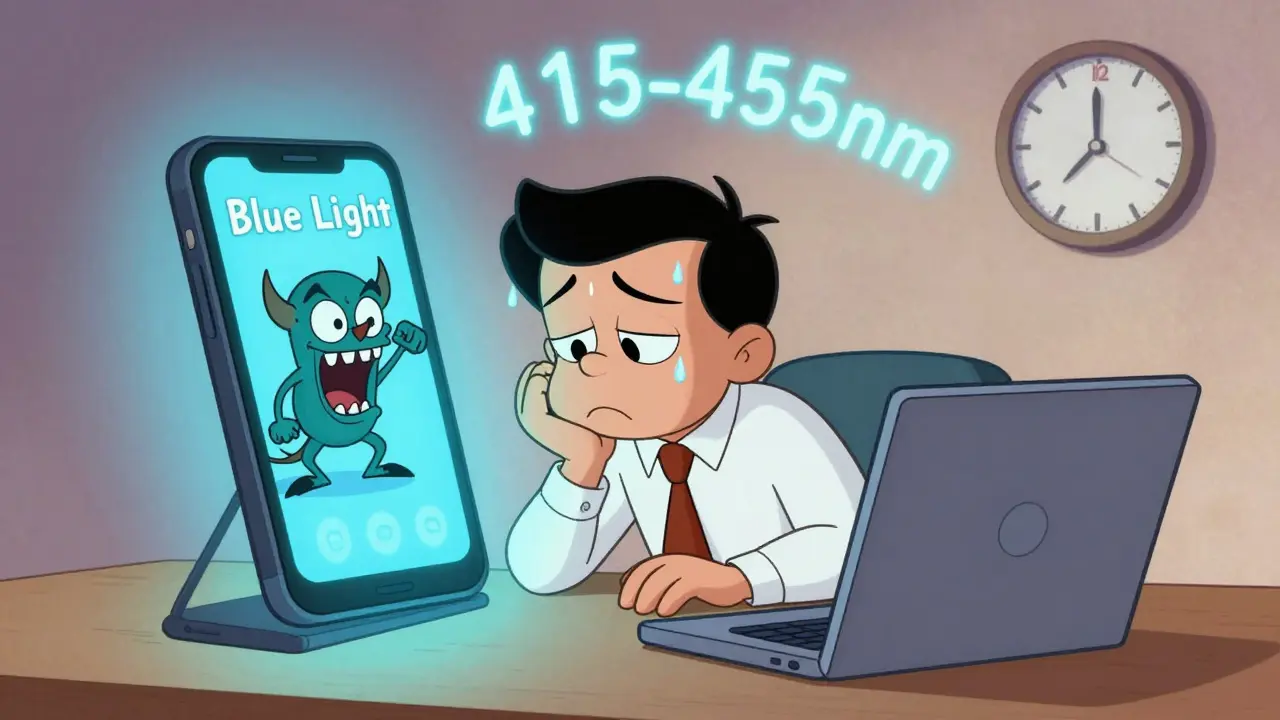
You’ve been staring at your phone, laptop, or tablet for hours. Your eyes feel dry, your head aches, and you can’t seem to focus. You blame it on being tired-but it might be blue light. This isn’t just a buzzword. Blue light is a real part of the visible spectrum, between 415 and 455 nanometers, and it’s everywhere now-phones, TVs, LED lights, even your car dashboard.
Unlike UV light, blue light doesn’t burn your skin, but it does something quieter and more persistent. It passes right through your cornea and lens and hits your retina. Studies from the National Institutes of Health show that prolonged exposure to this range of light can trigger oxidative stress in eye cells. One 2018 study found that just 24 hours of blue light at typical screen levels reduced human corneal cell viability by over 37%. That’s not a myth. That’s lab data.
But here’s the twist: most of the damage isn’t from permanent eye disease. It’s from fatigue. Blue light scatters more easily than other colors, so your eyes have to work harder to focus. That’s why you get blurry vision, headaches, and that gritty feeling like sand is in your eyes. And it’s not just your eyes-it’s your sleep. Harvard research shows blue light at night suppresses melatonin longer than any other color. Six and a half hours of screen time before bed can delay your sleep cycle by three hours.
Do Blue Light Glasses Actually Help?
Walk into any optometrist’s office or scroll through Amazon, and you’ll see shelves of blue light glasses. Clear lenses. Amber lenses. Premium brands like Eyezen. They promise relief. But do they deliver?
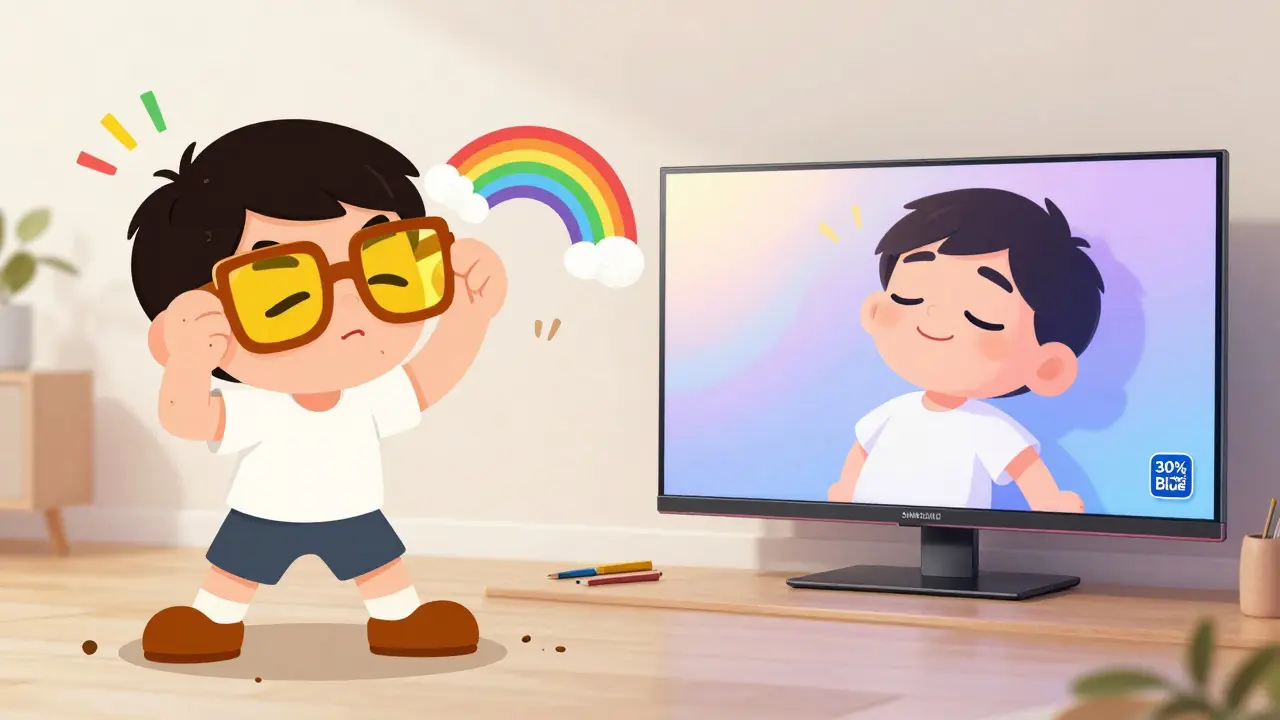
Not always. Independent testing by Consumer Reports in March 2023 found that many so-called blue light glasses only block 12% of blue light-far less than the 20% manufacturers claim. Prescription lenses with blue light filtering? They help a bit with visual fatigue during long computer sessions, reducing strain by 22% compared to regular lenses. But they don’t fix dry eyes. And if you wear amber-tinted glasses, you’ll notice everything looks yellow. That’s fine for relaxing at night, but terrible if you’re editing photos, checking skin tones, or doing graphic design.
A University of Manchester study found amber lenses block 65-100% of blue light, which sounds great-until you realize they reduce color accuracy by over 8%. That’s why professional photographers on forums like DPReview flat-out reject them. One user said, “It ruins my ability to judge skin tones.” And if you’re using them during the day, you’re not just changing colors-you’re messing with your brain’s natural light cues.
So what’s the real answer? Hardware filters built into modern screens are starting to outperform glasses. Apple’s iOS 17.4, released in March 2024, now adjusts color temperature based on ambient light sensors. Independent tests showed it reduces melatonin suppression by 37% compared to older Night Shift settings. OLED displays from Samsung and LG are now cutting blue light at the source, reducing emissions in the 415-455 nm range by 30-40% without any software needed. That’s the future. Glasses are becoming a temporary fix.
Screen Filters: Software vs. Hardware
Most people rely on software filters like Night Shift, f.lux, or Windows Night Light. They’re free, easy to turn on, and built into your phone or laptop. But here’s the catch: they rarely target the most harmful part of blue light-the 415-455 nm range identified by the International Commission on Illumination as the “peak hazard” zone.
Software filters typically reduce blue light by 10-20%. That’s better than nothing. But hardware solutions-like OLED panels with adjusted phosphors or quantum dot filters-can cut that same range by 30-40% without changing the color you see. That’s why companies like Samsung and Corning are investing in next-gen lenses that block 45% of harmful blue light with less than 2% color shift. These aren’t available yet, but they’re coming.
And software has another problem: inconsistency. A 2022 survey found that 68% of users who tried to manage blue light failed because they turned off night mode on one device but not another. You might have it on your laptop, but your tablet is still blasting blue light at bedtime. That wipes out any benefit. The key isn’t just using filters-it’s using them everywhere, all the time.
The 20-20-20 Rule: The Only Habit That Works
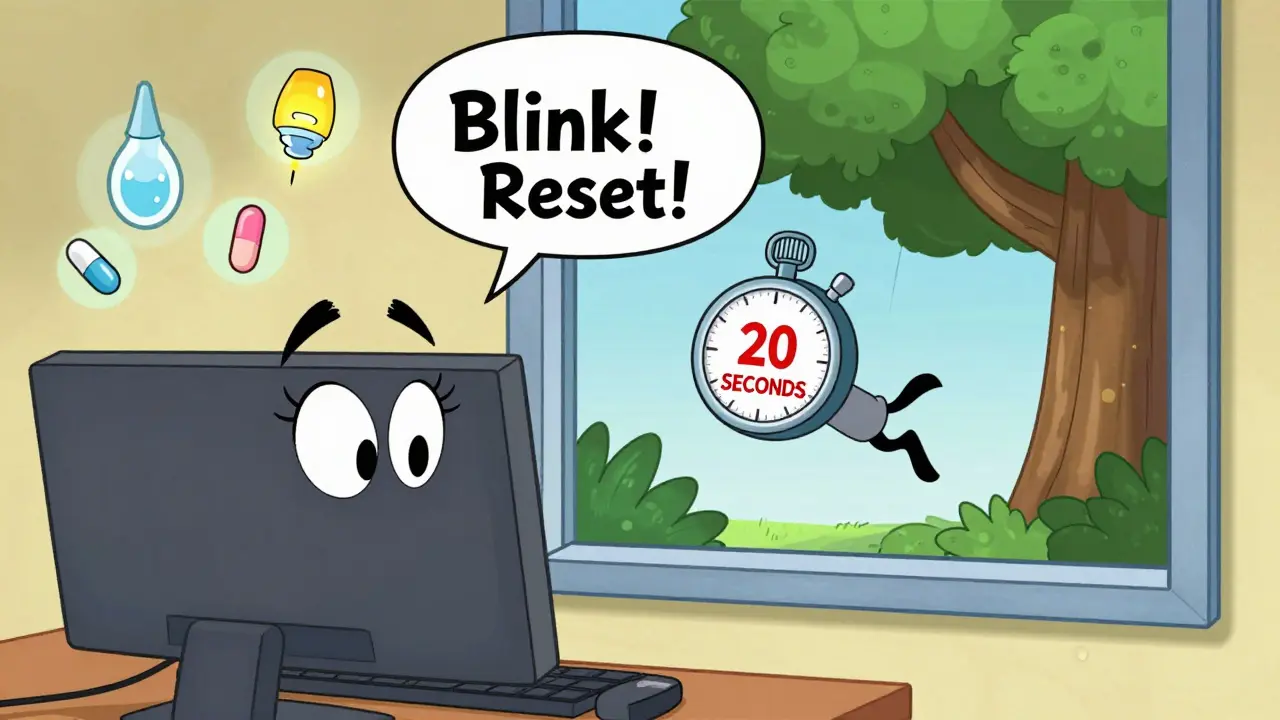
Forget expensive glasses. Forget fancy filters. The single most effective thing you can do right now is the 20-20-20 rule: every 20 minutes, look at something 20 feet away for 20 seconds.
It’s simple. It’s free. And it works. A 2021 study in Optometry and Vision Science found this habit reduced eye strain by over 53%. Why? Because your eyes aren’t designed to stare at one spot for hours. When you look at a screen, your eyes are constantly focusing and refocusing-especially if you’re sitting too close. The 20-20-20 rule gives your eye muscles a break. It lets your tear film reset. It reduces that dry, scratchy feeling.
And it’s not just about comfort. People who follow this rule report better sleep, fewer headaches, and less blurred vision. On Reddit’s r/Bluelight, 78% of 1,243 users said they noticed less strain after sticking to this rule. That’s not marketing. That’s real people.
Set a timer. Use an app. Put a sticky note on your monitor. Do it. Even if you think you’re “fine.” You’re not. Your eyes are working overtime.
Other Simple Fixes That Make a Difference
- Brighten your room, not your screen. If your room is dark and your screen is bright, your eyes are strained. Match your screen brightness to the ambient light. Aim for 300-500 lux in your workspace. That’s about the level of a well-lit office. Not a spotlight. Not a dim cave.
- Keep your distance. Sit at least 20-30 inches from your screen. That’s about an arm’s length. Closer than that increases the demand on your eyes by 3.7 diopters. That’s like trying to read a book held against your nose.
- Use artificial tears. Dry eyes are common with screen use. Over-the-counter lubricating drops can help. Avoid ones with redness relievers-they make things worse over time.
- Supplement with lutein and zeaxanthin. These are natural pigments found in leafy greens. A 2024 study in Nature Communications showed that taking 10mg of lutein and 2mg of zeaxanthin daily increased your eye’s natural blue light filter by 0.12 units. That’s equivalent to wearing 25% blue light-blocking lenses-without the yellow tint.
- Turn off screens two hours before bed. If you can’t, at least turn on night mode. University of Toronto research found this boosts melatonin by 58% compared to regular settings.
What Experts Really Say (And Why They Disagree)
Here’s the messiest part: experts can’t agree.
The American Academy of Ophthalmology says there’s no proof blue light from screens damages your eyes. They don’t recommend blue light glasses. Period.
But Dr. Martin Rosenberg, lead author of the 2018 NIH review, says blue light between 415-455 nm is “closely related to eye damage”-including dry eye, cataracts, and macular degeneration.
So who’s right? The answer is both. The damage from screens isn’t usually permanent. It’s cumulative. It’s fatigue. It’s disrupted sleep. It’s inflammation from oxidative stress that builds over years. The AAO is right that you won’t go blind from your phone. But if you’re staring at screens 8 hours a day, every day, for 20 years, your eyes are under constant low-level stress. That matters.
And then there’s the sleep angle. Dr. Stephen Lockley from Harvard is clear: blue light at night is the strongest suppressor of melatonin. That’s not debatable. If you’re having trouble sleeping, and you’re on screens before bed, that’s the most likely culprit.
So don’t get caught in the debate. Use the tools that work. The 20-20-20 rule. The dimmer screen. The night mode. The supplements. You don’t need to believe in blue light damage to benefit from these habits.
What’s Next for Blue Light and Eye Health
The market for blue light products is booming-$3.12 billion in 2022, growing at nearly 15% a year. But that’s not sustainable. As screens get smarter, the need for aftermarket filters will drop. Apple, Samsung, and LG are building better light control into their displays. Within five years, most new phones and tablets will reduce harmful blue light by default.
Prescription blue light lenses? Their market share is already peaking. IDC predicts a 18% annual drop in non-prescription blue light glasses sales from 2025 to 2028. People are realizing: if the screen doesn’t emit the bad light, you don’t need glasses to block it.
Meanwhile, research is moving toward prevention. The FDA just cleared the first medical device-Lumineyes-that delivers white light therapy with almost no blue light to reset circadian rhythms. And scientists are studying how diet, screen timing, and even room lighting can protect vision long-term.
The future isn’t about buying more filters. It’s about building better habits and using smarter technology. You don’t need to be afraid of blue light. You just need to be smart about how you use it.
 Get Your Tadalista Prescription Online - Simple, Fast and Secure
 Calcipotriol for Psoriasis in Skin of Color: Benefits, Risks & Usage
 Chiropractic Care: Relief for Your Backache
 Finding Pharmacies and Medication Help Abroad: A Traveler’s Guide
 Bean Pod Supplements: Science-Backed Benefits for Better Health and Wellness (2025 Guide)
Sazzy De
January 30, 2026 AT 13:36Niamh Trihy
January 31, 2026 AT 15:10Diksha Srivastava
February 2, 2026 AT 04:19calanha nevin
February 2, 2026 AT 04:56Lisa McCluskey
February 3, 2026 AT 16:52Adarsh Uttral
February 4, 2026 AT 02:04Russ Kelemen
February 5, 2026 AT 14:42Amy Insalaco
February 6, 2026 AT 09:21Natasha Plebani
February 7, 2026 AT 01:11KATHRYN JOHNSON
February 7, 2026 AT 17:35Jason Xin
February 8, 2026 AT 16:46Sidhanth SY
February 10, 2026 AT 04:21