It’s easy to assume that if you have a fever, sore throat, or cough, antibiotics will fix it. But that’s not true-and taking them when you don’t need them could make things worse. The difference between a bacterial infection and a viral infection isn’t just scientific jargon. It’s the line between getting better quickly and risking long-term harm from drug resistance.
What’s the Real Difference?
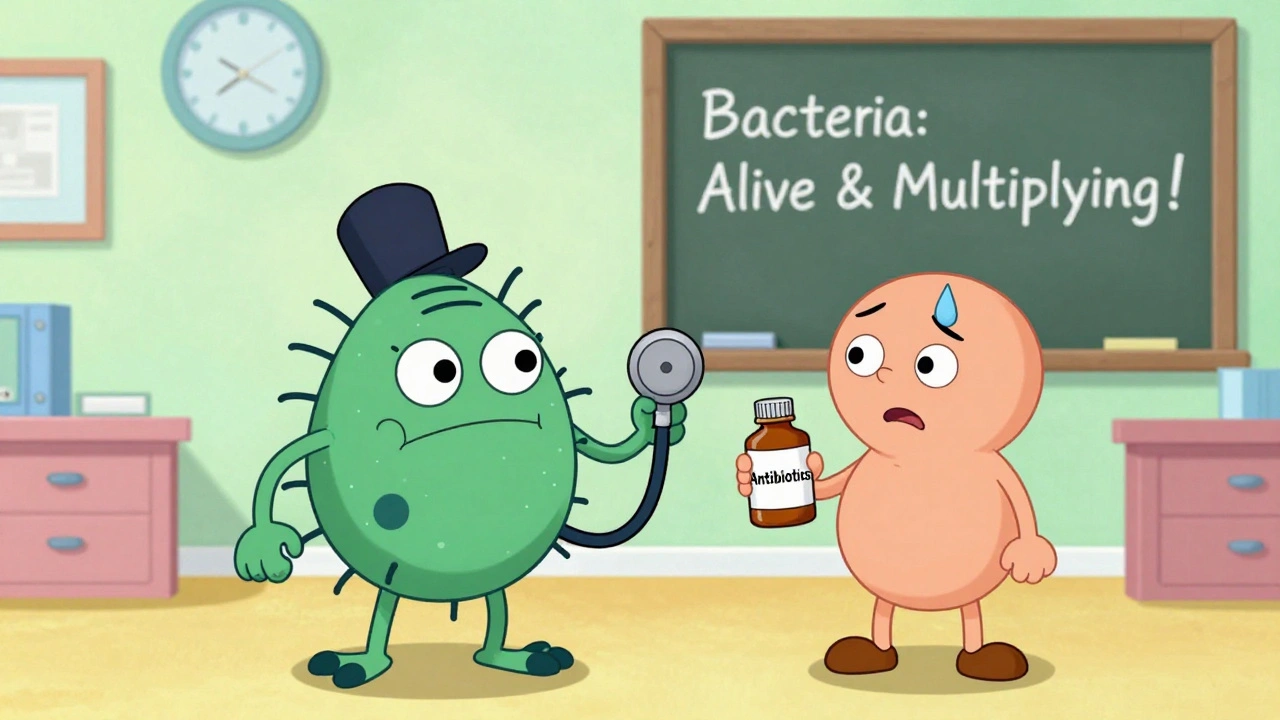
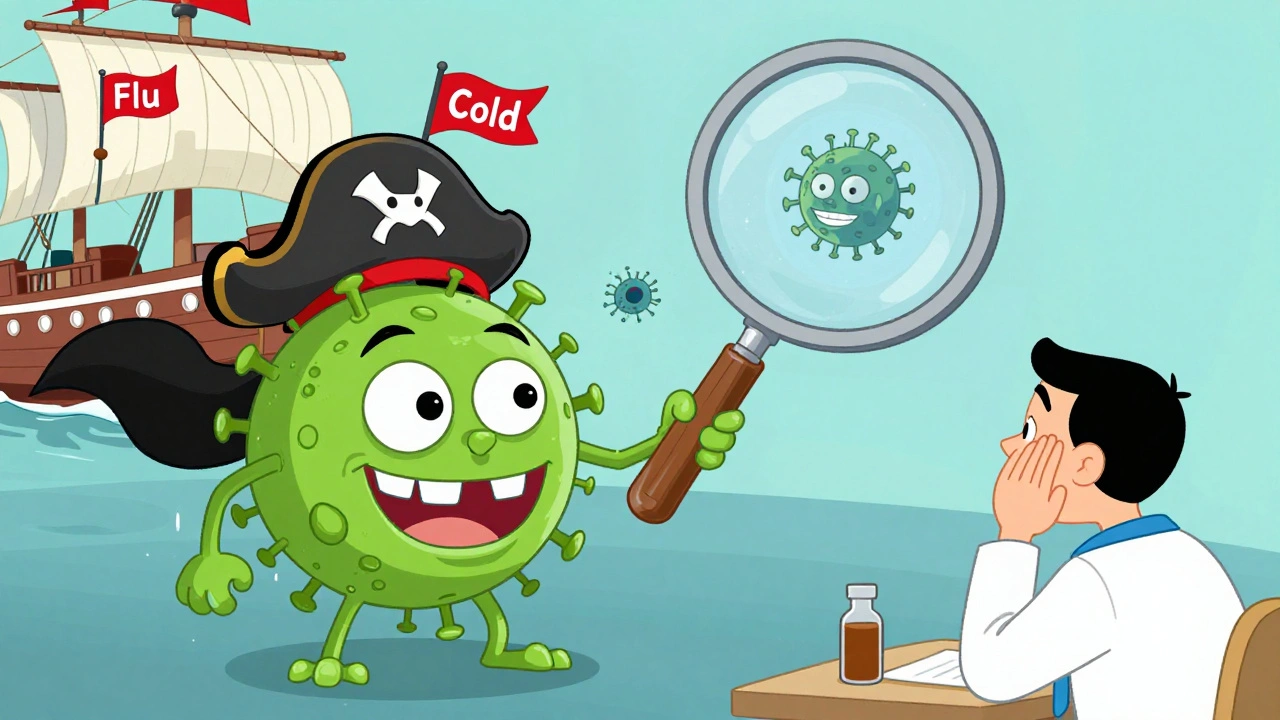
Bacteria are living, single-celled organisms. They can survive on their own-in soil, water, or on your skin. They multiply by splitting in two, sometimes every 20 minutes under the right conditions. That’s why a bacterial infection like strep throat can get worse fast if left untreated. Viruses aren’t alive in the same way. They’re just genetic material wrapped in a protein coat. They can’t reproduce on their own. They need to invade your cells and hijack their machinery to make copies. That’s why viruses like the flu or common cold spread so easily through coughs and sneezes-they’re riding on your body’s own systems. Size matters too. The biggest viruses are about 300 nanometers across. The smallest bacteria are around 200 nanometers. That might not sound like much, but under a regular microscope, you can see bacteria. Viruses? You need an electron microscope to even spot them.Common Examples You’ve Probably Experienced
Bacterial infections include:- Strep throat (caused by group A Streptococcus)
- Tuberculosis (TB), which still affects over 10 million people each year globally
- Urinary tract infections (UTIs), which send over 8 million people to doctors in the U.S. annually
- The common cold (usually from rhinoviruses)
- Influenza (flu), which hits 9-41 million Americans every year
- Chickenpox (varicella-zoster virus)
- COVID-19, which has caused over 7 million documented deaths worldwide as of 2024
Symptoms: How to Tell Them Apart (And Why It’s Tricky)
Here’s the problem: bacterial and viral infections often feel the same. Sore throat? Fever? Cough? Fatigue? Both can cause them. But there are patterns:- Bacterial infections often come with higher fevers-above 101°F (38.3°C)-and symptoms that last longer than 10-14 days. Sometimes, you start feeling better, then suddenly get worse again. That’s a red flag for a secondary bacterial infection after a virus.
- Viral infections usually start with a runny nose, mild fever (under 100.4°F), body aches, and a cough. Most improve within 7-10 days without any specific treatment.
Why Antibiotics Don’t Work on Viruses
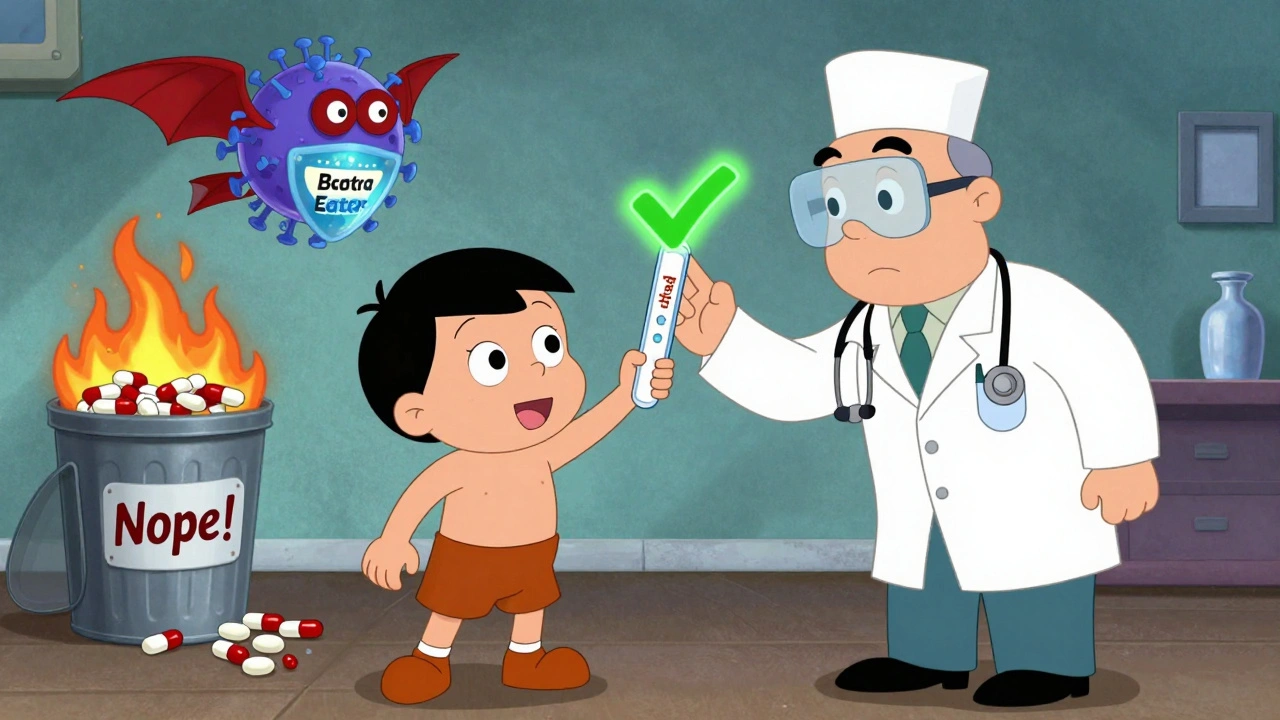
Antibiotics are designed to kill bacteria. They attack things like cell walls or protein-making machines-structures that viruses simply don’t have. Giving antibiotics for a cold or the flu is like using a hammer to fix a leaky faucet. It won’t work, and it can cause damage. The CDC estimates that 47 million unnecessary antibiotic prescriptions are given each year in the U.S. alone-mostly for viral infections. That’s not just wasteful. It’s dangerous. Every time you take an antibiotic when you don’t need it, you’re helping bacteria become resistant. That’s how superbugs form. Drug-resistant infections already cause 1.27 million deaths globally each year. By 2050, that number could hit 10 million-more than cancer. And it’s not just about future risks. Right now, antibiotic misuse leads to Clostridioides difficile (C. diff) infections. These cause over 223,000 cases and 12,800 deaths annually in the U.S. alone.When Antibiotics Are Necessary (And When They’re Not)
If you have strep throat, a UTI, or bacterial pneumonia, antibiotics are life-saving. Penicillin or amoxicillin for 10 days can clear strep throat and prevent complications like rheumatic fever. But for most sore throats, coughs, and colds? No antibiotics needed. Instead, focus on:- Rest
- Hydration
- Over-the-counter pain relievers like acetaminophen or ibuprofen
- Saline nasal sprays for congestion
- Oseltamivir (Tamiflu) for flu-if taken within 48 hours of symptoms, it can shorten illness by 1-2 days
- Acyclovir for chickenpox or shingles
- Remdesivir for severe COVID-19 in hospitalized patients
The Centor Criteria: A Simple Tool Doctors Use
If you’re in a clinic with a sore throat, your doctor might use the Centor Criteria to decide if you need a test:- Tonsil exudate (white patches on tonsils)? +1 point
- Tender lymph nodes in the neck? +1 point
- History of fever over 100.4°F? +1 point
- No cough? +1 point
What’s New in Diagnosis and Treatment?
A breakthrough test called FebriDx came out in 2020. It’s a finger-prick test that checks two biomarkers: CRP (a sign of inflammation) and MxA (a protein your body makes only during viral infections). It gives results in 10 minutes with 94% accuracy in telling viral from bacterial causes. Hospitals are starting to use it in emergency rooms and urgent care centers. One study showed it cut unnecessary antibiotic use by half. Researchers are also working on:- Narrow-spectrum antibiotics that target only one type of bacteria, sparing your good gut bacteria
- Phage therapy-using viruses that infect bacteria to kill them. Early trials in Europe show 85% success against resistant infections
- Universal coronavirus vaccines in Phase III trials, aiming to protect against future variants and new coronaviruses
The Bigger Picture: Why This Matters
Misunderstanding these infections isn’t just a personal mistake. It’s a global crisis. Viral respiratory illnesses cost the U.S. healthcare system $45 billion a year in medical visits and lost work days. Inappropriate antibiotics add another $1.1 billion in unnecessary costs. The World Health Organization calls antibiotic resistance one of the top 10 global health threats. And it’s not just in hospitals. It’s in your kitchen, your school, your office. Every time you push for an antibiotic you don’t need, you’re helping create a world where common infections become deadly again.What Should You Do Next?
If you’re sick:- Don’t demand antibiotics. Ask: “Could this be viral?”
- Track your symptoms. If you’re getting worse after 7-10 days, go back. You might have developed a bacterial infection.
- Get tested if your doctor recommends it. Don’t rely on guesswork.
- Use antivirals only if prescribed and within the right time window.
- Wash your hands. Stay home when sick. Vaccines for flu and COVID are still your best defense.
Can a viral infection turn into a bacterial one?
Yes. Viral infections like the flu or COVID-19 can weaken your immune system and make it easier for bacteria to take hold. About half of hospitalized COVID-19 patients develop a secondary bacterial infection, often in the lungs. That’s why doctors sometimes prescribe antibiotics later in the illness-even if the original cause was viral.
Why do doctors sometimes prescribe antibiotics for colds?
Some doctors do it because patients pressure them, or because they’re unsure. But it’s not based on evidence. The CDC and WHO strongly advise against it. Up to 85% of bronchitis cases and 70% of sinus infections are viral, yet antibiotics are still overprescribed for them. This practice fuels antibiotic resistance and puts patients at risk for side effects like diarrhea or C. diff infections.
How long should symptoms last before I worry?
For most viral infections, symptoms improve within 7-10 days. If your fever lasts more than 3-4 days, your symptoms get worse after starting to improve, or you develop new symptoms like ear pain, sinus pressure, or difficulty breathing, that’s a sign you may have a bacterial complication. See a doctor for evaluation.
Are there home tests to tell bacterial from viral infections?
Not yet for most people. Rapid strep tests are available in clinics, and the FebriDx test is used in some urgent care centers, but it’s not sold over the counter. Home antigen tests for flu and COVID exist, but they don’t detect bacteria. If you suspect a bacterial infection, you still need a doctor’s assessment and possibly a lab test.
Can I prevent bacterial infections?
Yes, indirectly. Vaccines for diseases like pneumococcal pneumonia, whooping cough, and meningitis protect against specific bacterial infections. Good hygiene-handwashing, not sharing utensils, covering your cough-also reduces spread. Avoiding unnecessary antibiotics helps prevent resistant strains from developing in your body and community.
 The Connection Between Spironolactone and Gynecomastia
 Celiac Disease in Children: Growth, Testing, and Diet Adherence
 Why American Mistletoe is the Perfect Addition to Your Daily Supplement Routine
 Generic Drug Prices: Why Americans Pay Less Than Europeans
 Cranberry Products and Warfarin: What You Need to Know About Bleeding Risk
Doug Hawk
December 1, 2025 AT 19:52Man I used to think antibiotics were just magic pills for anything that made me feel crappy. Turns out I was basically helping build superbugs in my gut. That FebriDx test sounds like a game changer - 10 minutes and you know if it's viral or bacterial? Why isn't this in every urgent care yet? I got prescribed amoxicillin for a cold last winter and felt like an idiot afterward.
Saurabh Tiwari
December 3, 2025 AT 00:08so many people still think fever = bacteria 😅 honestly the whole antibiotic thing is wild when you think about it. we're basically training germs to be immune like it's some kinda video game. also why is it that every time i get sick my mom sends me chicken soup like it's a spell? 🤷♂️
Michael Campbell
December 3, 2025 AT 11:06Big Pharma wants you sick. They profit off antibiotics. They profit off vaccines. They profit off testing. They profit off your fear. They don't want you to know the truth.
Saket Modi
December 3, 2025 AT 14:23bro why are we even talking about this. just take the pill. 😴
Chris Wallace
December 5, 2025 AT 09:57I’ve been thinking about this a lot lately, especially after my kid got sick last month. I mean, it’s terrifying how easy it is to fall into the trap of thinking ‘more medicine = better.’ I spent three days stressing over whether to take her to the doctor because I didn’t want to contribute to antibiotic resistance, but I also didn’t want to risk her getting worse. The part about secondary bacterial infections after viral ones really hit home-she developed an ear infection right after the cold seemed to clear up. That’s when I realized how nuanced this really is. It’s not black and white, and the fact that doctors have to make split-second decisions with limited tools is insane. I wish more people understood that withholding antibiotics isn’t neglect-it’s responsibility.
william tao
December 6, 2025 AT 00:58It is an incontrovertible fact that the systematic overprescription of antibiotics constitutes a profound public health failure, one that has been enabled by systemic complacency, patient demand, and a medical-industrial complex that prioritizes revenue over rationality. The data presented here is not merely suggestive-it is damning.
Sandi Allen
December 6, 2025 AT 05:02And yet… no one talks about the fact that the CDC is funded by pharmaceutical companies… and the WHO? They’re influenced by the Gates Foundation… and the ‘FebriDx’ test? It’s patented by a company that also sells antibiotics… this is all a setup… they want you dependent… they want you scared… they want you to keep coming back… it’s not about health… it’s about control.
John Webber
December 8, 2025 AT 04:55i never knew viruses werent alive?? like… how do they even work then? and why do we even call them infections if they dont live? also i think people just want to feel like they did something when they're sick… like take a pill = better. i got a cold last week and just drank tea and slept. felt better in 4 days. no pills.
Shubham Pandey
December 8, 2025 AT 19:31strep test is 95% accurate? then why do docs still guess? lazy.
Elizabeth Farrell
December 9, 2025 AT 06:28Thank you for writing this. I’ve been trying to explain this to my family for years, especially my mom who still believes ‘antibiotics fix everything.’ I showed her the part about how 30% of sore throats are misdiagnosed and she finally paused. She said, ‘So you’re telling me I’ve been making you take medicine you didn’t need?’ I said yes-and that’s why we need more testing, not more pills. I’m so glad there are tools like FebriDx now. I hope more clinics get them soon. And I really appreciate you mentioning phage therapy-it’s so cool that we’re going back to older ideas, but with modern science. Maybe we’ll find a way to fight superbugs without making more of them. I just hope we don’t wait until it’s too late.