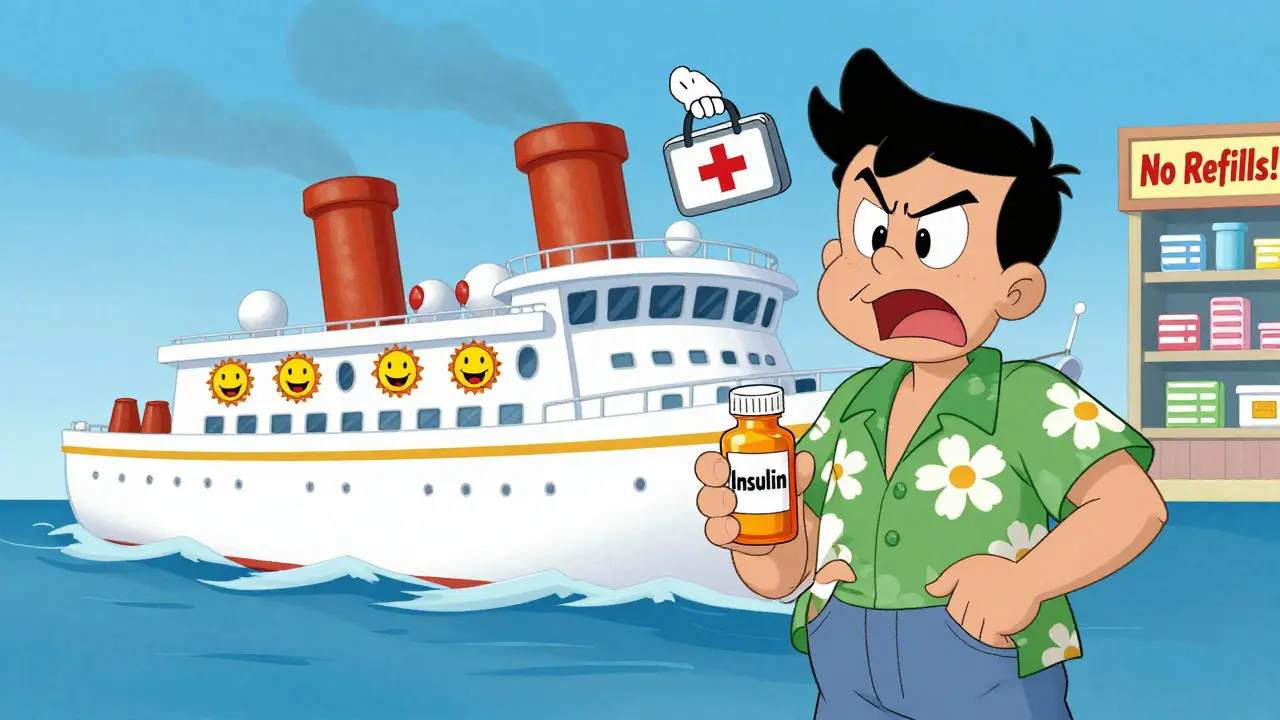
When you're on a cruise, the last thing you want is to run out of your regular medication or get sick without access to what you need. Cruise ship medical centers aren't hospitals - they're infirmaries. That means they can handle basic emergencies, treat common illnesses like seasickness or stomach bugs, and sometimes fill prescriptions. But don't assume they’ll have your exact drug, at a reasonable price, or even at all. Planning ahead isn’t just smart - it’s essential.
What You Can Actually Get Onboard
Most cruise ships carry a limited pharmacy stocked with medications for the most common issues: motion sickness, nausea, mild pain, allergies, acid reflux, and basic antibiotics. Larger ships like those from Royal Caribbean or Carnival might have 50 to 100 different medications on hand. These include things like omeprazole for heartburn, amoxicillin for infections, or metformin for diabetes - but only if they’re common enough to justify shelf space. Here’s the catch: they won’t carry everything. Narcotics, psychiatric medications, specialty injectables like insulin pens, or rare chronic disease drugs are almost never stocked. Storylines, a cruise line designed for long-term residents, is an exception - they offer compounding and can handle more complex prescriptions. But even they require you to submit requests 6 to 12 months before departure. For everyone else? Assume your meds won’t be available.Costs Are Higher Than You Think
If you do need to buy something onboard, expect to pay more. A single dose of an antibiotic might cost $25 to $40. Compare that to $5 to $15 at a U.S. pharmacy. That’s a 200% to 300% markup. Why? Because of logistics. Ships can’t restock easily. Medications are stored in climate-controlled rooms, shipped ahead of time, and tracked manually. There’s no bulk pricing, no insurance discounts, and no generic alternatives unless they’re already on the shelf. Some lines offer complimentary seasickness pills or basic pain relievers - those are usually fine to take. But if you need something specific, you’re paying retail price, no exceptions.Bring Your Own - and Bring Enough
The number one rule? Bring your own medications. Not just enough for the trip - bring extra. Experts recommend at least 3 to 5 extra days’ supply. Why? Cruises get delayed. Ports close due to weather. Ships reroute. You might be stuck at sea for an extra day or two. Pack your meds in your carry-on. Not in checked luggage. If your bag gets lost, your meds won’t. Keep them in their original bottles with the pharmacy label. Security and medical staff will ask to see them. If your name on the bottle doesn’t match your passport, you’ll have trouble. International ports have strict rules - unlabeled pills can be confiscated or cause delays. If you take insulin, carry a doctor’s note. Same for inhalers, CPAP machines, or any device that needs power. Storylines requires passengers to bring distilled water and extension cords for CPAPs - and they’re not alone. Many lines expect you to handle your own equipment.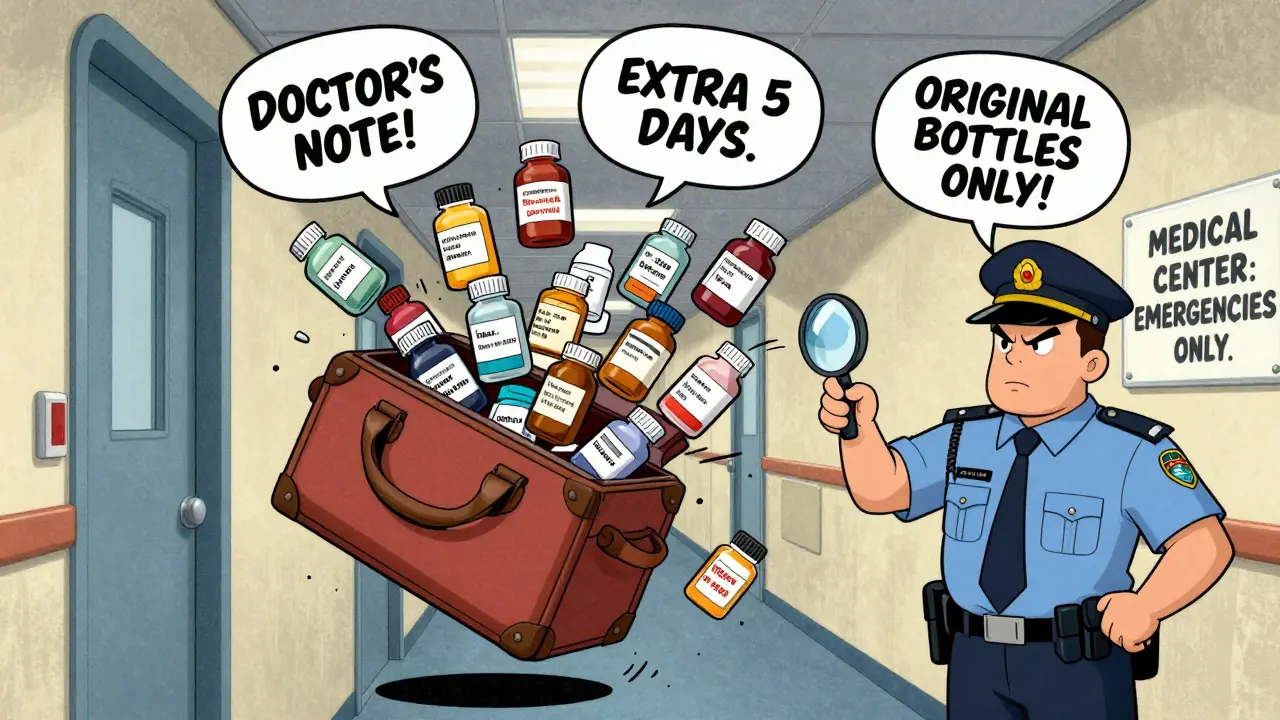
Special Cases: Diabetes, Blood Pressure, and More
Diabetes patients: Bring twice as much insulin as you think you’ll need. Bring syringes, test strips, and a glucose meter. Don’t rely on the ship to have any of it. Some ships carry insulin - but only in limited quantities, and only for emergencies. If you’re on a 14-day cruise and need a refill after day 7? You’re out of luck unless you planned ahead. Blood pressure meds? Same deal. If you’re on a beta-blocker or ACE inhibitor, bring your full supply. Ship pharmacies rarely carry these unless they’re on the standard list - and even then, not always. Mental health meds? Antidepressants, anti-anxiety drugs, or mood stabilizers? Almost never available. The staff aren’t psychiatrists. They’re general practitioners with limited training and no access to specialist networks. Don’t risk it.What Happens If You Run Out?
If you do run out, here’s what typically happens:- You’ll be seen by the ship’s doctor - usually one physician and one or two nurses for thousands of passengers.
- If they have your medication in stock, you can buy it - at full price.
- If they don’t, they might try to substitute with something similar - but only if it’s safe and approved.
- If no substitute works, they’ll advise you to wait until the next port.
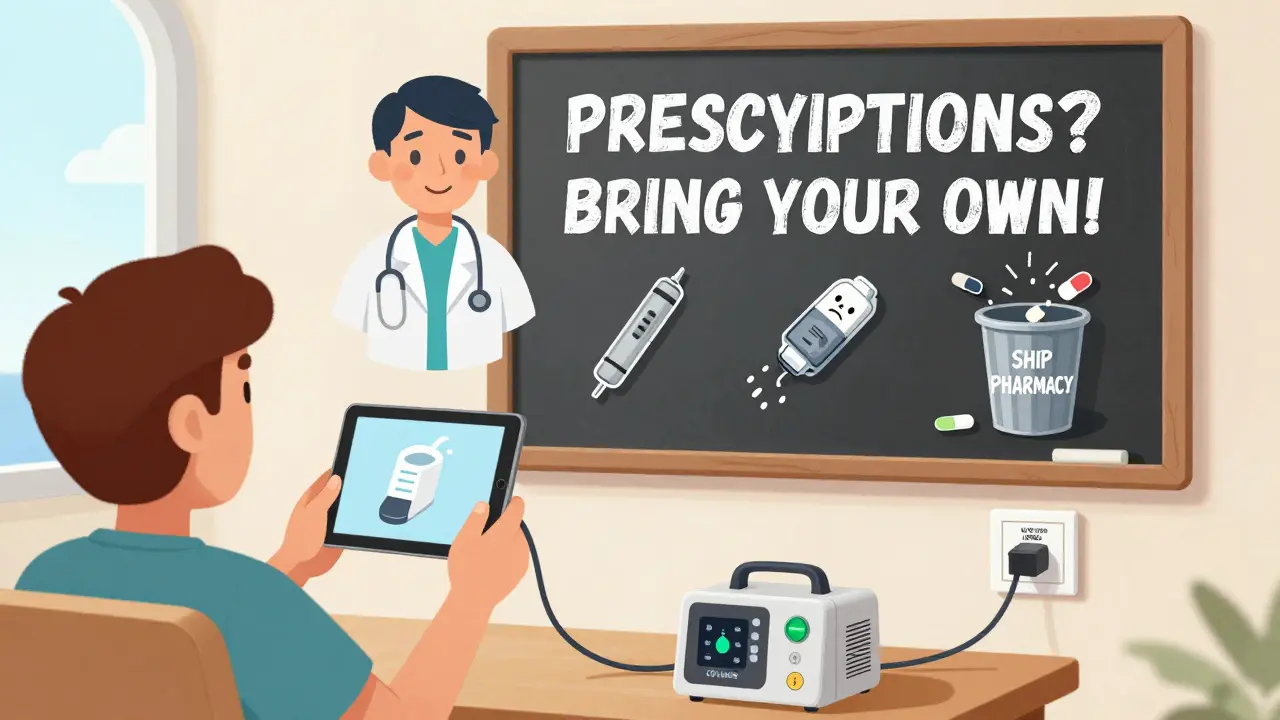
How to Prepare Like a Pro
Follow these steps before you board:- Check your cruise line’s medical policy. Royal Caribbean, Disney, and Norwegian all have FAQs. Read them.
- Get a 90-day supply if your cruise is longer than 30 days.
- Ask your pharmacist to repackage your meds into clearly labeled travel containers - but always keep the original bottles in your carry-on.
- Make a printed list: drug name, dosage, frequency, prescribing doctor, and phone number.
- For controlled substances (like opioids or stimulants), get a signed letter from your doctor. Some countries have zero tolerance for unmarked pills.
- Take photos of your prescriptions and store them on your phone. If you lose the originals, this can help.
What About Telemedicine?
Some newer ships - especially Royal Caribbean’s 2024 fleet - now offer telemedicine. You can video-call a shore-based doctor for advice. But even then, they can’t send prescriptions to the ship. They can only recommend treatment. If you need a new prescription, you still have to rely on what’s onboard or wait for a port.The Bottom Line
Cruise ship medical centers are there for emergencies and common illnesses - not for your ongoing prescriptions. Treat them like a first-aid station, not a pharmacy. The best way to avoid a medical crisis at sea? Bring everything you need, in original containers, with extra supply, and know your cruise line’s limits ahead of time.Don’t wait until you’re dizzy from seasickness or your blood pressure spikes to realize you forgot your meds. Plan it like you’d plan your passport - because it’s just as critical.
Can I get my prescription filled on a cruise ship?
Sometimes, but only for common medications like antibiotics, antacids, or motion sickness pills. Most specialty drugs - including insulin, blood pressure meds, or psychiatric medications - won’t be available. Always assume you’ll need to bring your own.
How much more do medications cost on a cruise ship?
Expect to pay 200% to 300% more than you would at a U.S. pharmacy. A single antibiotic dose might cost $25-$40 instead of $5-$15. There are no insurance discounts or generic options unless the ship already stocks them.
Should I bring my medications in original bottles?
Yes. Always. Security and medical staff will ask to see them. If your name on the bottle doesn’t match your passport, you could be denied entry to the medical center or face delays in port. Keep originals in your carry-on - don’t pack them in checked luggage.
What if I need my medication after the cruise ends?
Always bring at least 3-5 extra days’ supply. Cruises can be delayed due to weather, mechanical issues, or port closures. If you run out after your trip ends, you might be stuck without access to a pharmacy for hours or even days.
Can I get a new prescription from the ship’s doctor?
Only for conditions they can treat onboard - like a sinus infection or mild pneumonia. They won’t refill chronic prescriptions for things like diabetes, high blood pressure, or anxiety. They’re general practitioners with limited resources, not specialists. Don’t rely on them to replace your home doctor.
Are there any cruise lines with better pharmacy services?
Storylines is the only line currently offering advanced pharmacy services, including compounding and 6-12 month advance prescription submissions. For all other cruise lines, medical services are basic and emergency-focused. Don’t assume better service unless you’ve confirmed it directly with the cruise line.
 Goldenseal and Medications: What You Need to Know About Liver Enzyme Interactions
 Top 6 Neurontin Alternatives for Neuropathic Pain Management in 2024
 Cerebral Aneurysm: Understanding Rupture Risk and Modern Treatment Options
 Top 10 Reliable Alternatives to Drugwatch for Drug Information
Erica Santos
March 10, 2026 AT 02:16Scott Easterling
March 11, 2026 AT 10:30Nicholas Gama
March 11, 2026 AT 11:06Stephen Rudd
March 11, 2026 AT 12:36George Vou
March 13, 2026 AT 10:02Mantooth Lehto
March 15, 2026 AT 05:25Melba Miller
March 16, 2026 AT 07:57Katy Shamitz
March 18, 2026 AT 02:49Janelle Pearl
March 19, 2026 AT 16:20Neeti Rustagi
March 19, 2026 AT 18:21