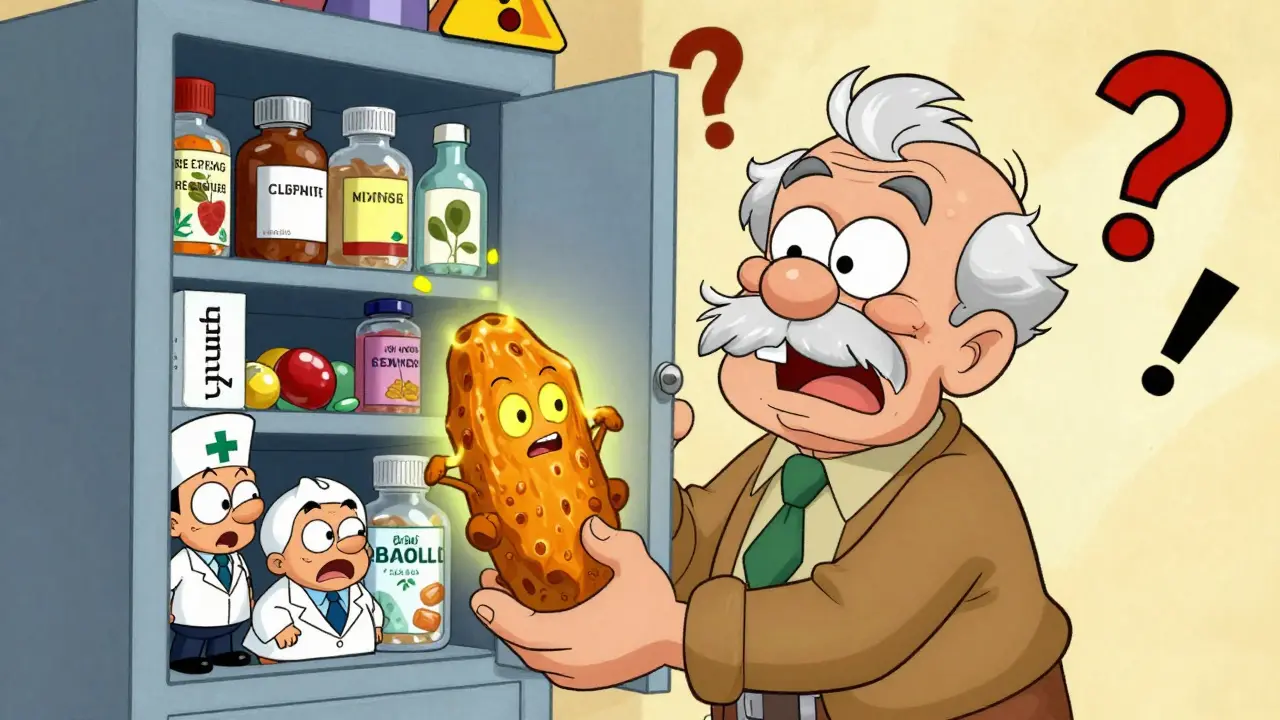
Starting a new medication can feel like a step forward in your health-until you realize you’re already taking five other pills, a handful of supplements, and that herbal tea your cousin swears by. What happens when all these things meet inside your body? Drug interactions aren’t just a footnote in the prescribing leaflet. They’re real, common, and sometimes dangerous. About 3 to 5% of all outpatient prescriptions involve a clinically significant interaction. For people on five or more medications, that number jumps to nearly one in three. If you’re over 65, you’re even more at risk: over 40% of adults in that group take five or more drugs. That’s not just a statistic-it’s your reality.
What Exactly Is a Drug Interaction?
A drug interaction happens when one substance changes how another works in your body. It’s not always obvious. Sometimes it makes a drug weaker. Other times, it turns a safe medicine into a dangerous one. There are two main types: pharmacokinetic and pharmacodynamic.
Pharmacokinetic interactions mess with how your body handles the drug-how it’s absorbed, broken down, or cleared out. The most common culprit? The CYP3A4 enzyme. It’s responsible for breaking down about half of all medications you take. If another drug blocks this enzyme, your medicine builds up in your system. Too much can cause side effects. If a drug speeds up the enzyme, your medicine gets flushed out too fast-and stops working.
Pharmacodynamic interactions are about effects, not chemistry. Two drugs might do the same thing to your body, and when combined, they amplify each other. Think of it like turning up the volume on two speakers at once. Take blood thinners like warfarin and amiodarone together? Your risk of dangerous bleeding shoots up. Combine opioids with promethazine? Your breathing slows down dangerously. Even something as simple as eating aged cheese while on an MAO inhibitor can spike your blood pressure to life-threatening levels-some cases have seen systolic pressure over 200 mmHg.
High-Risk Interactions You Can’t Ignore
Not all interactions are created equal. Some are so dangerous they’re listed in clinical guidelines as red flags. Here are a few you need to know:
- Simvastatin + Calcium Channel Blockers: If you’re on amlodipine, your simvastatin dose must not exceed 20 mg per day. With diltiazem or verapamil? Drop it to 10 mg. Go higher, and you risk muscle damage that can lead to kidney failure.
- Warfarin + Amiodarone: Amiodarone can make warfarin way too strong. Doctors often cut the warfarin dose by 30-50% right away and check your INR within 3-5 days.
- LMWH + DOACs: Combining low molecular weight heparins with direct oral anticoagulants increases bleeding risk by 300-400%. This combo should only happen under strict supervision, if at all.
- St. John’s Wort + Cyclosporine: This herbal supplement can slash cyclosporine levels by 40-60%. That’s a recipe for organ rejection in transplant patients. Yet, 68% of patients never tell their doctor they’re taking it.
- MAO Inhibitors + Tyramine-Rich Foods: Aged cheese, cured meats, tap beer-these can trigger a hypertensive crisis in people on drugs like phenelzine. Even small amounts matter.
These aren’t rare edge cases. They’re everyday risks. The HIV Drug-Drug Interaction Guide lists 147 high-risk combinations, and 72% of them involve CYP3A4. That’s not a coincidence-it’s a pattern.
Why You’re More at Risk Than You Think
Most people don’t realize how many things they’re taking that can interact. Prescription drugs? Check. Over-the-counter painkillers? Check. Vitamins, herbal teas, fish oil, melatonin, turmeric? Those count too. A 2022 University of Michigan study found that 32% of patients misunderstand basic instructions like “take on an empty stomach.” They think it means no food for two hours before or after. The real rule? One hour before or two hours after. That small misunderstanding can change how well your medicine works.
And then there’s the issue of communication. Only 35% of community pharmacies do full medication reviews. Most patients don’t bring a list to appointments. They forget. They think supplements are “natural,” so they’re safe. They don’t mention the CBD oil they started for sleep, or the garlic pills they take for “heart health.” But those can interfere with blood thinners, blood pressure meds, and even chemotherapy.
Patients with kidney or liver problems are at even higher risk. If your kidneys aren’t filtering well (eGFR under 30), or your liver can’t process drugs properly, interaction risks jump 2.5 to 4 times. That’s not a small increase-it’s a red alert.
What You Can Do Right Now
You don’t need to be a doctor to protect yourself. Here’s what works:
- Make a complete list. Write down every pill, capsule, patch, drop, and herbal product you take. Include doses and why you take them. Don’t leave anything out-not even the gummy vitamins or the chamomile tea.
- Bring it to every appointment. Hand it to your doctor, pharmacist, or nurse. Ask: “Could any of these interact with my new medication?”
- Ask about alternatives. If your new drug has dangerous interactions, ask if there’s another option. For example, if you’re on amlodipine and need a statin, pravastatin doesn’t interact the same way as simvastatin.
- Know your monitoring schedule. If you’re starting a high-risk combo like warfarin and amiodarone, you’ll need an INR test within 3-5 days. Don’t wait for your doctor to call. Ask when and where.
- Use one pharmacy. If you fill all your prescriptions at one place, the pharmacist can flag interactions your doctor might miss. Pharmacists catch 40-60% more potential interactions than physicians alone.
What Your Doctor and Pharmacist Should Be Doing
Healthcare providers have tools and guidelines to help, but they’re not always used. The ICH M12 Guideline (adopted May 2024) is now the global standard for testing drug interactions. It requires labs to use human liver cells and precise protein concentrations to predict how drugs will behave in real people. That’s good science-but it doesn’t help you unless your provider checks for it.
Best practices include:
- Completing a full medication review within 72 hours of starting a new drug.
- Creating a Personal Medication Record (PMR) with seven key details: name, dose, reason, timing, duration, substances to avoid, and side effects to watch for.
- Using severity grading: contraindicated, major, moderate, minor. Not all alerts are equal. A 2023 JAMA study found doctors ignore 90-95% of drug interaction warnings-but they still follow 75% of high-severity ones.
- Checking for kidney and liver function before prescribing high-risk drugs.
Some clinics are now requiring specialists and primary care doctors to communicate within 48 hours of a high-risk medication change. Early results show 18% fewer adverse events. That’s not magic-it’s coordination.
When Technology Fails You
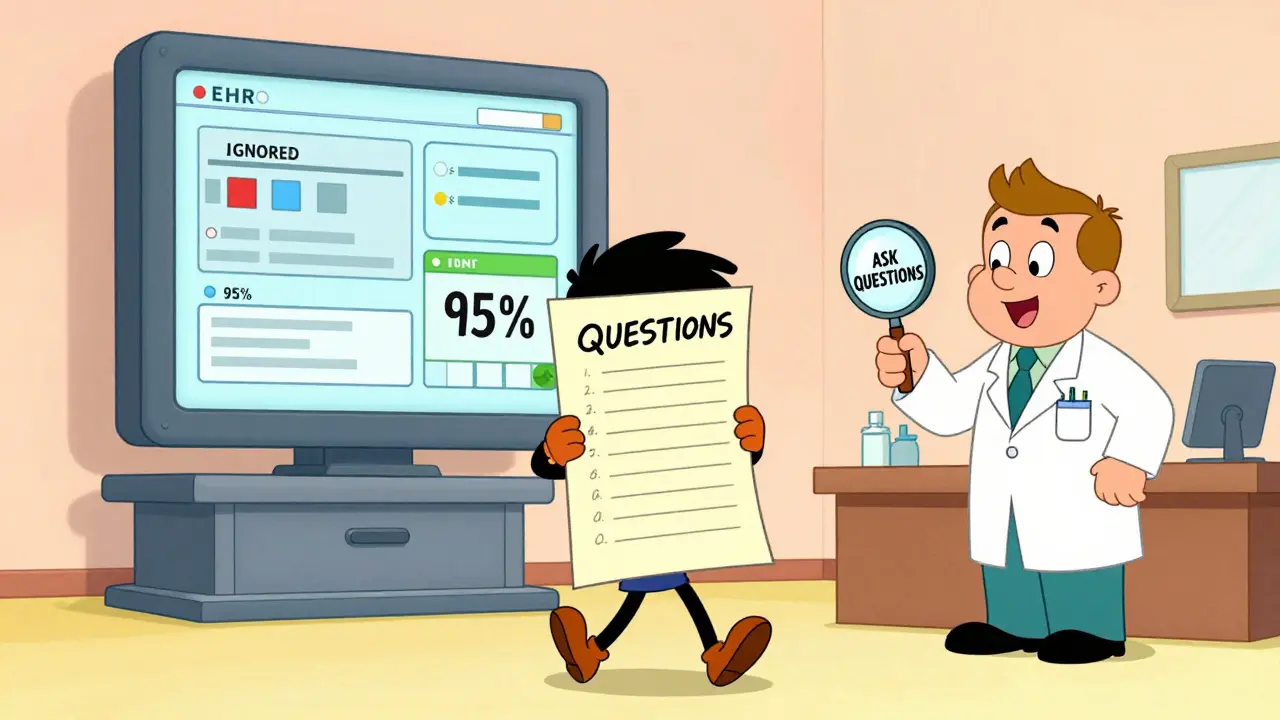
You might think your EHR or pharmacy app will catch everything. It won’t. A 2022 BMJ study found current systems miss 15-20% of high-risk interactions. Why? Because they don’t account for supplements, herbal products, or food interactions. They also don’t know your kidney function or how well you’re taking your meds.
And then there’s alert fatigue. Doctors see so many pop-up warnings that they start clicking “ignore” without reading. That’s why the FDA and EMA now push for smarter systems-ones that only warn about serious risks. By 2025, all certified electronic health records in the U.S. will need to use standardized severity ratings. That’s progress. But until then, you’re your own best safety net.
What to Do If You Notice Something Off
Starting a new medication? Watch for these signs in the first week:
- Unusual dizziness, confusion, or extreme sleepiness
- Unexplained bruising or bleeding
- Severe muscle pain or weakness
- Dark urine or yellowing skin
- Rapid heartbeat or sudden high blood pressure
If you see any of these, don’t wait. Call your pharmacist or doctor. Don’t stop the medicine unless they tell you to-but don’t ignore it either. Early detection saves lives.
Final Thought: You’re Not Just a Patient. You’re a Partner.
Managing drug interactions isn’t just about following rules. It’s about knowing your body, asking questions, and speaking up-even if you feel like you’re bothering your doctor. You’re not being difficult. You’re being smart. The system is full of gaps. Your awareness fills them.
Keep your list updated. Ask about alternatives. Use one pharmacy. Know your monitoring schedule. And never assume something is safe just because it’s “natural.”
Starting a new medication should be a step toward better health-not a hidden risk. You have the power to make it that way.
Can I take herbal supplements with my new prescription?
Some herbal supplements can interfere with prescription drugs in dangerous ways. St. John’s Wort can reduce the effectiveness of blood thinners, birth control, and HIV meds by 40-60%. Garlic, ginkgo, and ginger can increase bleeding risk when taken with warfarin or aspirin. Turmeric may affect liver enzymes that break down medications. Always tell your doctor or pharmacist about every supplement-even if you think it’s harmless.
What if I forget to take my new medication? Will that cause an interaction?
Missing a dose won’t cause an interaction, but it can make your treatment less effective or trigger withdrawal symptoms. More importantly, inconsistent dosing can make it harder for your doctor to tell if side effects are from the new drug, the old ones, or a combination. Try to take your meds at the same time every day. Use a pill organizer or phone reminder.
Are over-the-counter painkillers safe with my new drug?
Not always. NSAIDs like ibuprofen or naproxen can increase bleeding risk with blood thinners and raise blood pressure if you’re on ACE inhibitors. Acetaminophen (Tylenol) is usually safer, but it can stress your liver if you’re also on statins, antifungals, or certain antidepressants. Always check with your pharmacist before taking OTC pain relievers.
How long should I wait before taking a new medication with my others?
There’s no universal waiting time. Some interactions happen immediately. Others build up over days or weeks. The key is timing based on the drug’s half-life and how it’s metabolized. For example, if you’re starting a new statin while on a calcium channel blocker, your doctor will adjust the dose right away. For others, they’ll monitor over time. Never space doses apart hoping to avoid interaction-this can be unsafe. Always follow your provider’s instructions.
Should I get my blood tested after starting a new drug?
For certain drugs, yes. If you’re on warfarin, you’ll need an INR test within 3-5 days. For lithium, digoxin, or some seizure meds, blood levels are checked to make sure they’re in the safe range. If you have kidney or liver disease, your doctor may order more frequent tests. Ask at your appointment: “Do I need a blood test after starting this?” If they say no, ask why.
 How to Prevent Wrong-Patient Errors at the Pharmacy Counter
 Compare Atorlip 5 (Atorvastatin) with Alternatives: What Works Best for Cholesterol
 How Clavulanic Acid Revolutionizes Antibiotic Treatments for Resistant Infections
 Diabetic Kidney Disease: How Early Albuminuria Signals Risk and Why Tight Control Saves Kidneys
 Blue Light and Eye Health: Screen Filters and Habits That Actually Work
Uzoamaka Nwankpa
January 5, 2026 AT 05:03My grandma started a new blood thinner last year and didn't tell her doctor about the turmeric capsules she takes daily. She ended up in the ER with bruising all over her legs. I still can't believe she thought 'natural' meant 'safe.' Now she keeps a laminated list taped to her fridge. I wish more people took this seriously.
Oluwapelumi Yakubu
January 5, 2026 AT 22:02Let’s be real-pharmaceutical companies don’t want you to know how many of these interactions are avoidable. The CYP3A4 enzyme? It’s the silent puppeteer of your entire pharmacokinetic orchestra. And yet, we’re told to just ‘take your meds’ like obedient robots. Meanwhile, the herbal industry thrives on ignorance, peddling ‘miracle’ teas that sabotage your prescriptions. The real villain isn’t the drug-it’s the system that treats your body like a black box.
Terri Gladden
January 6, 2026 AT 12:40OMG I JUST REALIZED I’VE BEEN TAKING GINGER TEA WITH MY WARFARIN FOR 6 MONTHS??!! I’M GONNA DIE!! 😭😭😭 My pharmacist said I’m fine but I’m still crying in the shower. Someone please tell me I’m not gonna turn into a human bruise??
Jennifer Glass
January 6, 2026 AT 16:36This post was incredibly thorough. I especially appreciated the breakdown of pharmacokinetic vs. pharmacodynamic interactions-it helped me understand why my blood pressure spiked after I started taking that new antidepressant. I never realized that even something as simple as grapefruit juice could alter how my meds worked. I’ve started keeping a digital log now, and I bring it to every appointment. Small changes really do make a difference.
Joseph Snow
January 8, 2026 AT 08:11Let’s not pretend this is about patient safety. This is about liability. The FDA and EMA only pushed for standardized severity ratings after a dozen lawsuits. The real reason pharmacists catch more interactions? Because they’re legally required to flag them-not because they care. And the ‘natural supplement’ loophole? That’s a billion-dollar loophole designed to bypass regulation. Don’t be fooled. This isn’t medicine. It’s a legal shield wrapped in a wellness fantasy.
melissa cucic
January 8, 2026 AT 17:28I’ve been a pharmacist for 18 years, and I can confirm: 90% of the time, the most dangerous interactions come from things patients don’t even think are ‘medications.’ Melatonin? Fish oil? Turmeric? Chamomile? They’re not harmless-they’re silent actors in a chemical drama. I’ve seen patients on anticoagulants who didn’t realize that ginkgo biloba could turn their INR into a rollercoaster. I’m so glad this post emphasized the one-pharmacy rule. It’s the single most effective, underused tool we have.
Akshaya Gandra _ Student - EastCaryMS
January 10, 2026 AT 02:27im in india and we take like 10 diff herbs and ayurvedic stuff with our prescriptions and no one ever asks… my aunt took ashwagandha with her thyroid med and her TSH went crazy… maybe this info needs to reach more people in developing countries too??
en Max
January 11, 2026 AT 19:40It is imperative to underscore that the clinical management of polypharmacy requires a multidisciplinary, evidence-based approach, grounded in pharmacogenomic principles and informed by real-world pharmacokinetic data. The integration of Personal Medication Records (PMRs), as outlined in the ICH M12 Guideline, represents a paradigm shift in patient safety architecture. Furthermore, the persistent phenomenon of alert fatigue among prescribers necessitates the implementation of context-aware, risk-stratified clinical decision support systems, calibrated to individual patient phenotypes, including renal and hepatic function metrics. This is not merely best practice-it is bioethical obligation.
Angie Rehe
January 13, 2026 AT 00:56So let me get this straight-you want me to tell my doctor about every single supplement I take, even the ones I bought off a guy at the farmer’s market? And you think he’s gonna care? He spends 7 minutes with me and already forgot my name. Meanwhile, my pharmacy app keeps alerting me about ‘possible interactions’ with my multivitamin. I just click ‘ignore.’ It’s a joke. The system is broken. You’re just adding to the noise.
Jacob Milano
January 13, 2026 AT 23:37I used to think I was being responsible by reading every label. Then I started taking a new blood pressure med and noticed my hands were shaking. I didn’t say anything-until my wife pointed out I hadn’t slept in three days. Turns out, the new med was interacting with my melatonin. I called my pharmacist right away. He didn’t judge me. He just said, ‘Good catch.’ That’s the kind of partnership we need. You’re not a burden-you’re the missing piece.
Enrique González
January 15, 2026 AT 12:09Just started a new statin last week. Made my list. Went to my pharmacy. Asked the pharmacist: ‘Any red flags?’ He spotted a conflict with my fish oil I didn’t even know existed. We switched to pravastatin. No drama. No panic. Just smart. This stuff matters. Don’t wait for a crisis to act.