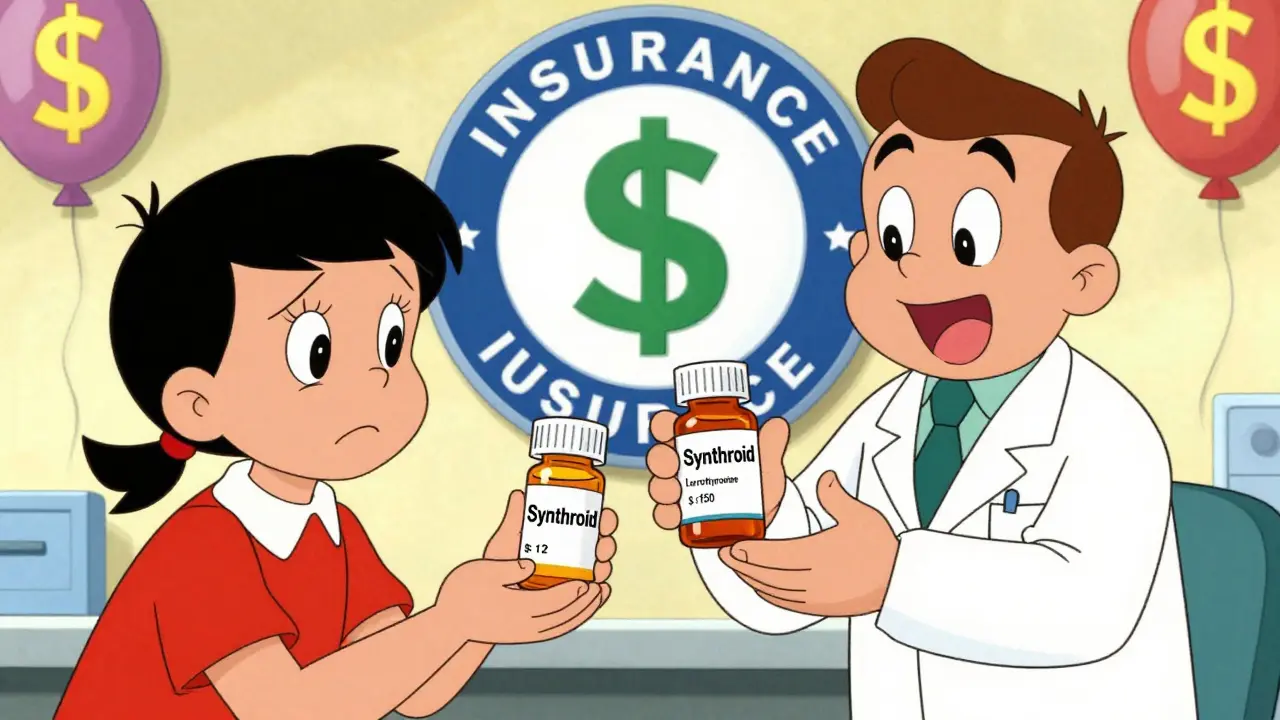
When your prescription comes back from the pharmacy and it’s not the brand you asked for, it’s not a mistake. It’s generic substitution-a common, often mandatory, move by insurers to cut costs. You might not like it. You might even be worried. But understanding how it works, what your rights are, and how to push back when needed can save you money, time, and stress.
What Exactly Is Generic Substitution?
Generic substitution means your pharmacist gives you a cheaper version of your drug-the same active ingredient, same strength, same way of taking it-but made by a different company. It’s not a knockoff. The FDA requires generics to match brand-name drugs in how they’re absorbed and used by your body. In most cases, they work just as well. In the U.S., about 90% of prescriptions filled are for generics. But they only make up 18% of total drug spending. That’s because a brand-name drug like Lipitor might cost $150 a month, while its generic, atorvastatin, costs $12. That’s not a small difference. Insurers know this. So they push generics hard. But here’s the catch: not all substitutions are automatic. It depends on your state, your insurance plan, and what your doctor wrote on the prescription.How Insurance Companies Make You Switch
Private insurers like Sun Life, Great West Life, and big pharmacy benefit managers (PBMs) like Express Scripts and OptumRx set rules that force substitution. They don’t just encourage it-they require it. Here’s how it usually works:- Your doctor prescribes brand-name Synthroid.
- Your insurance says: “We’ll only pay for levothyroxine-the generic.”
- If you insist on the brand, you pay the full difference out of pocket.
- Some plans even add a surcharge if you choose the brand-on top of your normal copay.
Your Rights: When You Can Say No
You have legal rights-even if your insurance doesn’t make them easy to use. In 19 states and Washington, D.C., pharmacists must substitute generics unless told otherwise. But in 7 states, including California and New York, the pharmacist needs your permission before switching. In 31 states, you must be notified before the switch happens-even if it’s just a note on the bag. The key phrase your doctor can write on your prescription? “Dispense as Written” or “Brand Medically Necessary.” If your doctor writes that, the pharmacy is legally required to give you the brand-no questions asked. That’s true even if your insurance won’t cover it. You just pay more. Texas law is especially clear: substitution is only allowed if:- The generic costs you less than the brand,
- You don’t refuse it,
- Your doctor didn’t say the brand is medically necessary.
When Generic Substitution Can Go Wrong
Most of the time, generics work fine. But not always. Some patients report problems after switching. On Reddit, one user switched from brand Synthroid to generic levothyroxine and ended up with thyroid levels that fluctuated for six months. They needed three dose adjustments. Another user switched from Lipitor to atorvastatin and saw no change-just saved $45 a month. Why the difference? Generics have the same active ingredient. But they can have different fillers, dyes, or coatings. These inactive ingredients don’t affect how the drug works-but they can affect how your body reacts. If you’re sensitive to lactose, gluten, or certain dyes, a different generic might trigger side effects your brand didn’t. This is especially true for drugs with a narrow therapeutic index-where even tiny changes in blood levels can cause problems. Think warfarin, lithium, or certain seizure meds. The FDA says generics are safe for these, but many doctors still prefer to stick with the brand. And then there’s the biologics problem. Biosimilars (the generic version of complex drugs like Humira or Enbrel) aren’t exact copies. They’re “highly similar.” That means substitution isn’t always automatic. In 38 states, you need extra consent before switching to a biosimilar. And only 38 biosimilars have been approved in the U.S. as of late 2023-compared to over 10,000 small-molecule generics.How to Get Your Brand Drug Approved
If you need the brand, don’t just complain. Fight smart. Step 1: Talk to your doctor. Ask them to write “Dispense as Written” or “Brand Medically Necessary” on the prescription. That’s the strongest legal protection you have. Step 2: File a prior authorization. Most insurers require this for brand-name drugs. Your doctor needs to submit medical records showing:- You tried the generic and had side effects,
- Your condition worsened after switching,
- You have a documented allergy or sensitivity.
What Pharmacists Need to Know
Pharmacists are on the front lines. They’re the ones who hand you the pill bottle. But they’re caught between insurance rules and patient safety. They must use the FDA’s “Orange Book” to check if a generic is rated “A” for therapeutic equivalence. No “B” ratings. No exceptions. They also have to notify you if they’re substituting. In 31 states, they must tell you-even if your doctor didn’t say “Dispense as Written.” And if you say no? They have to honor it. No pressure. No sneaky switches.
What You Can Do Today
Here’s your quick action plan:- Check your prescription. Does it say “Dispense as Written”? If not, ask your doctor to add it.
- Call your insurance. Ask: “What’s my copay for the generic vs. the brand?”
- Ask your pharmacist: “Is this a substitution? Can I see the label?”
- If you feel worse after switching, document it. Write down symptoms, dates, lab results.
- If your doctor agrees it’s medically necessary, file for prior authorization.
Why This Matters Beyond the Cost
Generic substitution isn’t just about saving money. It’s about control. Insurers want to cut costs. That’s their job. But your health isn’t a spreadsheet. If a drug works for you, you deserve to stay on it-not be moved because some algorithm says it’s cheaper. The system isn’t broken. It’s just stacked. And you’re not powerless. You have the right to know. You have the right to refuse. You have the right to appeal. The real question isn’t whether generics are safe. It’s whether your health should be decided by a computer-or by you and your doctor.Can my pharmacist switch my medication without telling me?
In 31 U.S. states and Washington, D.C., pharmacists are required to notify you before substituting a brand-name drug with a generic. Even if your doctor didn’t write "Dispense as Written," you should still be informed. In 19 states, substitution is mandatory unless you or your doctor object. Always check the label and ask if you’re unsure.
What does "Brand Medically Necessary" mean on a prescription?
This phrase legally prevents substitution. If your doctor writes "Brand Medically Necessary" or "Dispense as Written," the pharmacy must give you the brand-name drug-even if your insurance won’t pay for it. You’ll pay the difference, but you won’t be forced to switch. This is your strongest legal protection.
Are generic drugs really as good as brand-name drugs?
Yes-for most people and most drugs. The FDA requires generics to have the same active ingredient, strength, dosage, and bioequivalence as the brand. Studies show they work just as well for 90% of patients. But for drugs with narrow therapeutic indexes (like warfarin or lithium), or for people sensitive to inactive ingredients, switching can cause issues. Always monitor how you feel after a switch.
Why do some generics make me feel worse than others?
Different manufacturers use different inactive ingredients-fillers, dyes, coatings-that don’t affect the drug’s effectiveness but can affect how your body reacts. If you have allergies, sensitivities, or digestive issues, switching between generic brands might cause side effects. If this happens, ask your pharmacist to stick with the same generic manufacturer or request the brand.
Can my insurance force me to switch to a biosimilar?
In 38 states, you must give explicit consent before switching to a biosimilar-unlike with regular generics. Even then, your doctor must be notified within 5-7 business days. Biosimilars are not exact copies of brand biologics like Humira or Enbrel. They’re "highly similar," and substitution rules are stricter. Always ask if what you’re getting is a biosimilar, not a generic.
What if my doctor won’t write "Dispense as Written"?
Ask why. If they say it’s because of cost, explain your concerns. If you’ve had a bad reaction to a generic before, bring documentation-lab results, symptom logs, pharmacy records. Many doctors will write the note if you show evidence. If they refuse, ask for a referral to a specialist who can advocate for you. Your health comes first.
How long does it take to get prior authorization for a brand drug?
It usually takes 2-14 business days. The process involves your doctor submitting medical records, your insurer reviewing them, and then approving or denying. Some insurers respond faster if you call and ask for an expedited review-especially if your condition is unstable. Always follow up and ask for a reference number.
 Medication Safety at Home: A Step-by-Step Guide to Preventing Errors
 Buy Cheap Generic Tylenol Online - 2025 Guide
 Compare Inderal (Propranolol) with Alternatives: What Works Best for Anxiety, Heart Conditions, and Migraines
 Chloroquine: Uses, Side Effects, Dosage & the Latest COVID‑19 Findings
 Blue Light and Eye Health: Screen Filters and Habits That Actually Work
Gray Dedoiko
December 24, 2025 AT 02:19I switched from Synthroid to a generic last year and had zero issues. My TSH stayed stable, and I saved $50 a month. Honestly? If it ain’t broke, don’t fix it-but if the generic works, why pay extra?
Aurora Daisy
December 25, 2025 AT 13:32Of course the Americans are up in arms about generics. You guys pay $200 for a pill that costs $2 to make and then act like it’s a human rights violation. In the UK, we get generics without a drama club meeting. Your healthcare system is a circus.
Paula Villete
December 26, 2025 AT 16:40Okay but like… have you ever read the *actual* FDA guidelines on bioequivalence? Like, the 80-125% range? That’s not ‘same drug,’ that’s ‘kinda similar if you squint and ignore the fillers.’
I switched from brand Lipitor to a generic and got muscle pain so bad I thought I was dying. Turned out it was the cornstarch in the generic. My body hates corn. Who knew?
Also, why do doctors never tell you this? They just hand you the script like it’s a coupon. You’re not a vending machine. You’re a human with a digestive system.
And yes, I’m the person who keeps receipts from every pharmacy visit. Because one day, I’ll need to sue someone for emotional distress caused by lactose-filled pills.
Georgia Brach
December 28, 2025 AT 00:00There is a fundamental flaw in the assumption that cost-efficiency equates to clinical efficacy. The pharmaceutical industry’s reliance on generic substitution is a product of neoliberal healthcare economics, not evidence-based medicine. The FDA’s therapeutic equivalence ratings are statistically derived from population averages, yet individual pharmacokinetic variability is systematically ignored.
Moreover, the structural incentives embedded within pharmacy benefit managers create a moral hazard wherein patient outcomes are subordinated to profit margins. This is not a healthcare system. It is a market-driven apparatus disguised as care.
Katie Taylor
December 28, 2025 AT 05:31STOP LETTING INSURANCE COMPANIES TELL YOU WHAT YOU CAN TAKE. If you feel weird after switching, say NO. Write it down. Tell your doctor. File the prior auth. You’re not being difficult-you’re being smart. I saved my life by fighting for my brand-name seizure med. Don’t let them gaslight you into thinking you’re ‘just being high-maintenance.’ You’re not. You’re awake.
Isaac Bonillo Alcaina
December 28, 2025 AT 09:32People who complain about generics are usually the same ones who think organic kale is medicine and that ‘natural’ means ‘safe.’ The FDA has more rigorous testing for generics than most supplements you buy on Amazon. If your body can’t handle a generic, maybe your body has issues-not the drug.
Chris Buchanan
December 29, 2025 AT 15:02Bro. You think this is bad? Try being on a biosimilar in Texas and having your insurer switch you without telling you. I didn’t find out until my bloodwork showed my antibody levels spiked.
Here’s the move: get your doctor to write ‘Brand Medically Necessary’ on the script. It’s not hard. It’s not magic. It’s just paperwork.
And if your pharmacist tries to hand you a different generic? Say ‘I want the same one I got last month.’ They’ll stop. They really will.
You’re not asking for special treatment. You’re asking for consistency. That’s not selfish. That’s science.
Andy Grace
December 31, 2025 AT 01:59I’ve been on the same generic for 8 years. No issues. My doctor says it’s fine. I trust him. I also trust that if something was wrong, I’d know. Maybe not everyone’s body reacts the same, but that doesn’t mean the system is broken. It just means some people need extra care. That’s okay.
John Pearce CP
January 1, 2026 AT 02:34The notion that patients possess meaningful agency in pharmaceutical substitution is a myth perpetuated by regulatory theatrics. State laws mandating notification are performative compliance measures designed to absolve insurers of liability, not empower consumers. The real power resides with PBMs, who dictate formularies through opaque rebate structures. The patient’s consent is a legal fiction.
Pankaj Chaudhary IPS
January 1, 2026 AT 15:43In India, generics are the norm-and we’ve been saving lives with them for decades. If you can afford brand-name drugs, good for you. But for millions, generics mean the difference between treatment and death. This isn’t greed-it’s access. Let’s not romanticize privilege as patient rights.
Charles Barry
January 3, 2026 AT 06:48They’re not just switching your meds. They’re tracking your body’s response through your pharmacy data, feeding it into AI models that decide your ‘health value.’ That’s why they push generics so hard-they’re not saving money. They’re building a predictive model of your vulnerability. Next thing you know, your insurance will deny your next prescription because ‘your body adapted too well.’
Rosemary O'Shea
January 4, 2026 AT 23:24How adorable. You think writing ‘Dispense as Written’ on a prescription is some kind of noble act of resistance. Darling, you’re just a line item in a spreadsheet. The system doesn’t care if you feel better on the brand-it cares if your copay is under $20. You’re not fighting the machine. You’re just rearranging the deck chairs on the Titanic.
Bret Freeman
January 5, 2026 AT 01:32I spent six months switching between three different generics of my thyroid med. Each one gave me a different version of anxiety, brain fog, and heart palpitations. My doctor finally wrote ‘Brand Medically Necessary’-and my insurance STILL tried to deny it. I had to call them 14 times, send them my lab results, and threaten to go to the state medical board. I won. But I cried in the pharmacy parking lot. This shouldn’t be this hard.