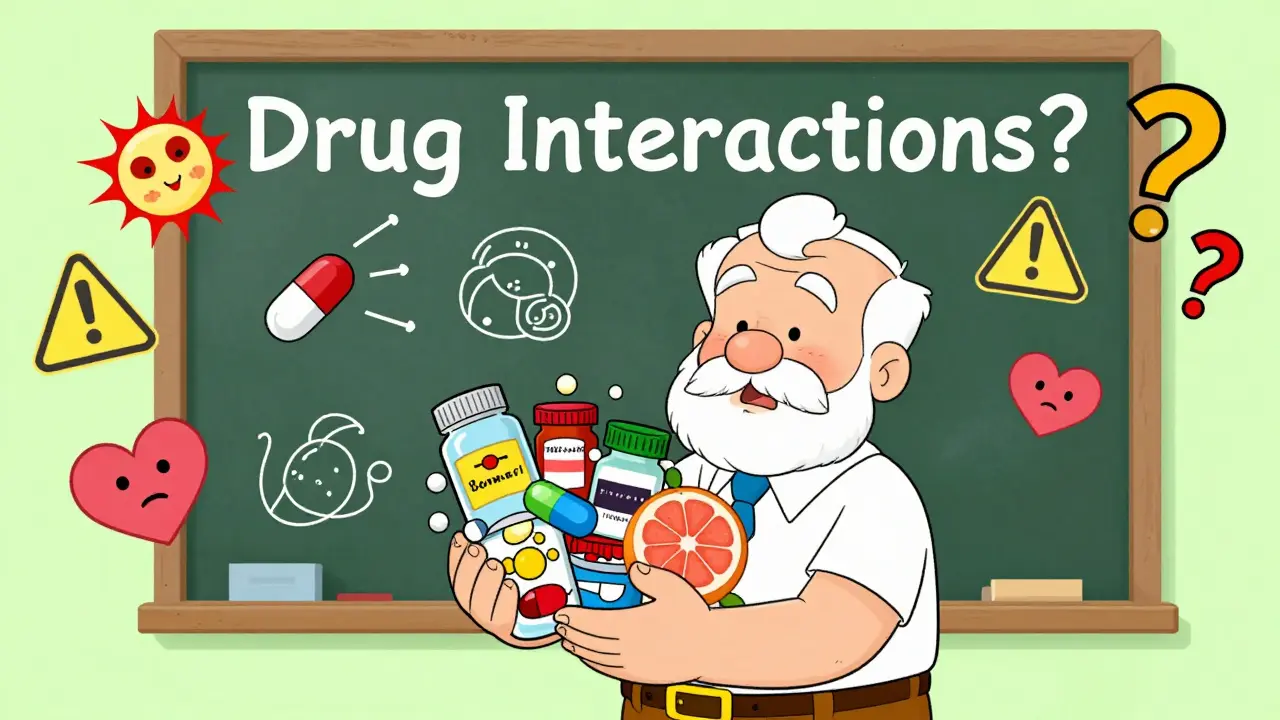
Starting a new medication can feel like a leap into the unknown. You might be told it will help with your blood pressure, cholesterol, or depression - but what if it clashes with something you’re already taking? Drug interactions aren’t just theoretical risks. They cause real harm: hospitalizations, organ damage, even death. The good news? Most of them are preventable - if you know how to check.
Why Drug Interactions Are More Common Than You Think
You’re not alone if you’re on more than one medication. Nearly half of adults over 65 take five or more prescription drugs. Add in over-the-counter painkillers, vitamins, herbal supplements, and even grapefruit juice, and the chances of a dangerous mix go up fast. A drug interaction happens when two or more substances change how your body handles a medication. This can make a drug too strong, too weak, or cause side effects you didn’t expect. For example, taking the cholesterol drug simvastatin with the heart rhythm medication amiodarone can increase your risk of muscle breakdown by 15 times - a condition that can lead to kidney failure. The FDA estimates that preventable adverse drug reactions kill about 7,000 people in the U.S. each year. And up to half of those reactions could have been avoided with a simple check.Step 1: Make a Complete Medication List
Before you even talk to your doctor, get every pill, capsule, patch, or liquid you take written down. Don’t skip anything. That includes:- Prescription drugs (even ones you haven’t taken in months)
- Over-the-counter meds like ibuprofen, antacids, or sleep aids
- Vitamins and minerals (especially vitamin K, iron, or calcium)
- Herbal supplements (St. John’s wort, garlic, ginkgo, echinacea)
- Recreational substances like alcohol or marijuana
Step 2: Ask These Four Questions Before Taking Anything New
When your doctor or pharmacist suggests a new drug, don’t just say “yes.” Ask:- Can I take this with my other medications?
- Should I avoid any foods, drinks, or supplements while using this?
- What are the warning signs I should watch for if there’s a bad interaction?
- How will this drug affect my body differently because of what else I’m taking?
Step 3: Use a Trusted Online Checker - But Don’t Rely on It Alone
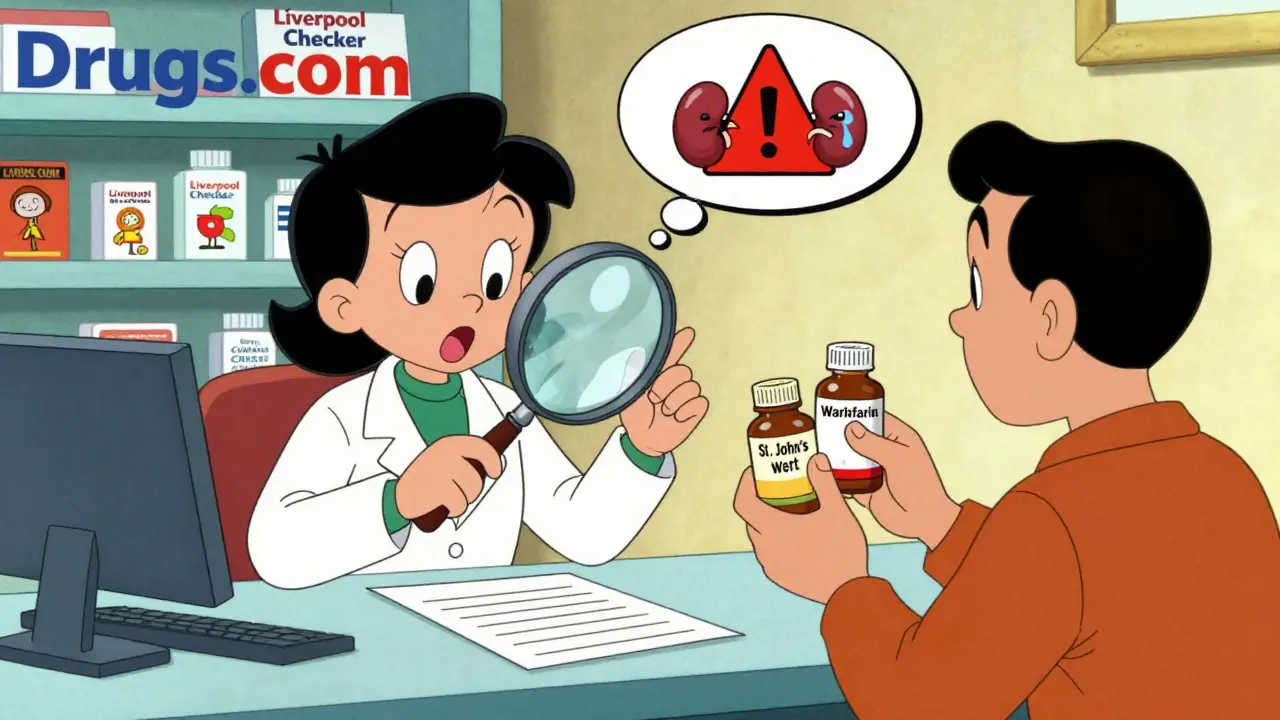
There are free tools you can use right now. The most reliable ones include:- Drugs.com Drug Interactions Checker: Screens over 24,000 prescription drugs, 7,000 supplements, and 4,000 foods. It’s updated daily and used by over a million people monthly.
- University of Liverpool HIV Drug Interaction Checker: Even if you don’t have HIV, this tool is trusted by doctors worldwide. It rates interactions from “contraindicated” to “no expected interaction” and shows the evidence level behind each warning.
- WebMD Interaction Checker: Easy to use, but less detailed than Drugs.com. It missed about 8% of serious interactions in a 2021 study.
Step 4: Know the High-Risk Combinations
Some drug pairs are especially dangerous. According to the American Academy of Family Physicians, these seven combinations account for 63% of serious interaction-related hospitalizations:- Warfarin + NSAIDs (like ibuprofen or naproxen)
- SSRIs (like fluoxetine or sertraline) + MAO inhibitors (like phenelzine)
- Digoxin + clarithromycin (an antibiotic)
- Statins (like simvastatin) + fibrates (like fenofibrate)
- Calcium channel blockers (like diltiazem) + protease inhibitors (used for HIV)
- Sildenafil (Viagra) + nitrates (like nitroglycerin)
- Theophylline + fluvoxamine (an antidepressant)
Step 5: Stick to One Pharmacy
Using multiple pharmacies is a silent risk. Each pharmacy only sees part of your medication history. If you fill your blood pressure pills at one store and your antidepressant at another, neither pharmacist has the full picture. A 2021 study of 22,000 Medicare patients found that using just one pharmacy reduced serious drug interactions by 31%. Pharmacies use automated systems to flag interactions - but only if they have all the data. If cost is the reason you’re switching pharmacies, talk to your doctor or pharmacist. Many drug manufacturers offer coupons. Some pharmacies have discount programs. Your health is worth the effort.Step 6: Keep a Medication Passport
Think of this as your personal health record. Write down your full medication list, allergies, and key medical conditions. Update it every time you see a new doctor, get a new prescription, or stop a drug. The Cleveland Clinic recommends keeping a printed copy in your wallet and a digital version on your phone. Their data shows this simple habit reduced medication errors by 52% among patients with multiple chronic conditions.
Step 7: Watch for Warning Signs
Even after checking, something might still go wrong. Pay attention to these red flags in the first few days of starting a new drug:- Unusual dizziness, confusion, or fainting
- Unexplained bruising or bleeding
- Severe muscle pain or weakness (especially with statins)
- Rapid heartbeat, chest pain, or trouble breathing
- Skin rash, swelling, or itching
- Extreme fatigue or nausea that doesn’t go away
The Bigger Problem: Fragmented Care
Many people see multiple doctors - a cardiologist, a rheumatologist, a primary care provider - and none of them talk to each other. A 2020 study found that 43% of patients with chronic illnesses have incomplete medication records because their care is spread across different systems. That’s why your personal list matters so much. You’re the only one who knows everything you’re taking. Be the quarterback of your own health.What’s Changing in 2025
New technology is helping. The FDA is testing AI systems that look at your electronic health records to predict your personal risk for interactions. Early results show they’re 89% accurate - much better than older systems. Also, starting in 2024, all U.S. electronic health record systems must use standardized interaction alerts that include your age, kidney function, and genetic factors. This means fewer false alarms and more real warnings. But tech won’t fix everything. A 2023 survey found that 71% of patients don’t read their medication labels. And 58% don’t tell their doctors about supplements they’re taking. You still have to be the one asking questions.Final Checklist Before Starting Any New Medication
Use this before you take that first pill:- ✅ I have a written list of every medication, supplement, and OTC drug I take.
- ✅ I brought the actual bottles to my appointment.
- ✅ I asked the four safety questions before agreeing to the new drug.
- ✅ I checked the interaction using Drugs.com or Liverpool’s tool.
- ✅ I know which foods or drinks to avoid (like grapefruit with statins).
- ✅ I’m using only one pharmacy for all my prescriptions.
- ✅ I updated my medication passport.
- ✅ I know the warning signs and what to do if I see them.
Can I check for drug interactions myself using apps?
Yes, apps like Drugs.com and the University of Liverpool’s tool are reliable and free. They screen thousands of combinations and give clear risk ratings. But they can’t replace professional advice. Always confirm results with your doctor or pharmacist - especially if you have kidney, liver, or heart issues.
Are herbal supplements safe to mix with prescription drugs?
No - not without checking. St. John’s wort can make birth control, antidepressants, and blood thinners less effective. Garlic and ginkgo can increase bleeding risk when taken with warfarin. Even common supplements like vitamin E or magnesium can interfere with antibiotics or heart meds. Always list them on your medication sheet.
Why do I get so many alerts when I check my meds online?
Many alerts are false positives - warnings that sound scary but aren’t actually dangerous for your specific situation. This is called “alert fatigue.” If you see too many, you might start ignoring them. That’s why it’s important to talk to your pharmacist. They can tell you which alerts matter and which don’t.
What should I do if my doctor says a drug interaction isn’t a problem?
Ask for the reasoning. Are they relying on evidence from studies? Are they adjusting your dose? Is there a safer alternative? If you’re still unsure, get a second opinion from a pharmacist. Many pharmacies offer free med reviews. Your health isn’t something to gamble on.
Can grapefruit really make my meds dangerous?
Yes. Grapefruit - and sometimes orange or pomelo juice - blocks enzymes in your gut that break down certain drugs. This can cause dangerously high levels in your blood. It affects statins (like simvastatin), some blood pressure meds, and certain anti-anxiety drugs. Even one glass can last 24 hours. If you’re on one of these drugs, avoid grapefruit completely.
How often should I update my medication list?
Every time you start, stop, or change a dose - even if it’s just a one-time antibiotic. Also update it before every doctor’s visit, hospital stay, or pharmacy refill. Keep it on your phone and in your wallet. You never know when you’ll need it.
Is it safe to use over-the-counter painkillers if I’m on blood pressure meds?
It depends. NSAIDs like ibuprofen and naproxen can raise blood pressure and reduce the effectiveness of many blood pressure drugs. They can also harm your kidneys if taken long-term. Acetaminophen (Tylenol) is usually safer for people on blood pressure meds, but always check with your doctor or pharmacist first.
 How to Handle Insurance Requirements for Generic Substitution
 How to Manage Medication Refills During Extended Travel
 Terramycin vs Alternative Antibiotics: Tetracycline Comparison Guide
 The Role of Special Olympics in the Lives of People with Intellectual Disabilities
 Trazodone vs. Alternatives: 2025 Comparison Guide
Meina Taiwo
December 21, 2025 AT 07:03Just got prescribed amiodarone last week. I checked Drugs.com before even filling it-caught the simvastatin interaction my cardiologist missed. Saved my kidneys. Always bring your bottles. Always.
Siobhan K.
December 23, 2025 AT 05:53Of course the FDA says 7,000 deaths are preventable-yet the system still doesn’t require pharmacists to cross-check with all prescribers. We’re putting the burden on patients because it’s cheaper than fixing infrastructure. Classic.
Sarah Williams
December 23, 2025 AT 14:27One pharmacy. Always. I used to switch for coupons and nearly died when my antidepressant clashed with a new antibiotic. Don’t be me.
Cameron Hoover
December 24, 2025 AT 00:58I used to think supplements were ‘natural’ so they were safe. Then I learned St. John’s wort turned my Zoloft into a placebo. Now I treat every herb like a prescription. No exceptions.
Brian Furnell
December 25, 2025 AT 02:33Let’s be real: the real issue isn’t patient ignorance-it’s the fragmentation of care. I’ve got a cardiologist, a neurologist, a rheumatologist, and a GP-all using different EHRs, none talking to each other. My meds list is a 17-item spreadsheet because I’m the only one who knows what’s what. And I’m not even on Medicare yet. This system is a house of cards held together by patient diligence.
That 31% reduction from single-pharmacy use? That’s not a win-it’s a indictment. Why should I have to be my own case manager? Why isn’t there a federal mandate for interoperable systems? We’re asking patients to do the work of a coordinated care network.
And don’t get me started on the ‘alert fatigue’ problem. I get 12 warnings every time I log into my pharmacy portal. Half are for things that don’t apply to me-like ‘avoid grapefruit’ when I haven’t touched it since 2018. The system is drowning us in noise and calling it safety.
Meanwhile, the AI tools the FDA’s testing? They’re trained on data from patients who actually have full records. What about the 58% who don’t tell their doctors about their turmeric supplements? The algorithm doesn’t know that. It just sees ‘no interaction’ and moves on.
Bottom line: we need structural change, not just checklists. A medication passport is great-but it’s a Band-Aid on a hemorrhage.
Peggy Adams
December 25, 2025 AT 23:12Also, did you know the FDA doesn’t require drug companies to test interactions with every single supplement? Like, they test with alcohol and grapefruit, sure-but what about ashwagandha? Or CBD? No clue. It’s a wild west out here.
Southern NH Pagan Pride
December 27, 2025 AT 01:27They’re not just ignoring supplements-they’re hiding them. Big Pharma doesn’t want you to know that turmeric and curcumin can outperform statins without the muscle damage. That’s why they fund studies that say ‘no evidence’-but never test the real doses. The FDA’s just their PR arm.
And don’t even get me started on how they ban natural remedies but let you buy 1000mg ibuprofen OTC. It’s all about control. You think your pharmacist is helping you? Nah. They’re just the gatekeeper for the system that profits from your illness.
Jason Silva
December 29, 2025 AT 01:05😂 I once took a melatonin gummy with my blood pressure med and woke up feeling like my brain was in a blender. The pharmacist said ‘it’s fine.’ I called the poison control line instead. They said ‘you’re lucky you didn’t stroke out.’ Now I only trust my own research. 🤓💊
Teya Derksen Friesen
December 29, 2025 AT 20:58While I appreciate the thoroughness of this guide, I must emphasize the importance of adhering to evidence-based protocols in clinical decision-making. The reliance on self-reported medication lists, while well-intentioned, introduces significant data integrity risks. Standardized digital reconciliation tools, integrated with certified EHRs, are demonstrably superior to paper-based or manually updated systems. Furthermore, the promotion of third-party online checkers without contextual clinical correlation may inadvertently contribute to patient anxiety and non-adherence.
Jerry Peterson
December 31, 2025 AT 18:20I’m from the Midwest and I used to think all this stuff was overkill. Then my dad had a bad reaction to a new antibiotic because his pharmacy didn’t know he was on warfarin. He ended up in the ER. Now I keep his meds list on my phone lock screen. It’s not about being paranoid-it’s about being prepared.
Christina Weber
January 2, 2026 AT 11:04Incorrect punctuation in the original post: ‘You’re not alone if you’re on more than one medication.’ Should be ‘You’re not alone if you are on more than one medication.’ Contractions are informal and inappropriate in medical guidance. Also, ‘Drugs.com’ is not an authoritative source-it’s a commercial site. Cite peer-reviewed literature or clinical guidelines, not crowd-sourced databases.
Cara C
January 3, 2026 AT 17:06This is such a vital post. I used to be the person who just took what the doctor handed me. Then I started asking questions-and it changed everything. I’m not a doctor, but I’m my own best advocate now. You’ve got this.
mukesh matav
January 5, 2026 AT 12:29Been on 7 meds for 10 years. Never had a problem. Maybe you’re just overthinking it?
Swapneel Mehta
January 6, 2026 AT 09:11Love this. I’m from India and we don’t have great pharmacy systems here. I use Drugs.com and show the results to my doctor. He’s usually impressed. Turns out, patients who ask questions get better care-even in places with limited resources.
Theo Newbold
January 7, 2026 AT 15:42Let’s not romanticize patient self-advocacy. This guide reads like a marketing brochure for Drugs.com. The real problem is pharmaceutical lobbying. Drug interaction alerts are suppressed in EHRs because they slow down prescribing. The system is designed to maximize profit, not patient safety. Your ‘checklist’ is a distraction from the structural rot.